Crematogaster
Crematogaster mimosae
Care Guide
Crematogaster mimosae is a species of acrobat ant whose name hints at a close association with acacia trees in its native African habitats. These ants are named for their remarkable ability to raise their heart-shaped gaster over their head when disturbed, a defensive posture that also makes them a delight to observe. The queen measures 6–7 mm, while workers are slightly smaller at 3–4 mm, but what they lack in size they make up for in agility and energy. Colonies range from a modest 500 to a bustling 5,000 workers, offering a satisfying middle ground for keepers who want a visible, active colony without the vast space requirements of larger species.
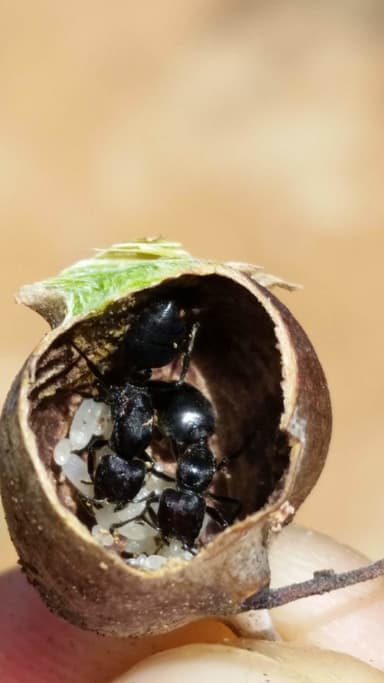
One of the most distinctive aspects of C. mimosae is their close relationship with extrafloral nectaries and sap-feeding insects. In the wild, they nest in hollow acacia thorns and tend scale insects or aphids for honeydew, supplementing their diet with small insects and sugar water. In captivity, they thrive on a balanced menu of protein (fruit flies, small crickets, or mealworms) and carbohydrates (diluted honey, sugar water, or commercial ant nectar). Their preference for sweet liquids is strong, and they will avidly collect honeydew from any insects you provide. On warm days, they display impressive foraging trails, climbing high on artificial twigs or mesh to mirror their natural arboreal lifestyle.
Care difficulty
Keeping Crematogaster mimosae is suited to intermediate keepers due to their specific humidity requirements and slightly more sensitive founding phase. Their claustral founding is straightforward—the queen seals herself in a test tube and raises her first brood without feeding—but the colony takes time to grow. They do not require hibernation, which simplifies year-round care, but they do need consistently warm temperatures between 24–28°C and high humidity of 60–80%. Maintaining this moisture is crucial, especially for the brood, as these ants are accustomed to the humid microclimate inside plant cavities.
Housing
A formicarium with good ventilation and vertical climbing options works best. Nests with cork, bark, or gridded structures that allow the ants to hang upside down will be immediately accepted. The outworld should include a source of constant sugar water and a small dish or vial for honeydew if you choose to keep a scale insect colony—an enriching addition that taps into their natural behaviour. Regularly moisten the nesting area but avoid waterlogging; a clay or sand substrate that holds moisture will help. These ants are less sensitive to vibrations than some species, but they do appreciate a quiet, stable location away from direct sunlight and drafts.
First days after purchase
After receiving your C. mimosae colony, place the test tube or small nest in a warm, dimly lit area and resist the urge to peek too often. Allow the ants to settle for at least 48 hours. Offer a drop of sugar water and a small insect piece near the entrance—if they take it, they are well on their way. Check humidity levels daily and gently moisten the nest if the substrate appears dry. Within a week, you should see workers expanding the nest and forging curiously into the outworld. Patience during this acclimatisation phase rewards you with a colony that quickly becomes bold and fascinating to watch.