Pogonomyrmex
Pogonomyrmex maricopa
Nuptial Flight Calendar
Flight months: Jul, Aug
Care Guide
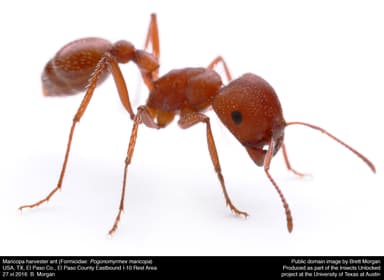
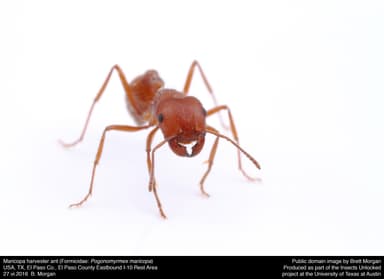
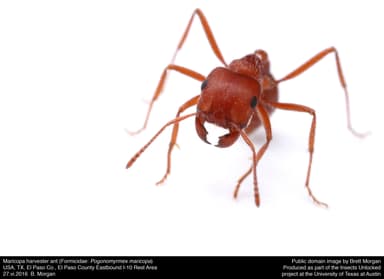
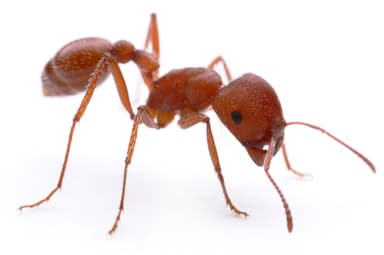
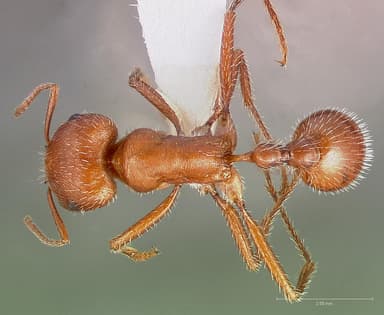
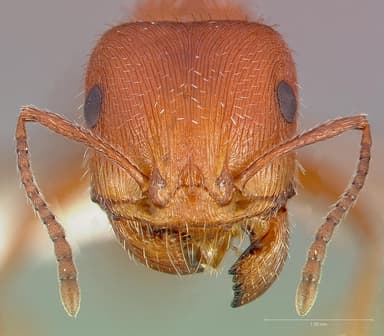
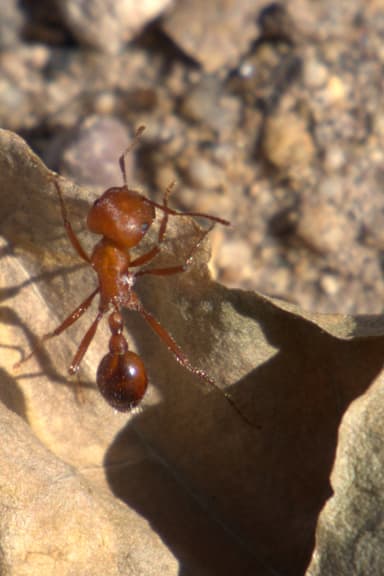
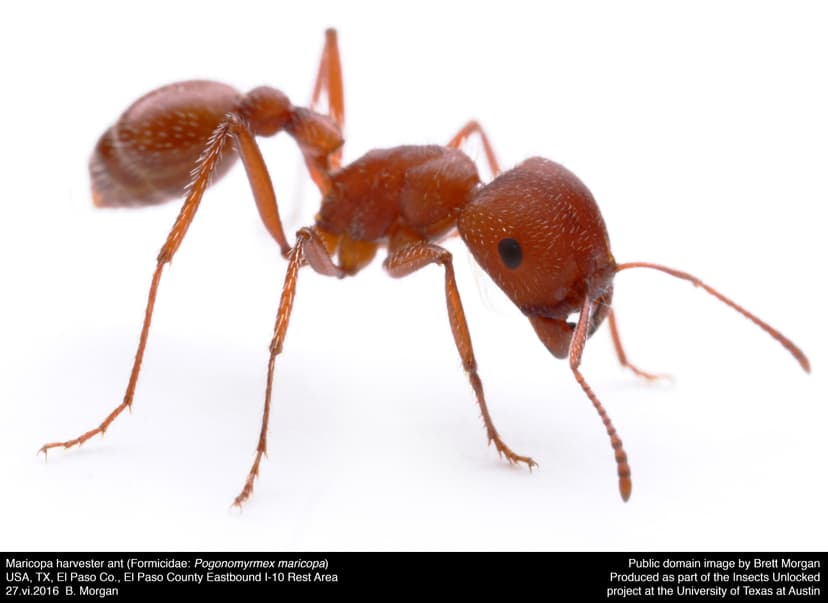
Among the harvester ants of the American Southwest, Pogonomyrmex maricopa — the Maricopa harvester ant — commands a special, almost intimidating respect. Queens reach a robust 10 to 12 millimeters, while their monomorphic workers span a narrow 7 to 9 millimeters, all clad in the classic reddish-brown that makes these foragers so visible on the sun-baked soil. Mature colonies can swell to around 10,000 individuals, a modest number by harvester ant standards, yet their simple one-caste structure belies a complex social life. What truly sets this species apart, however, is its venom: Schmidt (1990) famously ranked P. maricopa as possessing the most toxic insect venom known, with an LD50 that surpasses even that of the bullet ant. For the keeper with a passion for desert ecosystems, the chance to observe their diligent seed-harvesting columns under carefully controlled conditions is both a profound privilege and a serious undertaking.
Make no mistake — this is an ant for the expert alone. The combination of a sting that delivers intense, lasting pain and a need for meticulously maintained arid microclimates raises the stakes considerably. Pogonomyrmex maricopa is ill-suited to the casual hobbyist or anyone who has not already kept several intermediate desert species. Only those comfortable with fully escape-proof setups, precise heating, and the reality that a single careless moment could mean a hospital visit should consider them. The reward lies in watching one of nature’s most refined venom-delivery systems operate within a thriving, grain-gathering society, a spectacle that Taber (1998) describes as central to the ecology of North American drylands.
Creating a home that mimics their native range — a swath of the Southwest extending from Arizona and New Mexico southward into northern Mexico, where summers are blistering and the air shimmers — is an exercise in restraint. The enclosure must provide a steep temperature gradient, with a warm zone maintained at 30–32°C and a cooler retreat around 24°C, replicating the soil profile where brood develops best. Humidity should never creep above 50%, and in the nest itself 30–40% is safer; many keepers achieve this with a gypsum or ultracal block nest that can hold a tiny water reservoir beneath a thick, dry barrier. A deep outworld filled with a sand-clay mixture allows the ants to rearrange their environment, as Cole (1968) observed in natural nests that may plunge over a meter into the earth. Lighting can be gentle, but direct, hot illumination from above encourages natural thermoregulation and prevents the persistent damp that invites fungi deadly to these xerophilic ants.
Diet for P. maricopa is refreshingly straightforward, if tailored to a granivore’s physiology. Offer a rotating mix of tiny seeds — Kentucky bluegrass, white millet, amaranth — lightly crushed for the smallest workers, replenished every few days. Live-killed or frozen-thawed insects such as small crickets and mealworm pieces provide necessary protein, but moderation is key; one or two insect bits per week for a young colony prevents the nitrogenous waste that can sour the nest in low-humidity conditions. Water is best supplied via a covered cotton tube in the outworld, placed well away from the nest entrance so that humidity does not migrate where it is not wanted. Spritzing is wholly unnecessary, and any condensation on the glass is a warning sign. AntWiki notes that these harvesters rarely accept sugary liquids, and while a drop of dilute honey may be investigated, it should not form a dietary staple.
A winter dormancy is non-negotiable for the long-term health of the colony. In their native haunts, P. maricopa experiences a distinct cool season, and we must reproduce this by gradually lowering the temperature over a few weeks until the nest stabilizes around 18°C. Maintain this quiet, dark period for eight to twelve weeks, continuing to offer water but ceasing all supplemental feeding. The colony will cluster together, barely moving; this is normal and beneficial, as it aligns their reproductive rhythm with the monsoon-triggered nuptial flights recorded in July and August after heavy afternoon rains (AntWeb). Failure to hibernate often leads to a disintegrating brood pattern and a restless, short-lived colony.
When your queen arrives, she will be in a standard glass tube with a water reservoir — claustral founding means she requires absolutely no food until her first tiny workers emerge, which can take four to six weeks at 26–28°C. Keep her in darkness, undisturbed, and resist the urge to check more than once a week. The initial nanitics, barely 7 mm long, will be timid; introduce a single, small grass seed and a fragment of cricket leg only after they begin to explore the tube’s cotton barrier. Once the worker count passes 20 or so, connect the tube to your prepared desert outworld, gradually ramping up heat and feeding frequency. Watch for escape behavior immediately — these ants are fast, determined, and a single forager can deliver a sting that Schmidt (1990) quantifies as unrivalled in the insect world. With patience, steady nerves, and an unwavering respect for their power, you will witness a piece of the real desert unfold before you.