Oxyopomyrmex
Oxyopomyrmex santschii
Nuptial Flight Calendar
Flight months: Jun, Jul, Aug, Sep
Care Guide
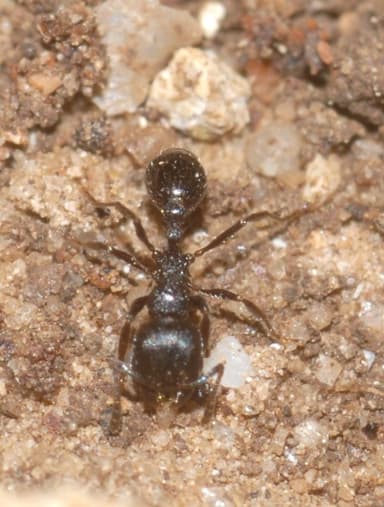
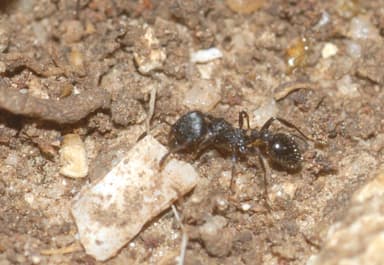
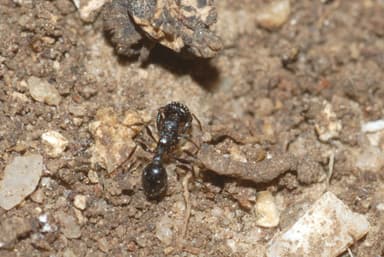
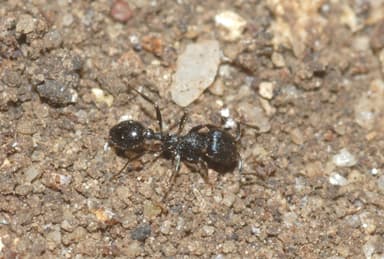
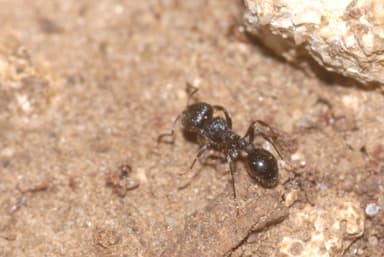
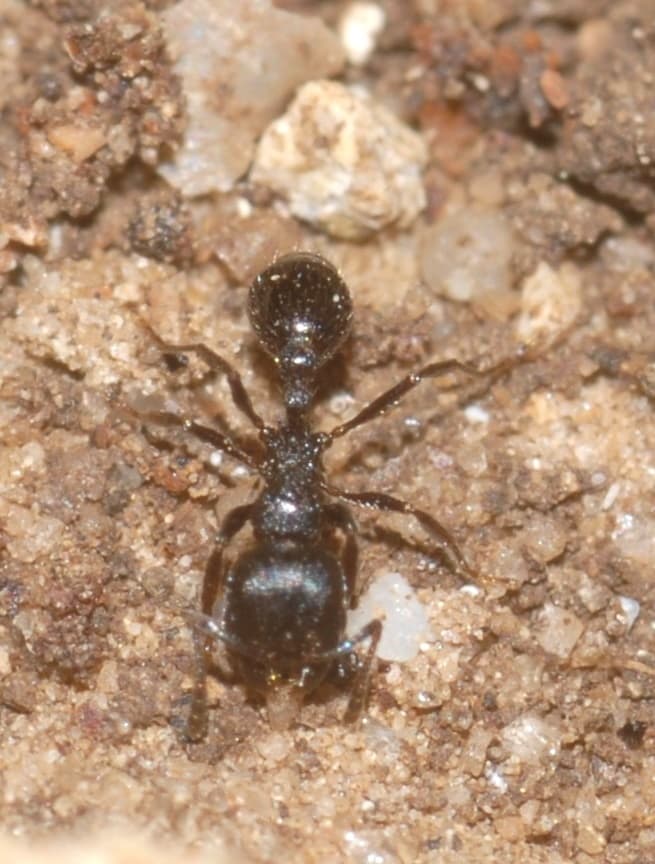
Oxyopomyrmex santschii is a diminutive yet captivating harvester ant from the sunbaked landscapes of Mediterranean Europe and North Africa, where its range spans roughly from the Iberian Peninsula to the eastern Mediterranean, north to about 45°N and south into the Sahara’s margins (Cagniant 1996). Queens measure a modest 5.5 to 7 mm, while the uniformly small minor workers reach just 3 to 4 mm — there is no polymorphic worker caste, so every forager is the same sleek, reddish-brown silhouette, perfectly adapted for a life spent collecting seeds in arid grasslands and open steppe. Colonies are claustral, meaning a newly mated queen seals herself away to raise her first brood using only her internal fat reserves and wing-muscle histolysis, and mature societies rarely exceed about a thousand individuals. What makes the genus Oxyopomyrmex particularly interesting is their specialized mandibles, which bear a unique tooth arrangement for processing small seeds, a trait that sets them apart from the more familiar Messor harvesters and offers a window into the evolutionary paths of granivory in desert ants. For the keeper, it’s a combination of compact size, tidy seed-storing behavior, and an understated elegance — watching a tiny worker methodically crack a grass seed with its modified jaws is a quiet drama in miniature.
This species earns an intermediate care difficulty rating primarily due to its very specialized humidity and hibernation requirements, making it best suited for keepers who have successfully maintained a few easier arid-climate ants like Messor or Pogonomyrmex and are ready for a more precise challenge. The claustral foundation phase is straightforward, but the colony’s long-term health hinges on providing a sharp seasonal cycle and avoiding the damp, stagnant conditions that can quickly lead to fungal outbreaks. Patient observers who appreciate a slower-paced colony — growth is steady rather than explosive — and who enjoy micromanaging microclimates will find O. santschii deeply rewarding. Beginners might struggle with the hibernation discipline and the narrow moisture window, but anyone with a year or two of experience, especially with desert species, should feel at home.
Housing must replicate the well-drained, warm microhabitats these ants favor in nature. A dry nest setup is essential, and a ytong or plaster nest with a thin, integrated water feeder to create a gentle humidity gradient works wonderfully; the nest chamber itself should sit at a low 40–60% relative humidity, which can be maintained by occasionally adding a few drops of water to a distant corner of the nest block rather than direct moistening. Temperature is ideally kept between 20 and 28 °C, with a slight nighttime drop being beneficial. Since O. santschii are agile and relatively small, escape-proofing is critical — a tight-fitting lid and a smear of PTFE-based barrier around the outworld rim are non-negotiable. A thin layer of fine sand or a sand-clay mix in the outworld not only looks natural but also provides a surface where workers can process seeds and discard husks. Importantly, the nest should be on the smaller side so that the colony feels secure, and it must be absolutely dry near the entrance, as these ants are extremely sensitive to prolonged dampness, which can cause mites or mold. A small external heat source, such as a low-wattage heat cable placed under one corner of the nest, allows the colony to thermoregulate and brood to develop properly.
In the wild, O. santschii are dedicated granivores, and their diet in captivity should mirror this. Offer a mix of tiny grass seeds, poppy seeds, chia, and crushed niger seeds as staples; workers will meticulously chew these into a fine, ant-bread-like paste that feeds the larvae. While they will accept the occasional fruit fly or pinhead cricket as a protein boost, particularly during rapid brood production, be sparing — too much insect protein can lead to refuse buildup and mold in the arid nest. Carbohydrate sources like sugar water or honey are taken but often ignored if seeds are plentiful, so provide a small feeding dish of diluted honey only once a week. Water is vital but must be offered in a way that doesn’t raise overall humidity: a tiny test-tube waterer with a cotton plug placed in the outworld is perfect, allowing workers to drink without the risk of flooding the nest. Always remove uneaten fresh food after 24–48 hours to prevent spoilage, as the warm, dry setup can quickly desiccate leftover insect parts, making them hard and unusable.
A true hibernation is not just recommended but required for long-term colony vitality, as these ants are adapted to a Mediterranean climate with cool, moist winters. In late autumn, gradually reduce the temperature over two to three weeks until the colony rests at a steady 12 °C. They should remain at this chilly but not freezing temperature for at least three months, during which activity will cease almost entirely and the queen will stop laying eggs. Humidity can be slightly higher during diapause, around 50–65%, to mimic the winter rains in their native range, but be vigilant that the nest doesn’t become sodden. Provide a small water source and check monthly; if workers emerge to drink, that’s normal. In early spring, warm them back up slowly over a couple of weeks to avoid shocking the brood. A well-executed hibernation is the key to breaking the colony’s annual cycle, triggering robust spring egg-laying and preventing the slow decline that comes from year-round warmth.
When your new O. santschii queen arrives, she will likely be in a test tube with a water reservoir and cotton plug — this is her world for the next few weeks. Do not disturb her with vibrations or bright light; place the tube in a dark, warm spot at around 25 °C and resist the urge to check on her for at least two weeks, as she is highly sensitive during the claustral stage. The first feeding is not needed until you see the initial nanitic workers, usually after six to eight weeks, and even then, a tiny pinch of poppy seeds placed near the tube entrance is enough. Watch carefully for the workers’ first foraging trips: they will be timid, but within days you’ll see them eagerly collecting seeds and processing them inside the tube. At this point, connect the tube to a small nest and outworld, but let the colony move at its own pace — they will relocate when the tube becomes too cramped or too moist, and forcing it risks stress. Pay attention to condensation inside the tube; if water droplets build up, transfer carefully to a fresh, drier setup. Early signs of trouble include workers huddled listlessly near the water source (a sign of excess humidity stress) or a queen that fails to produce brood after a month, which may indicate improper hibernation timing. With patience and a steady hand on the climate controls, your tiny colony will slowly thrive, piece by piece.