Odontomachus
Odontomachus chelifer
Nuptial Flight Calendar
Flight months: Jan, Feb, Oct, Nov, Dec
Care Guide
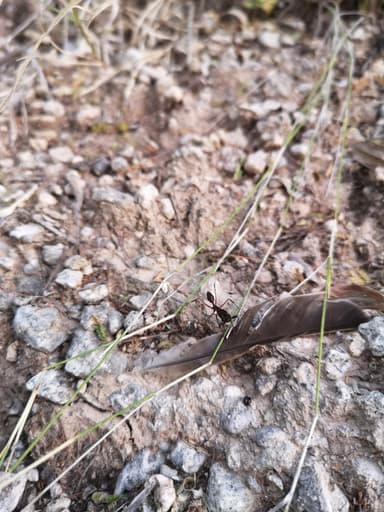
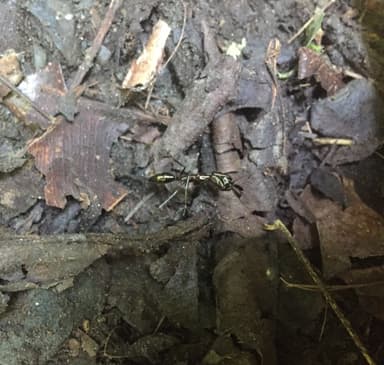
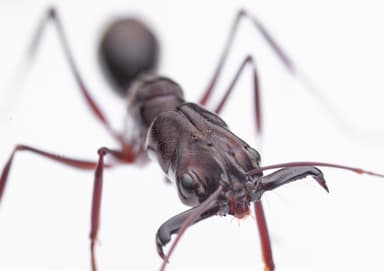
Odontomachus chelifer, often referred to as the giant trap-jaw ant, is a striking inhabitant of the Neotropics whose sheer speed and power make it one of the most captivating species in the hobby. Queens reach a substantial 18 to 22 millimeters, while workers span 15 to 20 millimeters, all sharing a uniform mandibulate body plan without any physical castes beyond minor worker. Their elongated, dark reddish-brown to black bodies are built around those iconic, widely spaced mandibles that lock open at 180 degrees and snap shut at velocities exceeding 60 meters per second — among the fastest movements in the animal kingdom. In the wild, they use this weapon not only to dispatch prey but also to catapult themselves away from threats, an ability that demands a secure captive setup. Colonies remain modest, capping at around 200 individuals, and new queens found claustrally, sealing themselves away to rear their first brood entirely from internal reserves. Across their vast range — from central Brazil north through Central America into Mexico, as occurrence data confirm — they hunt as solitary foragers on the forest floor, a behavior beautifully described by Raimundo et al. (2009). For the keeper, O. chelifer offers a window into the primitive ponerine lifestyle: a slow-growing, nervous, and endlessly fascinating society.
This species is best suited to the intermediate keeper who already has a feel for maintaining stable microclimates and respecting a colony’s boundaries. While not overtly aggressive, workers will deliver a memorable sting if mishandled, and their explosive mandibles can propel them out of an inadequately sealed foraging arena. Their care is not technically complex, but it demands consistency: they react poorly to sudden drops in humidity or temperature, and founding queens are easily stressed by excessive inspection. Enthusiasts who appreciate observation over rapid expansion will thrive here, as brood development is deliberate and colony growth rewards patience. A solid, escape-proof formicarium with a tight-fitting lid is non-negotiable, given their ability to scale smooth surfaces and their habit of leaping when startled.
Housing for Odontomachus chelifer must replicate the warm, moist leaf litter of its tropical habitat. A high-humidity nest is critical — aim for 65 to 85 percent relative humidity at all times, with a visible moisture gradient that allows the ants to select the microsite that suits their current brood stage. Plaster, ytong, or a well-seasoned naturalistic setup with a mix of coco fiber and sand-clay substrate all work well, provided they can hold moisture without becoming sodden. Temperature should be maintained between 22 and 28 °C, ideally with a gentle heat source applied to one side of the nest to let the colony thermoregulate. The foraging area should be roomy and furnished with a layer of leaf litter, pieces of bark, and a small water source; these ants navigate largely by ground vibration and chemical trails, so a cluttered environment reduces their skittishness. Ventilation must be generous to prevent stagnant air, yet fine mesh is necessary to contain even the slightest gap.
In terms of diet, O. chelifer is a formidable live-animal predator that relies heavily on protein for its larvae. Offer a staple of crickets, dubia roach nymphs, or mealworms two to three times a week, sizing prey so that a worker can easily immobilize it with a single mandible strike. They will also scavenge freshly killed insects, which can be a safer option for a small founding colony. Carbohydrate needs are modest; many colonies will accept a drop of diluted honey or sugar water, particularly when larvae are present, but don’t be surprised if interest waxes and wanes — in nature these ants derive sugars primarily from prey hemolymph and occasional plant exudates. Always provide a fresh water source, such as a test tube waterer or a small plaster hydration station, and promptly remove uneaten food to forestall mites.
A welcome simplicity in their care is that Odontomachus chelifer does not require a hibernation period. Collected from entirely tropical and subtropical latitudes, they maintain brood production year-round as long as stable temperatures and consistent food availability are offered. Keepers should resist any temptation to cool them during winter months; doing so will only cause brood mortality and queen stress. This perpetual activity, combined with their relatively compact colony size, makes them an excellent year-round display species.
When your colony or newly mated queen first arrives, the priority is to let them settle with minimal disturbance. A founding queen sealed in her test tube will need nothing except darkness and warmth for weeks; do not attempt to feed her until the first tiny workers appear. For an established colony, connect the transport tube to a pre-humidified nest and let them discover the new space at their own pace, which can take several days. The first meal should be small — a decapitated fruit fly or a cricket leg, together with a tiny bead of sugar water on a piece of foil — offered only after the ants are actively exploring. Watch for signs of disorientation or excessive grooming, and check that the nest humidity stays high to prevent the queens and workers from desiccating. With a soft touch and steady conditions, your O. chelifer will soon begin patrolling their territory with those mesmerizing, slow-motion mandible strikes, providing a daily spectacle of ancient ant engineering.