Odontomachus
Odontomachus bauri
Care Guide
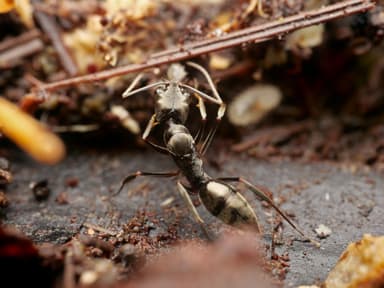
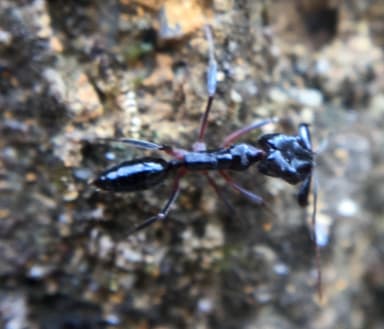
Odontomachus bauri are among the most fascinating ants in the hobby, instantly recognizable for their enormous, spring-loaded mandibles that snap shut at blistering speeds—the fastest predatory strike in the animal kingdom. These alert, fast-moving ants are sometimes called “trap-jaw” or “snapping” ants, and watching a worker hunt is an unforgettable experience. The queen measures between 10 and 12 mm, while workers are slightly smaller at 8–10 mm. Colonies are moderate in size, typically reaching 100 to 500 individuals, and they do not display pronounced polymorphism—workers are similar in size, but their powerful jaws make up for any lack of variety. As a semi-claustral species, the founding queen must forage for food to feed her first brood, which adds a layer of involvement and observation for the keeper.
Care difficulty
Keeping Odontomachus bauri is best suited for intermediate keepers. The semi-claustral founding phase requires regular feeding of small insects, and the ants are notably fast and skittish—they can escape if the setup isn’t secure. However, once a colony is established, their bold hunting behavior and rapid growth make them one of the most rewarding species to maintain. They do not require hibernation, which simplifies year-round care.
Housing
A formicarium with controlled humidity is essential—these ants come from tropical environments and need a nest humidity of 70 to 80 percent, along with a temperature range of 24 to 28 °C. The nest should be kept consistently moist but not waterlogged; a gradient with a drier outworld works well. The outworld should be escape-proof with tight-fitting lids or fluon barriers, as these ants are excellent climbers. A varied insect-based diet is crucial: crickets, fruit flies, roaches, and mealworms are all taken eagerly. They also appreciate sugar water or honey water as a carbohydrate supplement, though protein remains the backbone of their nutrition. Their rapid mandible strike means they can subdue prey much larger than themselves, so don’t be shy about offering sizable insects once the colony is established.
First days after purchase
Upon receiving your Odontomachus bauri colony, transfer them gently into a prepared test tube setup or a small, well-moistened nest chamber. Place the setup in a dark, quiet location and allow the ants at least 48 hours to acclimatize without disturbance. During this period, provide a droplet of sugar water on a small piece of foil and a tiny insect—dead or freshly killed—near the entrance. Observe from a distance; any sudden vibrations or bright light will stress them. Once you see workers actively foraging and the queen tending eggs, you can begin gradually introducing regular feedings. Patience is key in these first days: the trap-jaw response is a defense mechanism, and a calm, secure colony will soon reward you with spectacular hunting displays.