Nylanderia
Nylanderia faisonensis
Nuptial Flight Calendar
Care Guide
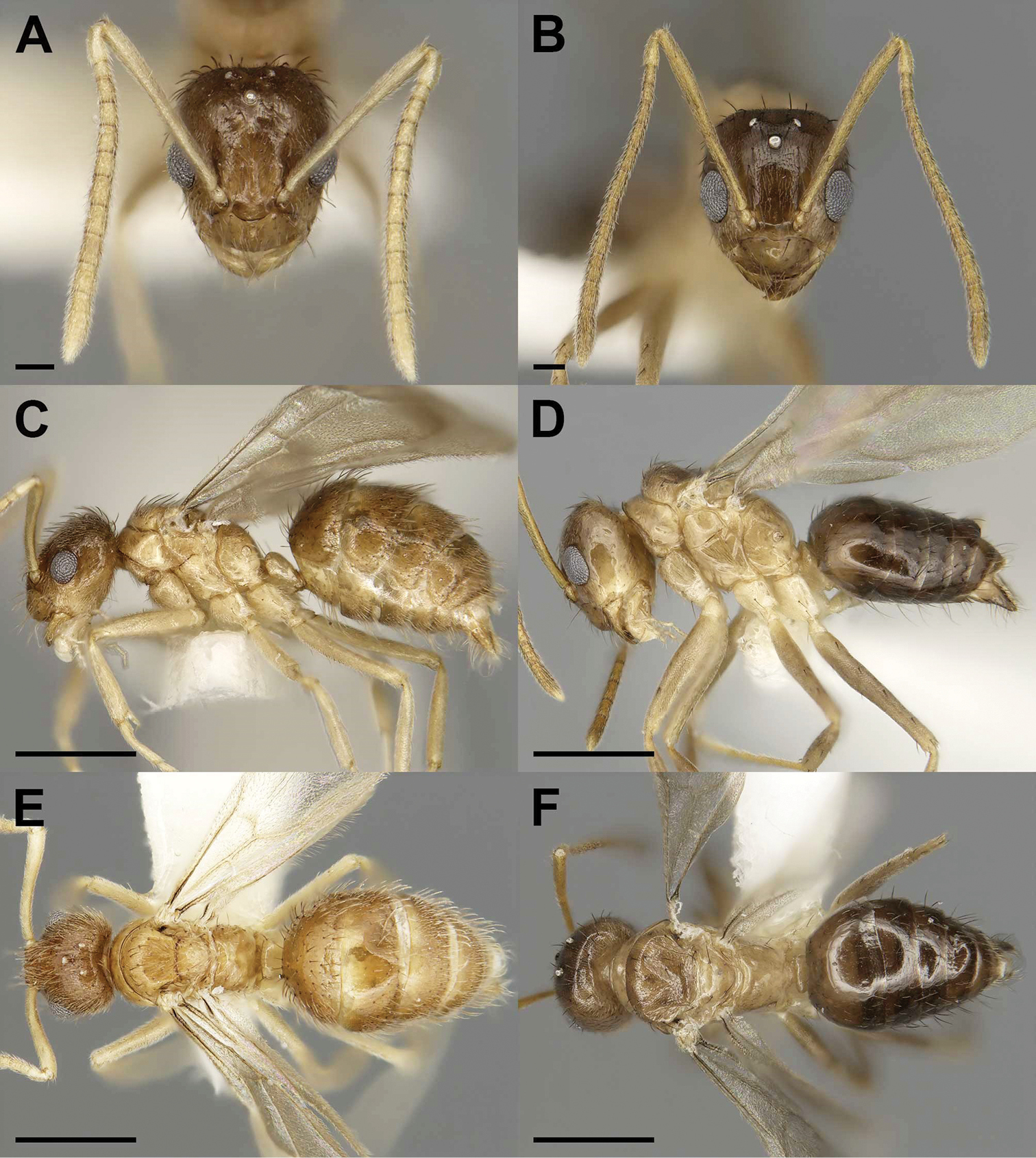
Nylanderia faisonensis, commonly known as the fast-running forest ant, is a small but highly active species that brings constant motion and energy to any formicarium. The queen measures just 4 to 5 millimeters, while the workers are even more diminutive at 2 to 3 millimeters, making them one of the more delicate-looking ants in the hobby. Despite their tiny size, these ants are robust and form colonies of 500 to 3,000 workers — a respectable mid-sized society that can quickly fill a nest with life and activity. They are monomorphic, meaning all workers share a similar size and shape, which simplifies identification but does not lessen the charm of their fast, coordinated movements.
One of the most endearing traits of Nylanderia faisonensis is their diet. These ants are true generalists: they readily accept a wide variety of insects such as fruit flies, small crickets, and mealworms, but they also have a notable sweet tooth. Sugar water and honeydew are essential staples, and a well-fed colony will spend much of its time tending to these liquid food sources. Observing the rapid, almost frenzied recruitment of workers to a fresh drop of sugar water is a highlight of keeping this species. Because they are not picky eaters, providing a balanced menu is straightforward — just ensure a steady supply of protein and carbohydrates.
Care difficulty
Nylanderia faisonensis is considered an intermediate-level species. Their small worker size and high activity levels demand a well-sealed formicarium, as these ants can squeeze through gaps that larger species cannot. The queen founds the colony claustrally, meaning she seals herself in a chamber and raises the first workers without needing food — a process that is relatively reliable for experienced keepers but requires patience from beginners. The main challenge comes from their need for stable warmth and humidity. A temperature range of 22 to 27 degrees Celsius and a relative humidity of 50 to 70 percent must be maintained, especially in the nest area, to support healthy brood development. Additionally, these ants require a genuine winter diapause: they should be hibernated at around 10 degrees Celsius for several months. Skipping hibernation can lead to reduced longevity and weak colonies.
Housing
A suitable setup for Nylanderia faisonensis includes a formicarium with small, narrow chambers that match their modest body size. Tunnels and rooms should be no more than 5 millimeters in height to prevent the ants from feeling lost or struggling to navigate. An attached outworld with a secure lid and a layer of fluon or oil along the rim is crucial to prevent escapes. The nest should be kept in a dark, quiet area with minimal vibration, as these ants can become stressed by frequent disturbances. Regular moisture in the nesting substrate — whether plaster, sand-clay mix, or acrylic with a hydration system — will maintain the humidity levels they need. A heating cable or mat set to the lower end of their temperature range works well, but avoid direct, intense heat.
First days after purchase
Upon receiving your Nylanderia faisonensis colony, allow the test tube or transport container to rest in a dim, quiet location for at least an hour before opening. Carefully transfer the ants to their new formicarium, ensuring the nest is pre-moistened and at the correct temperature. Avoid handling the queen directly; if she is still in her founding tube, you can connect the tube to the nest and let the colony move on its own. In the first few days, offer a small drop of sugar water and a tiny insect piece, but do not overfeed — uneaten food can spoil quickly in the humid environment. Observe from a distance to confirm the ants are exploring and the queen is settling in. With patience and steady conditions, Nylanderia faisonensis will reward you with a lively, fast-paced colony that is endlessly fascinating to watch.