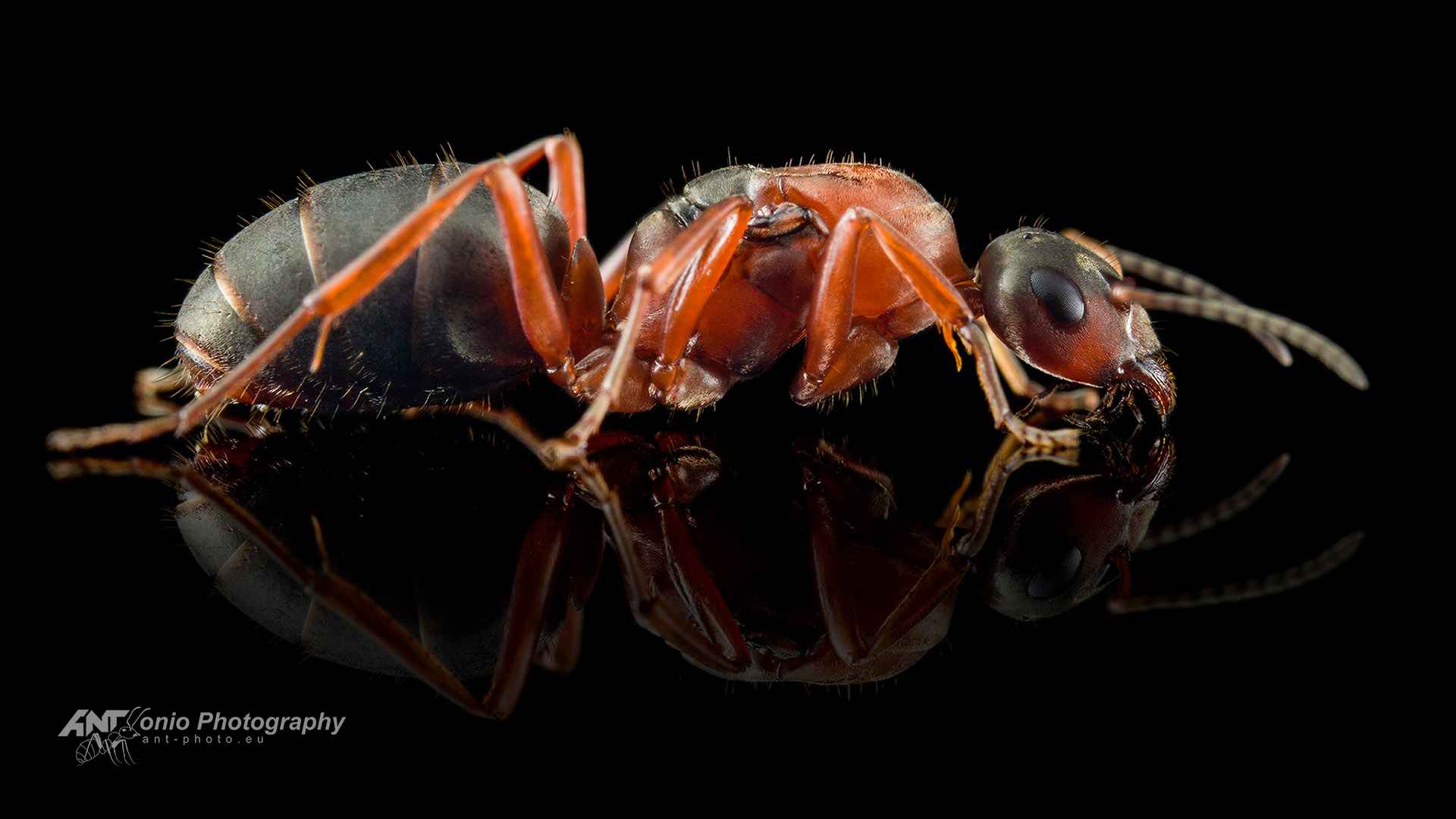
Formica
Formica rufibarbis
Nuptial Flight Calendar
Care Guide
Formica rufibarbis is one of the most rewarding species for anyone new to ant keeping, combining lively behaviour with a hardy and forgiving nature. These ants are known for their striking reddish-brown bodies and swift, energetic movements above ground. Colonies reach a mature size of several thousand workers, offering plenty of activity without the overwhelming scale of some larger species. The queen measures up to eleven millimetres and is claustral, meaning she will raise her first brood entirely on her own reserves – a great advantage for beginners who want to watch the founding process unfold without the need for regular feeding during the early weeks.
Workers vary in size between four and a half and eight millimetres, with the larger individuals often taking on more aggressive foraging and defence duties. Formica rufibarbis is a diurnal ant, so they are most active in daylight, and you will frequently spot them exploring their outworld and transporting prey or sugary droplets back to the nest. Their diet is versatile and easy to provide: they thrive on a mix of fresh insects such as fruit flies, mealworms, or small crickets, along with sugar water or honey water. They also appreciate honeydew when available, but a simple sugar solution and consistent protein supply will keep them strong. This dietary flexibility makes them less demanding than many other species.
Care difficulty
Caring for Formica rufibarbis is straightforward, making it an excellent choice for those just starting out. The queen's claustral founding means you can leave her undisturbed for several weeks until the first nanitics appear. Once the colony grows, their robust appetite and tolerance of a range of temperatures and humidity levels give the keeper plenty of room for error. As long as you provide food, water, and a quiet environment, these ants will reward you with steady growth and fascinating behaviour.
Housing
A suitable formicarium for this species should offer a dry nest chamber with a separate humid area – they prefer a humidity range of fifty to seventy percent, and the nest area can be kept slightly drier than the outworld. Temperatures between twenty and twenty-eight degrees Celsius suit them well; a heat cable or mat on one side of the nest allows the ants to choose their preferred temperature. Because Formica rufibarbis is an active forager, the outworld should be spacious and well-secured – they are capable climbers and will escape if given the chance. A layer of substrate or sand in the outworld helps them feel at home.
Hibernation is essential for this species. During winter, gradually lower the temperature to around six degrees Celsius and keep them cool for two to three months. Without this resting period, the queen’s lifespan and future brood production may suffer. Provide a small amount of water during hibernation, but withhold food.
First days after purchase
When your Formica rufibarbis colony arrives, place the formicarium in a quiet, dimly lit spot and let the ants acclimatise for at least twenty-four hours. Avoid opening the nest or disturbing them unnecessarily. During these first days, check that the test tube or nest section has access to clean water and a small drop of sugar solution placed carefully in the outworld. Do not offer live insects until the ants have settled and are moving normally. Watch for signs of stress – if they are running frantically or clustering away from the nest, reduce light and vibration further. With a little patience, you will soon see them begin to explore and accept food, and your colony will be off to a wonderful start.