Camponotus
Camponotus irritans
Nuptial Flight Calendar
Flight months: Jun, Jul, Aug, Sep
Care Guide
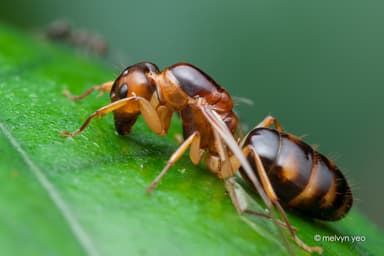
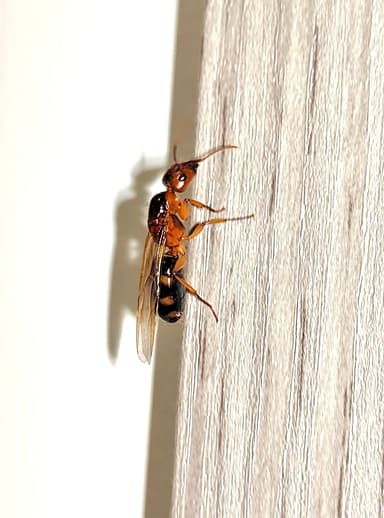
Camponotus irritans is a robust and visually striking carpenter ant native to the warm Mediterranean basin and North Africa, with confirmed range extending across southern Europe and into parts of western Asia (GBIF occurrence records; Bolton, 1995). Queens measure an impressive 11 to 14 millimetres, setting the stage for a strongly polymorphic worker caste that spans from nimble 5‑millimetre minors to formidable 10‑millimetre majors. This size variation creates a clear division of labour: minors fan out to forage, tend brood, and maintain the nest, while the broad‑headed majors act as living siege engines, crushing seeds and tough insect prey or blocking tunnel entrances with their massive heads. A mature colony can grow to around 10,000 individuals, transforming your setup into a continuously shifting metropolis. Because queens found claustrally, a newly mated female will seal herself away and raise her first generation entirely from her own body reserves, a process that offers the keeper a fascinating, low‑intervention window into the birth of a society. Perhaps most appealing for the hobbyist is that this species skips the traditional winter dormancy seen in temperate ants, remaining fully active year‑round under stable conditions.
With an intermediate care rating, Camponotus irritans sits just beyond the scope of absolute beginners, yet remains entirely manageable for anyone who has kept a founding colony before. The challenges lie in its physical prowess and its potential colony size: the large majors can test poorly sealed formicariums, capable of chewing through thin plastic or flimsy screen mesh, so all housing must be sturdy and escape‑proof. The growth potential also means you should have a plan for adding nest modules as the population expands. This species suits a keeper who has succeeded with smaller Camponotus or similarly sized ants and now craves a more dramatic display of polymorphism without stepping into the demands of truly advanced tropical species. The ants are largely crepuscular and nocturnal, though they will forage in daylight when temperatures are warm, so evening observation often rewards you with a bustling outworld.
Housing should replicate the warm, moderately dry conditions of their native habitat. Maintain a steady temperature between 22 and 28 degrees Celsius, ideally by applying a heat mat to one side of the nest to create a thermal gradient; this allows the ants to self‑regulate and accelerates brood development. Humidity requirements are moderate, staying within 40 to 60 percent — notably lower than many tropical species, so you must avoid persistently wet nests that can promote fungal growth. Nests made of ytong (autoclaved aerated concrete), plaster, or a natural sand‑clay mixture work beautifully, as they hold just enough moisture while permitting the ants to excavate and sculpt their chambers, satisfying their natural carpentry instincts. A thin layer of a sand‑loam substrate in a digging area gives the colony a medium to rearrange, reinforcing tunnel walls and increasing their security. The outworld should be connected with tubing at least 10 millimetres in diameter to comfortably accommodate the bulky majors, and it must include a well‑ventilated lid. As the colony approaches a few hundred workers, be ready to offer additional nest boxes; these ants will swiftly fill any room you provide.
Diet follows the familiar carpenter ant formula of protein and sugars. For protein, offer freshly killed insects such as fruit flies, small crickets, mealworms, or even tiny pieces of hard‑boiled egg two to three times per week, scaling up as the brood piles grow. Uneaten prey should be removed after a day to prevent spoilage and mite infestations. Carbohydrates can be supplied as a shallow pool of diluted honey (roughly 1:1 with water) or commercial ant nectar, while a sliver of apple or grape serves as a refreshing treat and a supplemental hydration source. Fresh water must be constantly available; a simple test tube reservoir with a cotton plug remains the gold standard, particularly vital during the founding stage when the queen should remain undisturbed. Once workers are foraging, place sugar liquids on a small piece of cotton to eliminate drowning risks. Many keepers find that offering a varied menu — rotating insects and occasionally dusting prey with calcium powder — contributes to visibly more robust brood.
No hibernation is required at all. You can keep temperatures stable through the winter months and the colony will happily continue rearing brood, allowing you to observe a steady rhythm of growth across the entire year. Some colonies naturally exhibit a mild slowdown in late autumn even without a temperature drop, a faint echo of the Mediterranean seasonality encoded in their biology, but this is subtle and requires no intervention. If you do notice a dip in foraging, first check that the heating is functioning and that the nest humidity has not drifted far below 40 percent, as overly dry conditions can trigger inactivity. Simply maintaining the recommended parameters will keep the ants in continuous motion.
The critical first days after bringing home a queen demand patience and minimal disturbance. Place her test tube in a completely dark, vibration‑free space and resist the temptation to peek more than once a week. Claustral queens are exquisitely sensitive to light and movement during founding; repeated checks often lead to egg cannibalism. When the first pale nanitic workers eventually emerge, you may offer a minuscule dab of honey on a slip of baking paper and a pre‑killed fruit fly or a single cricket leg. Observe whether the workers eagerly accept the offering — a sure sign the colony is settling into its new surroundings. A slight moisture gradient inside the tube, from damp cotton on one end to dryer on the other, is usually ideal. Should a small patch of mould appear, do not panic; the ants often isolate and manage minor outbreaks. Only if mould spreads aggressively should you consider a gentle transfer by attaching a fresh tube and letting the colony relocate at its own pace. In those early weeks, a hands‑off approach is your greatest tool, laying the groundwork for a vigorous, visually dramatic colony that will become a true centrepiece of your collection.