Lasius
Lasius nearcticus
Nuptial Flight Calendar
Flight months: Jul, Aug, Sep, Oct
Care Guide
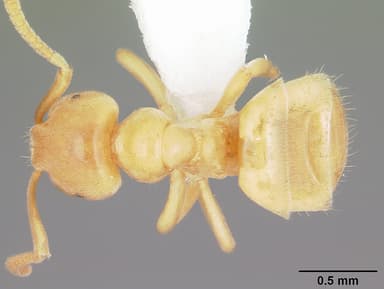
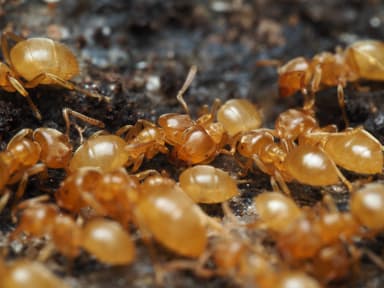
Lasius nearcticus, long known to myrmecologists under the former genus Acanthomyops, is a delightful subterranean ant prized by keepers for its characteristic citronella-like odor and fascinating symbiotic behaviors. Workers are monomorphic and modest in size, measuring just 3 to 4.5 mm, while the queen is substantially larger at 7.5 to 9 mm. Colonies mature to contain as many as 10,000 individuals, though enclosed formicaria usually see smaller, more manageable populations. In the wild, these ants excavate extensive soil galleries beneath stones and logs, where they tend honeydew-producing root aphids and scale insects — a trait that earned the group the name “citronella ants” and that, in captivity, gives the keeper an intimate view of a below-ground husbandry rarely seen. The species’ eastern North American range extends from the Great Lakes region south to the Gulf states, bounded roughly by 30° to 48° N latitude and 95° to 66° W longitude, as recorded in occurrence data. Nuptial flights occur on warm, humid afternoons from August through October, typically after a rain, making late summer the time to watch for newly mated queens (Wing 1968; Wilson 1955; Ellison et al. 2012).
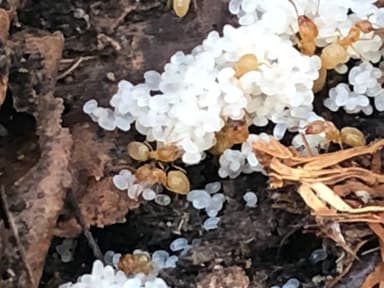
With a care difficulty rated intermediate, Lasius nearcticus is best suited to hobbyists who have already gained some experience with easier temperate ants, such as Lasius niger or Tetramorium, and who are ready to embrace the responsibility of a strict hibernation cycle. The primary challenges lie not in the ants’ day-to-day needs but in maintaining the high, steady humidity they require and in faithfully providing a cold winter rest. The founding queen is fully claustral, meaning she seals herself away in a chamber and never needs to forage until her first workers eclose. This makes the initial founding stage low maintenance, but the colony’s subsequent growth can be slow in its first year. Patient keepers will be rewarded, however, with a robust, industrious colony that exhibits strong tending behaviors and a complex division of labor among its workers — even though only a single minor worker caste is present, without physical polymorphism. The species’ deep amber to pale brown coloration and its habit of moving brood quickly underground when exposed to light only add to its appeal for the observant keeper.
Housing for Lasius nearcticus must replicate the cool, damp, enclosed conditions of subterranean life. Temperature should be kept between 18 and 26°C, with the sweet spot around 22–24°C; this range can be maintained by a small heat mat placed under one side of the nest for a gentle gradient, but only if the nest material does not dry out too rapidly. Humidity is the true linchpin of success, requiring a consistent 60 to 80% relative moisture. The best nest types are those that hold water well and allow the ants to excavate — a plaster or ytong block with integrated hydration reservoirs, or a soil‑filled terrarium with a moisture‑retentive clay‑sand mix, are both excellent choices. The ants will tunnel extensively, so a vertical nest section with a dark cover is ideal; a simple foraging arena attached to the nest provides a dry surface for feeding. Because these ants readily retreat from light into their galleries, the nest must be kept in darkness except for brief inspections, and any transparent nest walls should be shielded with red film or a fabric sleeve.
In the wild, Lasius nearcticus derives most of its energy from honeydew, and captive feeding must reflect this emphasis on liquid carbohydrates. Protein demands are met with small, soft‑bodied insects — fruit flies, pinhead crickets, or pieces of mealworm are all readily accepted, especially when the colony is raising larvae. Offer freshly killed prey twice a week, removing any uneaten remains after 24 hours to prevent mold. For sugars, provide a dilute honey‑water solution or maple syrup in a small cotton‑plugged tube; the workers will drink eagerly and share the bounty via trophallaxis. Fresh water should always be available, either through a test tube reservoir in the nest or a moistened plaster surface. A water feeder in the foraging arena, such as a tiny inverted tube on a cotton bed, serves as an additional safety net. Be mindful that too much free liquid in the nest can cause drowning, so all hydration must be capillary rather than pooling.
Hibernation is non‑negotiable for the long‑term health of Lasius nearcticus. The colony requires a cold rest period of roughly three to four months at about 5°C. As autumn approaches, gradually reduce the temperature and shorten the light cycle over several weeks; in practice, many keepers move the entire formicarium to a refrigerator or a cool cellar set exactly to that target. The nest must remain slightly moist but never soggy, as desiccation during diapause is a common cause of colony loss. In early spring, reverse the process with a slow warm‑up before returning the ants to their normal temperature. A queen that skips hibernation may lay fewer eggs or perish prematurely, and workers often become restless and die off — a clear sign of the colony’s deep‑seated biological clock (Wilson 1955).
When your queen or small founding colony first arrives, resist the impulse to inspect her constantly. Place the test tube or nest in a dark, quiet spot within the optimal temperature and humidity range, and allow at least 24 to 48 hours of undisturbed settling. Because the queen is claustral, she needs no food until her first workers emerge; you can, however, offer a tiny dab of honey on a piece of wax paper just outside the test tube entrance on day two or three, in case she is unusually hungry. Do not attempt to feed her in her chamber. Once nanitic workers appear, begin offering minute protein portions and a continuous carbohydrate source as described. Watch for signs of stress — a queen that paces restlessly or workers that are lethargic often signal humidity problems. With gentle patience, a stable microclimate, and strict adherence to the annual rhythm of winter chill, your Lasius nearcticus colony will develop into a thriving subterranean microcosm, offering years of intimate observation.