Iridomyrmex
Iridomyrmex purpureus
Nuptial Flight Calendar
Flight months: Oct, Nov, Dec
Care Guide
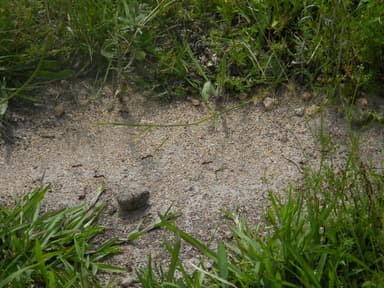
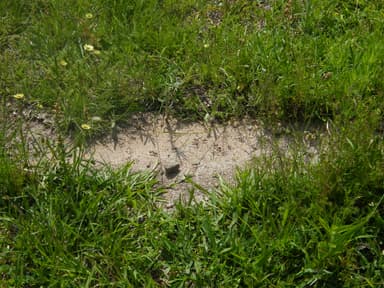
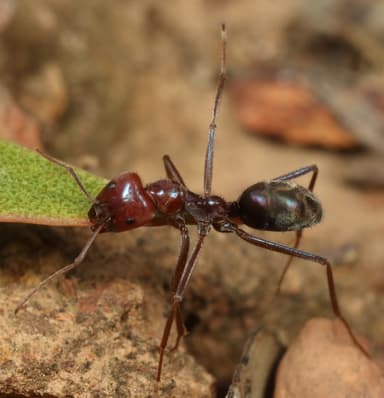
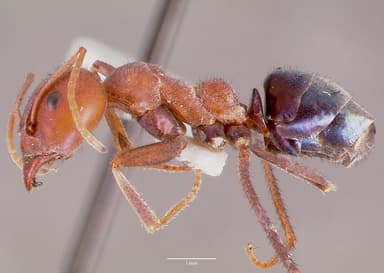
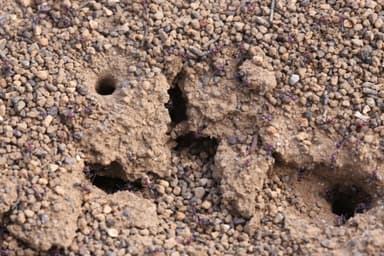
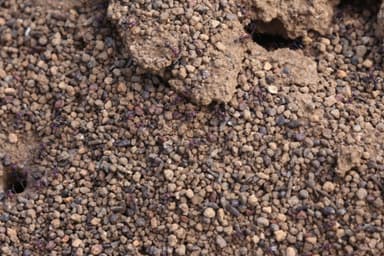
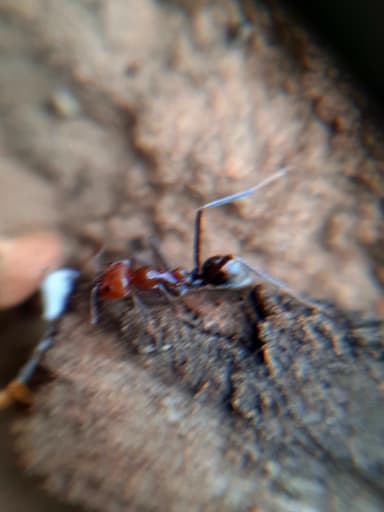
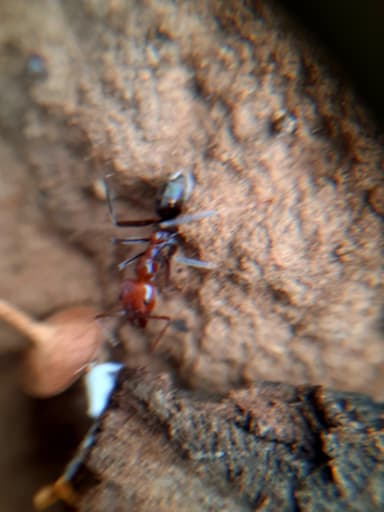
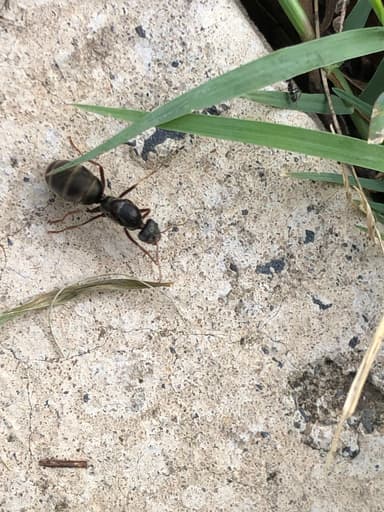
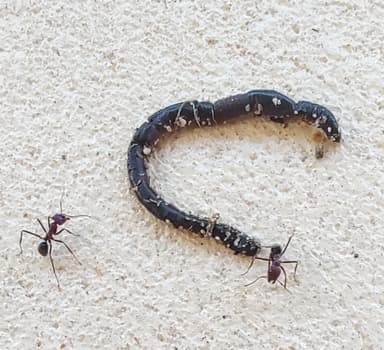
Iridomyrmex purpureus, the iconic meat ant of Australia, is a living spectacle of cooperation and industry. Queens measure a robust 12 to 14 millimeters, while the monomorphic workers range from 6 to 8 millimeters, all adorned with a characteristic metallic sheen that shifts from purplish-red to deep violet under light—hence the species name. Colonies in the wild can swell to over 300,000 individuals, often forming sprawling polydomous networks where multiple nests mounds are linked by well-maintained foraging trails (Greaves 1971). What truly captivates keepers is their sophisticated social architecture: they construct dome-shaped nests with sun-basking pebbles to warm the brood, coordinate mass raids on prey, and tend honeydew-producing insects like tiny ranchers. For a hobbyist, observing a meat ant colony is akin to watching a miniature civilization—they are relentlessly active, fiercely territorial, and endlessly fascinating subjects for any intermediate-level ant keeper.
With an intermediate care difficulty, Iridomyrmex purpureus is best suited for enthusiasts who have already successfully raised a few beginner species and are ready for a more demanding, large-scale colony. They are not ideal for novices primarily because of their explosive growth potential and impressive escape-artist tendencies; a mature colony can quickly overwhelm a poorly secured setup. However, for the prepared keeper, they are remarkably hardy and forgiving of minor environmental fluctuations. The founding is fully claustral, meaning a single queen needs no food until her first workers eclose, making the initial phase straightforward. Their active, diurnal nature provides a constant, engaging display, and watching their foraging columns organize and communicate via trail pheromones is a reward that justifies the extra vigilance required.
Housing these ants demands foresight and secure barriers. A spacious formicarium is non-negotiable—y tong or plaster nests with multiple chambers work well, but you must plan for expansion by offering additional nest modules or a generous outworld linked by tubing. Temperature should sit between 20 and 30°C, with a gradient created by a heat cable or mat on one side, allowing the colony to thermoregulate. Humidity is best maintained at 50 to 70 percent; a moisture gradient within the nest, such as a water source that wicks into part of the substrate, lets workers move brood to their preferred microclimate. In the foraging arena, a sandy-loam mixture mimics their natural soil and provides digging enrichment, though a simpler setup with a layer of fine sand and scattered pebbles works well. The outworld must be entirely escape-proof—apply a fluon or talc barrier and use a double-lid system if possible, because these ants are swift, curious, and will exploit any gap.
Feeding Iridomyrmex purpureus is straightforward but must scale with the colony. They are predominantly predatory, relishing protein-rich insects: crickets, mealworms, small roaches, and even freshly killed flies. Offer prey two to three times a week, adjusting frequency as the population grows; nymphs or pre-killed insects are safer for small colonies. Their carbohydrate appetite is equally vigorous—in the wild they lap honeydew from hemipterans and floral nectar, so provide a dish of sugar water, honey water, or a commercial ant nectar, replacing it regularly to prevent fermentation. A separate, pure water source via a test-tube drinker or a cottoned water dish is essential. They will also scavenge, but avoid overfeeding, which can lead to mold and mite problems in the nest.
Hibernation is not required for this species. Native to large swathes of Australia from semi-arid inland regions to coastal heathlands, Iridomyrmex purpureus does not undergo a true winter diapause. In captivity, maintain temperatures in the 20–30°C bracket year-round, and the ants will remain fully active, continuing to rear brood and forage. A natural seasonal cooling of a few degrees can occur without harm, but there is no need to artificially chill them for months. This makes them an excellent “tropical-style” species that keeps the keeper engaged across all seasons.
When your queen and her first workers arrive by mail, patience is paramount. Place the test tube in a dim, quiet spot and avoid any disturbance for at least 48 hours; the vibrations and light stress from shipping can cause her to neglect her eggs or even consume them. After this settling period, you may offer a micro-drop of sugar water on a sliver of foil, and, a day later, a tiny piece of pre-killed fruit fly or cricket leg—but only if she has workers to feed. Keep the tube attached to a small outworld but block the entrance with a plug until you see workers confidently foraging inside the tube. Once they begin to explore, allow access to the arena, but triple-check barrier integrity. Monitor condensation in the tube, as excessive moisture can drown ants, and watch for any signs of fungal growth. During these first weeks, resist the urge to feed heavily; a small colony has a slow metabolism, and uneaten food quickly spoils. As soon as numbers visibly increase, transfer them to their permanent nest, always ensuring the new housing is fully heated and humidified before the move. With calm, measured steps, you will be rewarded with a thriving colony that will dominate any room with its relentless energy and complex social choreography (Shattuck 1999; Andersen 2007).