Formica
Formica transmontanis
Nuptial Flight Calendar
Flight months: Jul, Aug, Oct, Nov
Care Guide
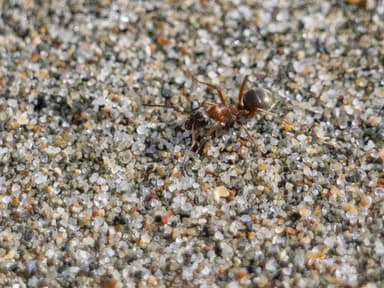
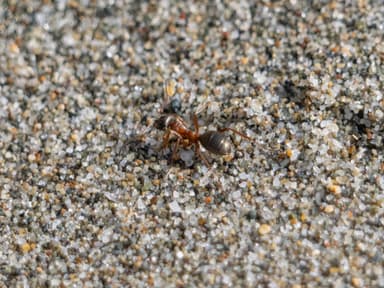
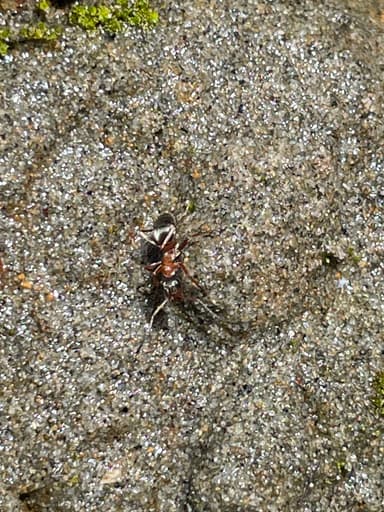
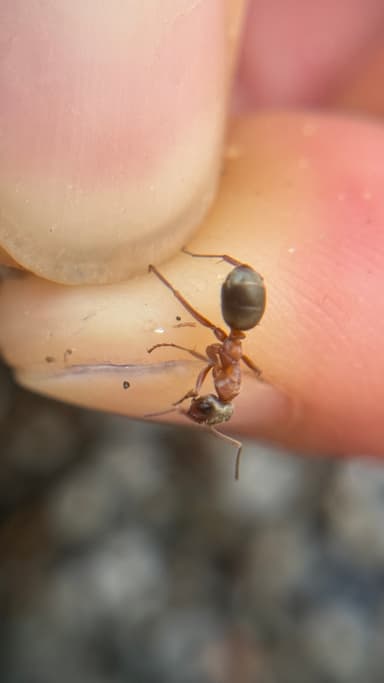
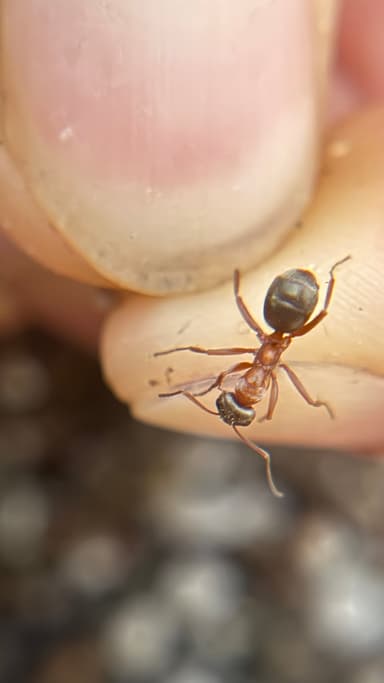
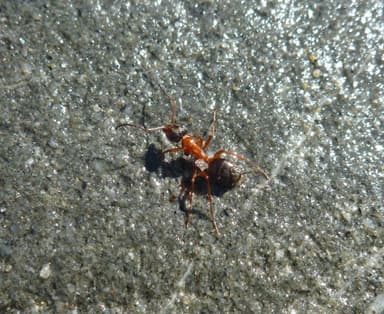
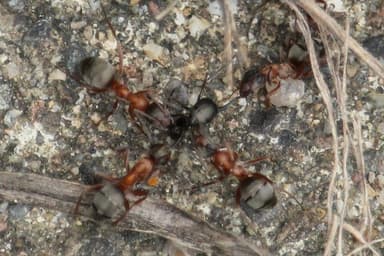
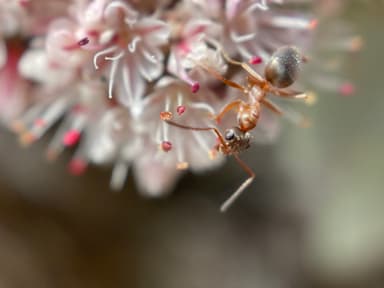
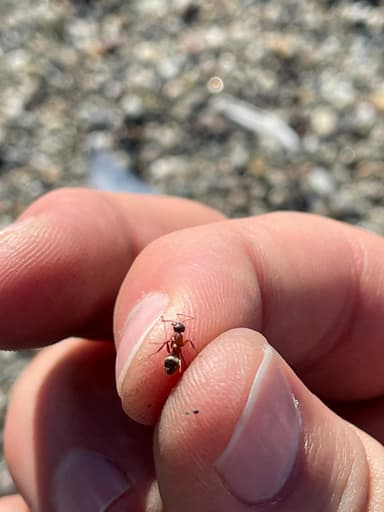
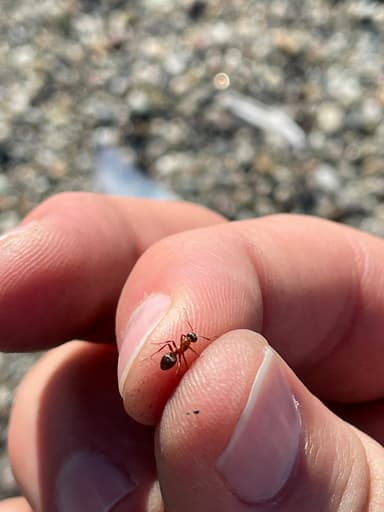
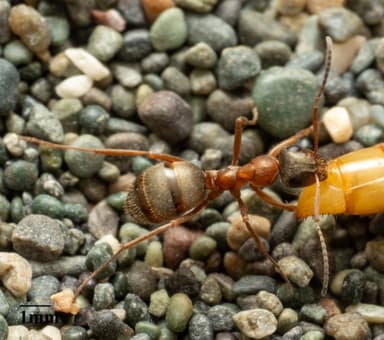
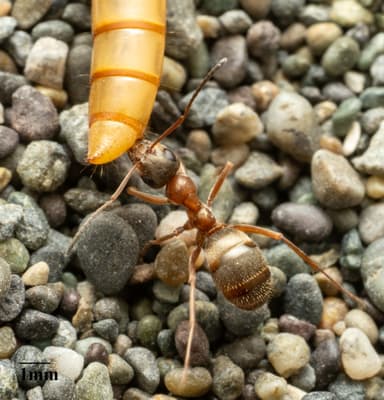
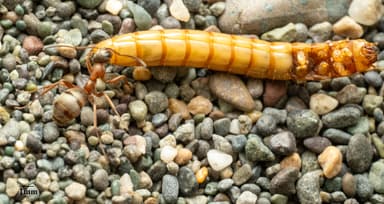
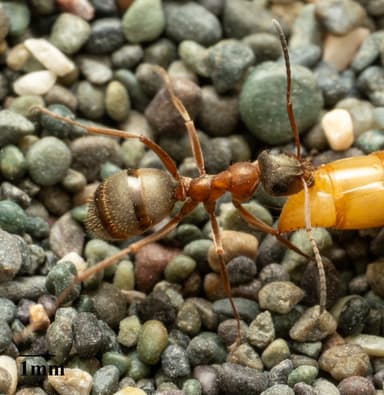
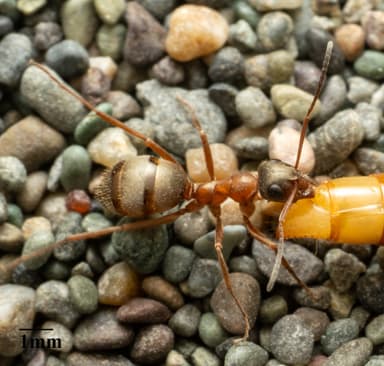
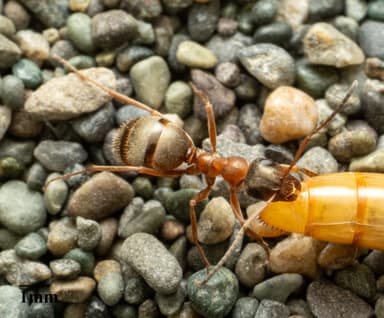
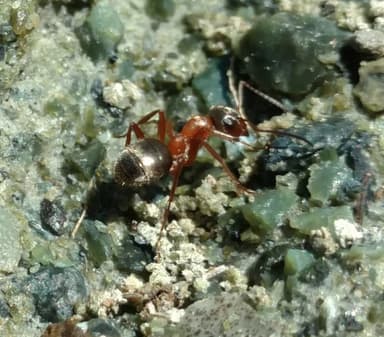
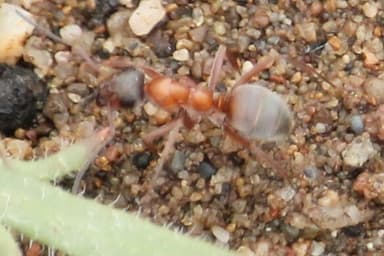
Formica transmontanis is a little-known but thoroughly absorbing species from the Pacific Northwest, ranging from the mountainous interiors of British Columbia down through Washington and Oregon to northern California, bounded by the Cascades and the Rockies. Workers are modest in size — between 4 and 7 millimetres — and strictly monomorphic, all falling into a single minor worker caste, which gives the colony a uniform, sleek appearance. The queen is noticeably larger at 7 to 9 millimetres, with a robust thorax that testifies to her early parasitic adventures. Colonies are fairly compact by Formica standards, topping out around 5,000 individuals, yet they exhibit the characteristic verve of the fusca group: swift, alert, and quick to spray formic acid when perturbed. What truly sets F. transmontanis apart — and elevates its husbandry to an art — is its mode of foundation. Like many of its close relatives, it is a social parasite: a newly mated queen cannot start a colony on her own. She must infiltrate a nest of a host species, usually another member of the Formica fusca complex, kill or subdue the resident queen, and coax the host workers into raising her own brood. This delicate hostage-taking defines the ant’s life history and shapes every aspect of its captive care (Francoeur 1973; AntWiki).
Because of that parasitic founding, Formica transmontanis is unequivocally a species for expert keepers. This is not a colony one can simply purchase as a single queen and expect to thrive. Successful husbandry requires either acquiring an already established colony — with host workers and a mated, egg-laying queen — or having the experience and resources to introduce a callow F. transmontanis queen to a small colony of a compatible Fusca-group host, a procedure that demands patience, a steady hand, and a willingness to accept losses. Once past the founding stage, however, the species is relatively robust, showing the resilience typical of montane Formica. The keeper must simply be prepared for a year-round commitment: a climate-controlled nest, a disciplined feeding schedule, and an uncompromising hibernation. This is not a forgiving ant for anyone who might forget a temperature check. Experienced hobbyists who relish the challenge of social parasites and appreciate the subtle beauty of a fast-moving, medium-sized brown-black Formica will find F. transmontanis deeply rewarding.
Housing for F. transmontanis should mirror the cool, well-ventilated mountain forests it calls home. A formicarium made of plaster, ytong, or a naturalistic soil-sand-clay mix works beautifully, provided it offers a gradient of humidity. The ideal temperature range sits between 18 and 28 degrees Celsius, with a slight day-night fluctuation that mimics the chamise-covered slopes of its native range. Humidity is best kept moderate, between 40 and 60 percent, avoiding both saturated, mould-prone corners and desiccating aridity. A partial soil or sand substrate in an outworld allows workers to engage in their natural digging behaviour, though they are not compulsive excavators; a few centimetres of loosely packed material will suffice. The nest chamber should have a moistened area — perhaps a water tower or a regularly dampened plaster block — that the ants can choose to occupy or leave, while good airflow prevents stagnation. As they are adept escape artists, a secure, tight-fitting lid with a fine mesh or a fluon barrier is non-negotiable.
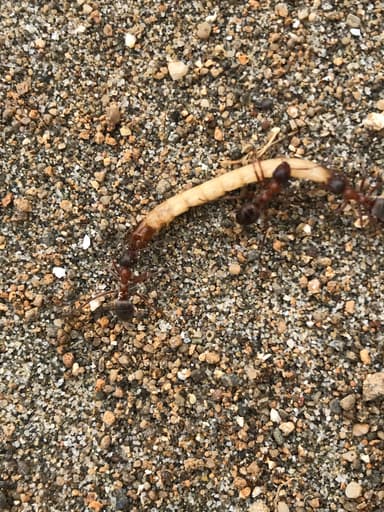
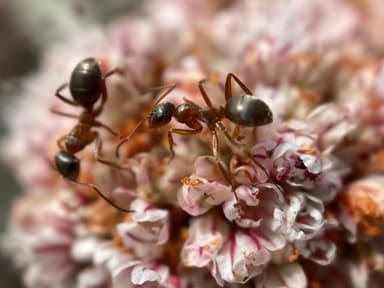
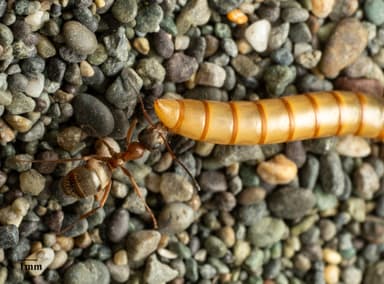
Feeding these ants is a straightforward but important ritual. Protein should come from the usual insect prey: fruit flies, small crickets, chopped mealworms, or freshly killed moths, all of which workers will eagerly dismember and carry back to the larvae. In the wild, F. transmontanis tends aphids and scale insects, lapping up honeydew; in captivity, a carbohydrate source is just as essential. Offer a small blob of organic honey, a slice of ripe melon, or a standard sugar-water solution (about one part sugar to four parts water) placed on a foil raft or in a shallow drinking dish. Fresh, clean water must always be available, ideally in a test tube set-up inside the outworld, as these ants drink frequently. Remove uneaten protein after two days to prevent spoilage, and adjust quantities to match the colony’s growth — a thriving colony of several hundred workers will pull down a lot of insect biomass during the larval season.
Hibernation is not optional for Formica transmontanis; it is a physiological imperative. The ants need a true winter pause, with a steady temperature of around 5 degrees Celsius for at least three to four months, typically from late October through February. At this temperature the colony clusters quiescently, their metabolism slowing to a crawl. A dedicated refrigerator, a wine cooler, or a cold room that maintains this target without freezing is the safest approach. Before entering hibernation, taper off the protein and allow the colony to clear its guts, then gradually reduce the temperature. During dormancy, check monthly for moisture and mould but disturb them as little as possible. Skipping or shortening this cold period will likely result in a weak, dwindling colony that loses productivity and ultimately fails, so careful planning is a prerequisite.
When you first bring an established F. transmontanis colony home — perhaps as a young mated queen with a cluster of host workers and her own first larvae — give them the gift of quiet. Place the sealed transport tube or container inside their new formicarium without forcing them out; let them emerge on their own terms. A drop of sugar water right at the entrance and a small misting of clean water will reassure them without overwhelming. Wait at least 24 hours before offering the first insect, and start with a pre-killed, soft-bodied small fly or cricket segment. Observe for signs of agitation: workers running frantically with brood, constant drinking, or alarm posture. A calm settlement usually sees the queen retreat to a damp chamber, with workers soon exploring and foraging. The nuptial flights apparently occur on warm, sunny July or August afternoons after rain, though records are scant (AntWeb, low confidence). With patience, that small pocket of wild mountain industry will settle into a stable, active colony, a miniature window into the fir-and-pine hills of the Northwest.