Dorymyrmex
Dorymyrmex bicolor
Nuptial Flight Calendar
Flight months: Feb, Mar, Apr, Jun, Jul, Aug, Sep
Care Guide
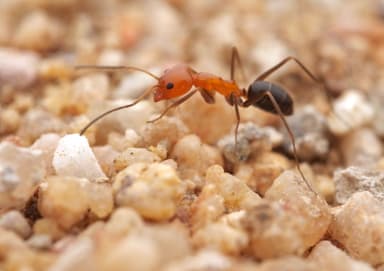
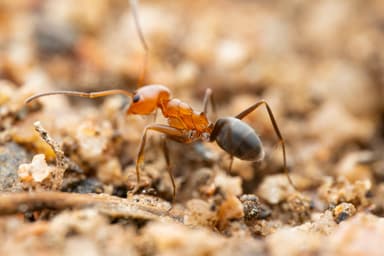
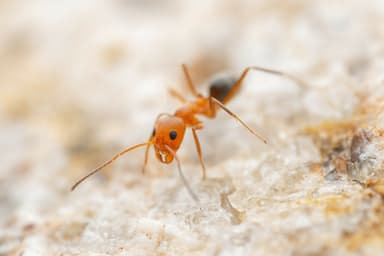
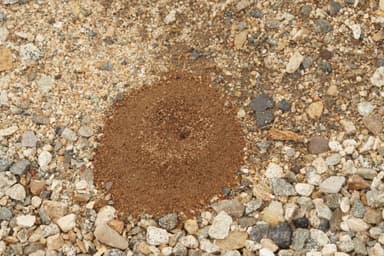
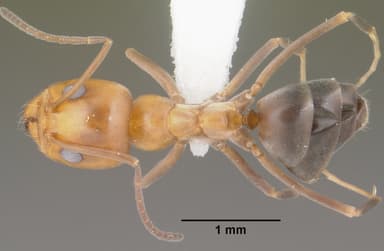
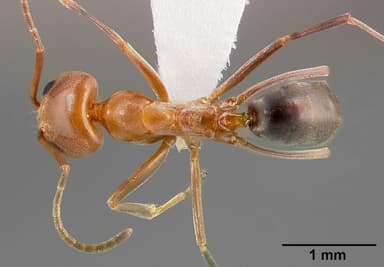
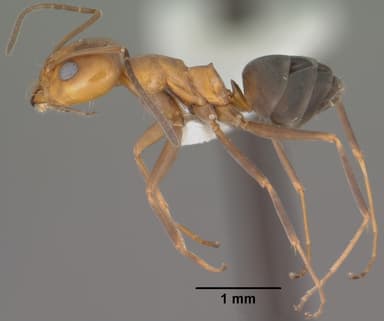
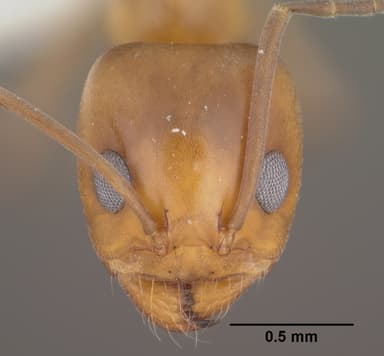
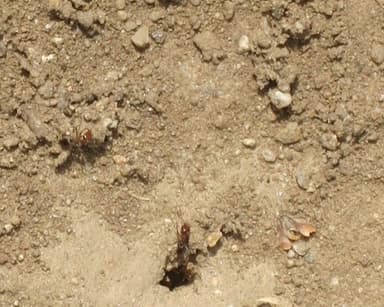
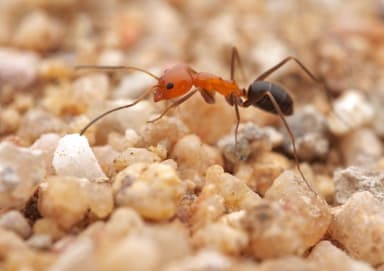
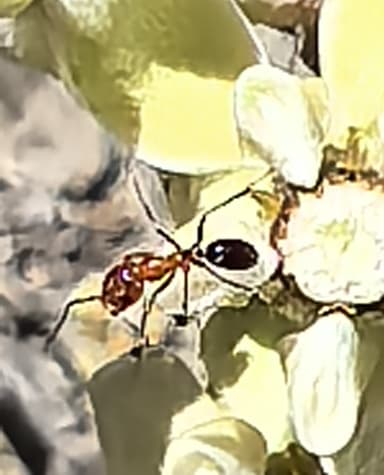
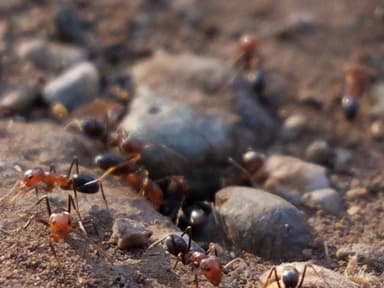
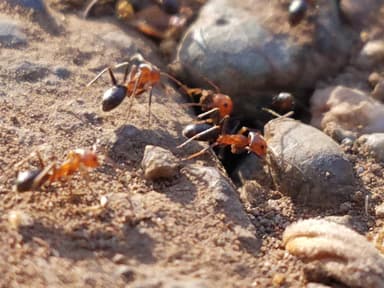
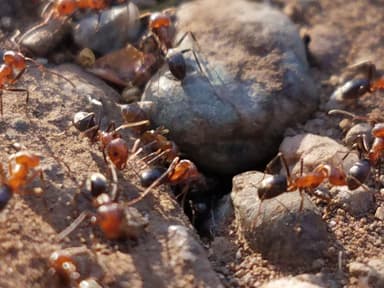
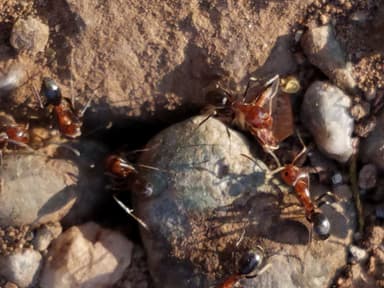
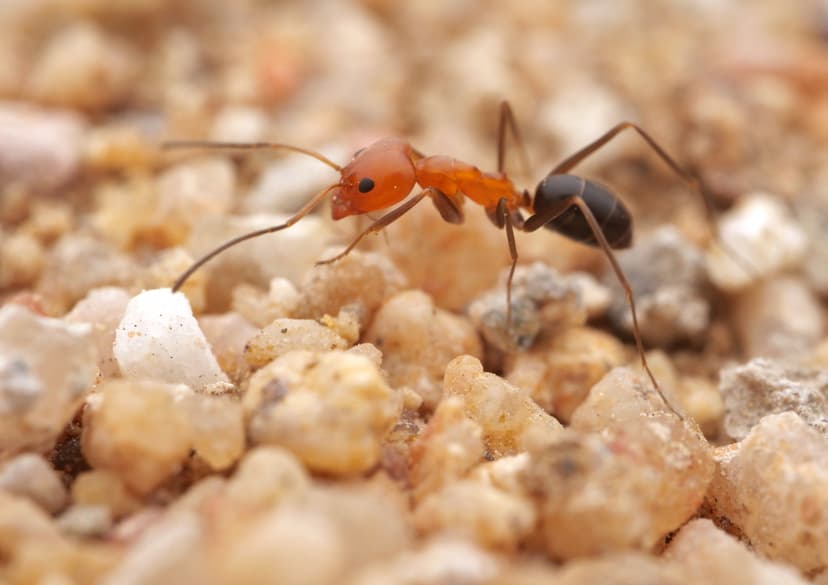
Dorymyrmex bicolor, a member of the pyramid ants, is a delightfully frenetic species native to the arid lowlands of western North America, from the deserts of the Baja Peninsula north into the Great Basin. Queens measure a robust 6–8 mm, while their monomorphic workers range from a mere 2.5 to 4 mm, sporting a distinctive two-toned look — a reddish head and thorax that contrasts sharply with a dark, glossy gaster. This small size belies the colony’s eventual heft: mature nests can house up to 10,000 individuals, a ceaseless river of foragers that erupt from crater-like mounds in the sand. What makes D. bicolor truly captivating is its background as a thermophilic sprinter. Watching them navigate a dry foraging arena in full midday heat, antennae twitching, reveals an ant supremely adapted to sun-scorched earth. They are non-stinging, relying on speed and chemical defenses, and their claustral, single-queen founding means you get to witness the quiet, underground miracle of a colony built from one determined female (Snelling 1995; AntWiki).
In terms of care, D. bicolor sits at an intermediate difficulty level, best suited for keepers who have already mastered humidity gradients and the art of containing tiny escape artists. This is not a beginner’s species. Their lightning pace and modest dimensions allow them to exploit any gap in a formicarium seal, and they are prone to chaos during feeding or cleaning. Patience is rewarded, however. They suit the hobbyist who delights in behavioral observation more than hands-on interaction, someone who appreciates the challenge of replicating desert conditions. The colony is sensitive to overhydration yet demands a precise thermal profile, making them a satisfying puzzle for those who enjoy tinkering with environmental controls.
Creating a fitting home means thinking like a bajada wash. Temperature must be maintained between 22°C and 30°C, with a clear basking spot at the upper end reaching 30°C while the nest core can be slightly cooler. Humidity is the real crux: keep it tightly between 30% and 60%, erring on the lower side. A bone-dry nest with a limited, well-ventilated hydration source is essential, as chronic dampness invites fungal collapse. Naturalistic soil, a loam-sand mix, or a ytong block carved with shallow, horizontal chambers works beautifully; a deep sand layer in an outworld allows them to express their natural excavation behaviors. Use a heat cable or lamp on one side to create a smooth thermal gradient, and never allow water to pool. Reference Snelling’s (1995) habitat notes confirm they nest in open, well-drained ground, so ensure a mesh lid for ample airflow. The foraging arena should be spacious and arid, mimicking the cracked desert flats where these ants make their living.
Feeding these miniature runners requires a steady supply of small insect protein and liquid sugars. Offer pre-killed or stunned fruit flies, pinhead crickets, and chopped mealworms twice weekly for the hungry brood. Workers are avid collectors of carbohydrates: a tiny drop of honey, maple syrup, or sugar water on a piece of foil will soon be mobbed. In nature they tend aphids and lap nectar, so a fresh sugar source should always be available. Supply water via a test tube sip or a micro-feeder, but keep it away from the nest substrate to prevent accidental humidity spikes. Because they are so small, adjust prey size to their jaws — a worker can be overwhelmed by a thrashing cricket. Their response to food is immediate and intense, so feeding time is a spectacle best watched through a magnifier.
Dorymyrmex bicolor requires a proper hibernation period, a non-negotiable winter rest at around 15°C. In their native range, winters are mild but distinct enough to slow their metabolism; skip this, and queens often cease laying, leading to a gradual colony decline. Reduce temperatures gradually in autumn, holding the hibernation temperature for 3–4 months, and keep the nest dry throughout. Only a tiny water source, far from the brood, is needed. You’ll notice activity dwindle until the workers cluster around the queen in a dormant mass. When spring returns, warm them slowly and resume feeding with a small drop of sugar water and a freshly killed fruit fly to test their vigor.
The first days after your D. bicolor colony arrives are critical. Unbox the test tube or shipping container in a sealed, well-lit space to prevent escapes — these ants are famously rapid. Place the tube in a darkened, draft-free area at about 25°C and let them settle undisturbed for 12–24 hours. After the initial rest, offer a tiny droplet of sugar water near the tube entrance, but refrain from protein for a day or two; a stressed queen may reject food or be jostled. Watch for her to begin grooming and showing interest in the water. If you’re transferring them to a nest, connect it with a short, dry tube and let them explore at their own pace, a process that can take days. The main red flags to monitor are prolonged inactivity, refusal of sugar after 48 hours, or workers dying in large numbers — these signal stress or poor conditions. With steady hands and a desert-dry setup, your colony will soon pour forth, a ribbon of tiny, restless life ready to turn an ant farm into a stage.