Tetraponera
Tetraponera rufonigra
Care Guide
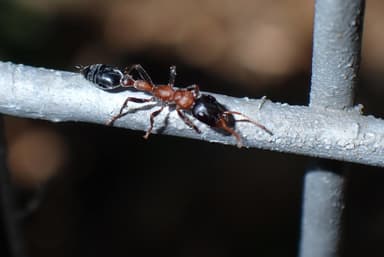
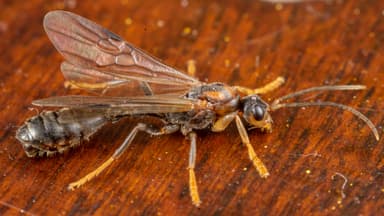
Tetraponera rufonigra is a strikingly slender and agile ant species, often recognized by its contrasting black and reddish coloration. These ants are naturally arboreal, nesting in hollow twigs and branches in tropical environments. Colonies remain moderate in size, typically housing between 300 and 1,500 workers. The queen measures 8–10 mm, while workers are slightly smaller at 5–7 mm, both sharing a sleek, elongated body shape that allows them to dart through narrow tunnels with remarkable speed. One of the most fascinating aspects of this species is its semi-claustral founding strategy: the newly mated queen must leave the nest to forage for food during the early stages of colony development, a behavior that adds an extra layer of engagement for the keeper.
Care difficulty
Keeping Tetraponera rufonigra is a rewarding challenge best suited for intermediate ant keepers. The semi-claustral founding means the queen requires regular feeding during the initial weeks, so a steady supply of small insects and sugar water is essential. These ants are fast-moving and can be sensitive to disturbances, but with consistent care they develop into a robust and active colony. Their diet consists primarily of insects such as fruit flies, small crickets, and mealworms, complemented by sugar water or honeydew. No hibernation is needed, so they remain active year-round when kept at appropriate temperatures.
Housing
Providing the right environment is key for Tetraponera rufonigra. Because these ants are arboreal, the formicarium should offer vertical climbing surfaces and narrow nesting spaces that mimic hollow twigs or branches. A setup with thin, interconnected chambers and a separate outworld works well. Temperature should be maintained between 24–30°C, and humidity levels must be kept high — around 70–80% — as the brood is sensitive to drying out. Regular misting of the nest area and a water source in the outworld will help achieve these conditions. Avoid excessive ventilation that lowers humidity. These ants also appreciate a quiet, vibration-free environment, as sudden disturbances can cause stress.
First days after purchase
Upon receiving your Tetraponera rufonigra colony, place them in a warm, dimly lit space and allow several days for acclimatization. Minimize opening the nest or handling the setup. Ensure the queen has easy access to food and water; small insects like freshly killed fruit flies can be offered once every two or three days. Observe from a distance to confirm that the queen is feeding and that the workers are tending to the brood. Patience during this period is crucial — once the first generation of workers emerges, the colony will gain stability and begin exploring more confidently. With proper care, this elegant species will reward you with an energetic and fascinating display of arboreal life.