Tetraponera
Tetraponera nigra
Care Guide
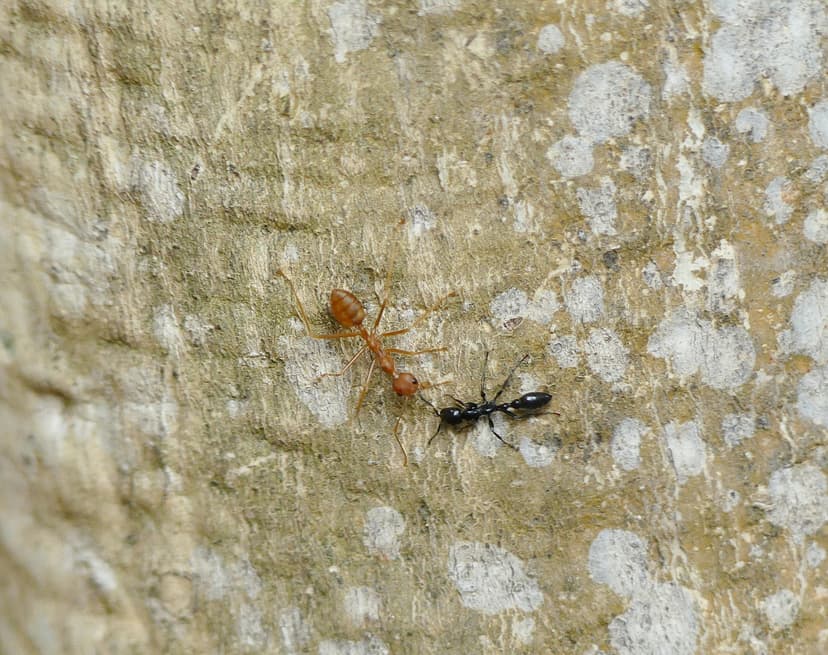
Tetraponera nigra is a strikingly slender and agile ant species, perfectly adapted to life in the trees. The queen, measuring 7–9 mm, is sleek and dark, while the workers range from 4–6 mm, all sharing a streamlined body built for navigating narrow hollow twigs and stems. Unlike many ground-dwelling ants, Tetraponera nigra does not display obvious polymorphism—workers are monomorphic, but their speed and venomous sting more than compensate for the lack of size variation. Their colonies typically reach between 100 and 1,000 workers, offering a manageable but lively display for the intermediate keeper.
In the wild, these ants are accomplished hunters, actively pursuing small insects and supplementing their diet with sweet secretions. In captivity, they thrive on a balanced menu of protein-rich insects—such as fruit flies, small crickets, or mealworms—and sugar water or honey water. Their semi-claustral founding style means the queen must leave the nest to forage during the first weeks, which requires a bit more attention than fully claustral species. However, this behavior is fascinating to observe, as the queen bravely brings back food to her tiny initial brood.
Care difficulty
Tetraponera nigra is best suited for keepers who have some experience with founding colonies. The semi-claustral phase demands patience and a steady supply of small prey, as the queen cannot rely solely on her metabolic reserves. Once the first workers emerge, care becomes more straightforward, but the ants remain sensitive to disturbances. Their intermediate difficulty rating reflects the need for consistent humidity and temperature control, as well as a watchful eye during the vulnerable early stages.
Housing
These ants require a formicarium that mimics their natural arboreal environment. A setup with hollow branches, cork tubes, or vertical chambers works well. The nest should be kept at 24–28°C with a relative humidity of 60–80%, achieved by regular moistening of the substrate or a connected hydration system. Tetraponera nigra does not hibernate, so warmth and food must be available year-round. The outworld should offer climbing structures and a shallow water source, as these ants are not strong swimmers. Avoid sudden vibrations or bright lights—though less skittish than some species, they appreciate a quiet, stable environment.
First days after purchase
Upon receiving your Tetraponera nigra colony, transfer the ants to their new formicarium with minimal disturbance. Place the setup in a warm, dim spot and refrain from checking on them too often for the first few days. Offer a small drop of sugar water and a single tiny insect near the entrance, then step back. Observe from a distance to ensure the queen accepts the food. During this acclimation period, keep humidity high and avoid abrupt temperature changes. With a calm start, your colony will soon reveal the elegant, predatory nature that makes Tetraponera nigra such a rewarding species.


