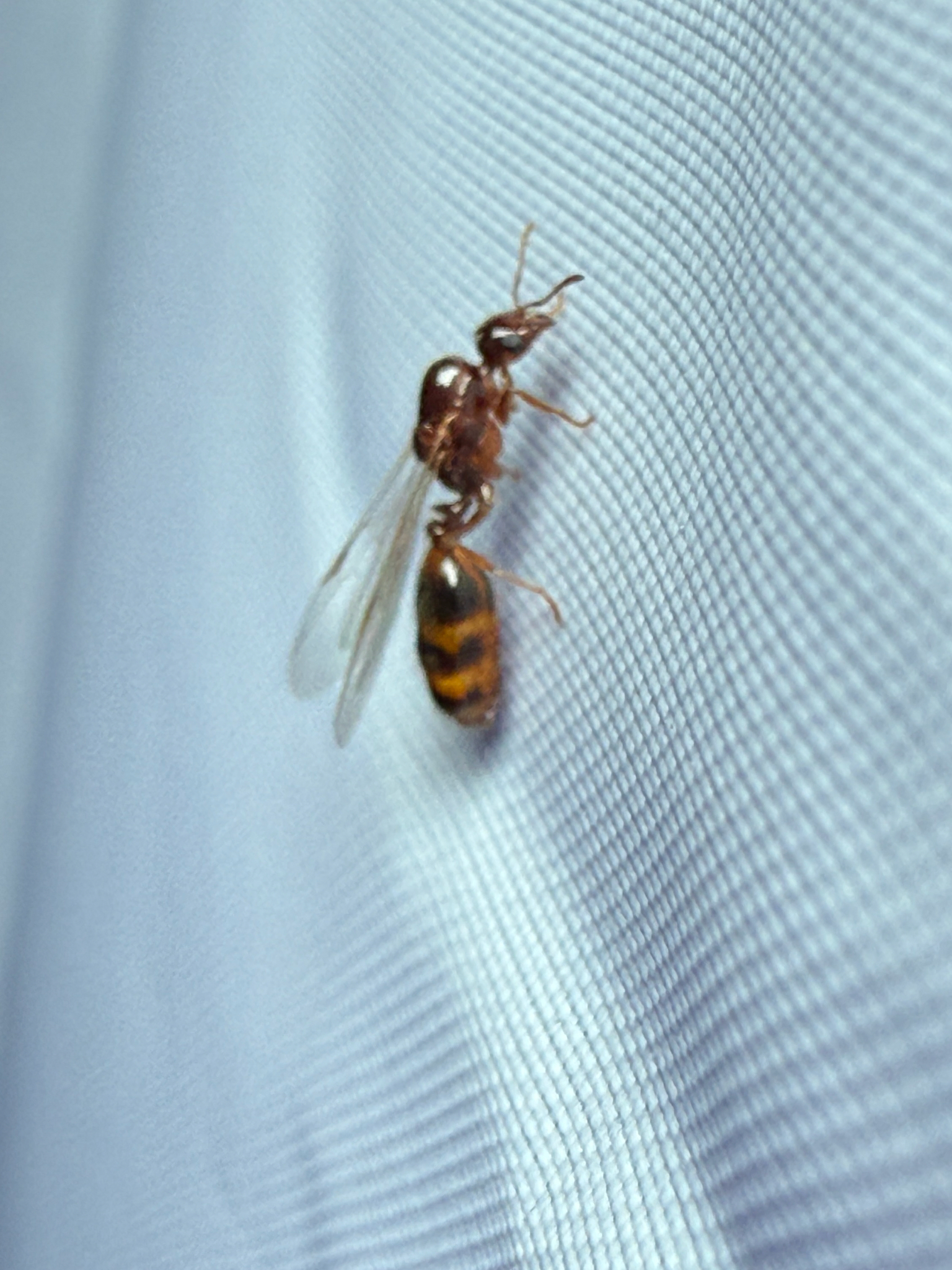
Solenopsis
Solenopsis geminata
Care Guide
Solenopsis geminata, the tropical fire ant, is a species that commands respect and fascination in equal measure. These ants are renowned for their fiery temperament, rapid colony growth, and remarkable adaptability. The queen, measuring 7–9 mm, initiates the colony through claustral founding, sealing herself in a chamber and rearing the first generation entirely from her stored reserves. Workers are strongly polymorphic, ranging from 3 mm minors to robust 6 mm majors, and they display a striking reddish-brown coloration that makes them unmistakable. When disturbed, they erupt in a coordinated defense, delivering a painful sting that has earned them their common name. A mature colony can swell to 150,000 workers, creating a bustling, highly organized society that is a joy to observe—provided you respect their space.
Care difficulty
Keeping Solenopsis geminata is best suited for intermediate ant keepers. While their claustral founding makes early stages relatively straightforward, their aggressive nature and need for secure enclosures demand extra attention. They are not a species for beginners seeking a low-interaction pet; instead, they reward keepers who appreciate dynamic behavior, rapid expansion, and the challenge of managing a fast-growing colony. Their diet is versatile: they eagerly hunt insects, drink sugar water, collect seeds, and consume protein sources, making feeding simple but requiring regular provision to sustain their high metabolism.
Housing
Providing the right environment is crucial. These ants thrive at temperatures between 24–30°C and humidity levels of 50–70%. They do not hibernate, so a consistent warm setup is needed year-round. A formicarium with a soil or sand-based substrate suits their natural burrowing instincts best, as they dig extensive tunnel networks and may mound soil at the entrance. Escape prevention is paramount—a generous layer of fluon or oil on the walls, plus a tight-fitting lid, is non-negotiable. The nesting area should be kept moderately humid, while the outworld can be drier. Offer a heat source (cable or mat) on one side of the nest to create a temperature gradient, allowing the ants to thermoregulate. These fire ants are sensitive to vibrations and sudden light changes, so place their home in a quiet, dim area.
First days after purchase
Upon receiving your colony, transfer them gently into a pre-set formicarium that has been warmed and lightly moistened. Place the setup in a calm, low-traffic location and leave them undisturbed for at least 48 hours to acclimatize. Provide a small drop of sugar water and a tiny insect (like a crushed cricket) near the entrance—but avoid opening the lid too frequently. Observe through the transparent walls; within a few days, you should see workers exploring and beginning to excavate. Resist the urge to handle or feed heavily during this settling-in period. Patience now will pay off in a confident, growing colony that will soon display the incredible coordination and fiery spirit that make Solenopsis geminata one of the most rewarding intermediate species to keep.