Polyrhachis
Polyrhachis ammon
Care Guide
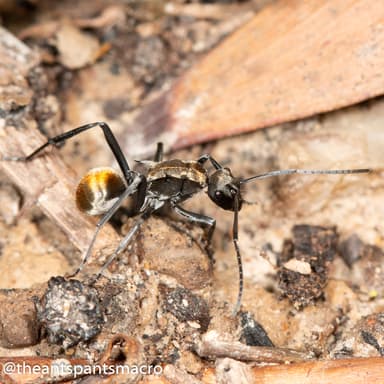
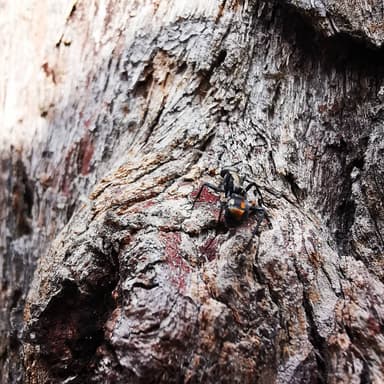
Polyrhachis ammon is a visually striking species, instantly recognizable by the sharp, backward-curving spines on its thorax and a subtle golden-green metallic sheen that catches the light. The queen, measuring 8–10 mm, is robust and dark, while workers are slightly smaller at 5–7 mm and equally well-armored. Unlike many ants that rely on a large worker force, these ants maintain modest colonies of 200 to 1,000 individuals, yet they are anything but dull. Their active, diurnal foraging habits and fascinating nest-building behavior—often using silk produced by their own larvae to bind leaves or plant fibers—make them a joy to observe for any hobbyist ready for a step up from beginner species.
Care difficulty
Keeping Polyrhachis ammon is best suited for intermediate ant keepers. Their claustral founding means the queen does not need feeding during the early stages, which simplifies the first few months. However, the colony is sensitive to abrupt changes in temperature and humidity, requiring a stable environment within 22–28°C and 40–60% relative humidity. Unlike many temperate ants, they do not need a hibernation period, so year-round activity is the norm. Their diet is varied—they eagerly take insects such as fruit flies, mealworms, and crickets, and also appreciate sugar water, diluted honey, or artificial honeydew. A balanced protein and carbohydrate intake is essential for brood production and worker vitality.
Housing
A formicarium with good ventilation and a separate outworld works well for this species. Because they are active during the day and appreciate warmth, a heat cable or mat (placed only on one side of the nest) helps create a thermal gradient. The nest area should be kept moderately moist but never waterlogged; the outworld can be drier. Unlike seed-storing species, Polyrhachis ammon do not need extra space for granaries, but they do appreciate vertical structures, twigs, or artificial leaves that mimic their natural nesting environment. Some colonies will weave silk into the substrate if provided with soft materials, adding an extra dimension of natural behavior. Reduced vibration and bright light are important—these ants are easily stressed by sudden disturbances, especially in smaller colonies.
First days after purchase
When your new colony arrives, place the entire setup in a quiet, dimly lit spot and resist the urge to inspect them constantly. Give the ants at least 24–48 hours to acclimatize. During this time, ensure they have access to fresh water (preferably in a test tube or through a wet cotton ball) and a small drop of sugar water to stabilize their energy. Avoid offering large live prey until the colony shows active foraging. After a few days, you can begin offering tiny insects like pinhead crickets. Keep a close eye on humidity—if the nest dries out, the queen may become sluggish. With patience and consistent care, your Polyrhachis ammon colony will grow into a shimmering, spine-covered spectacle that rewards your efforts with endless activity.