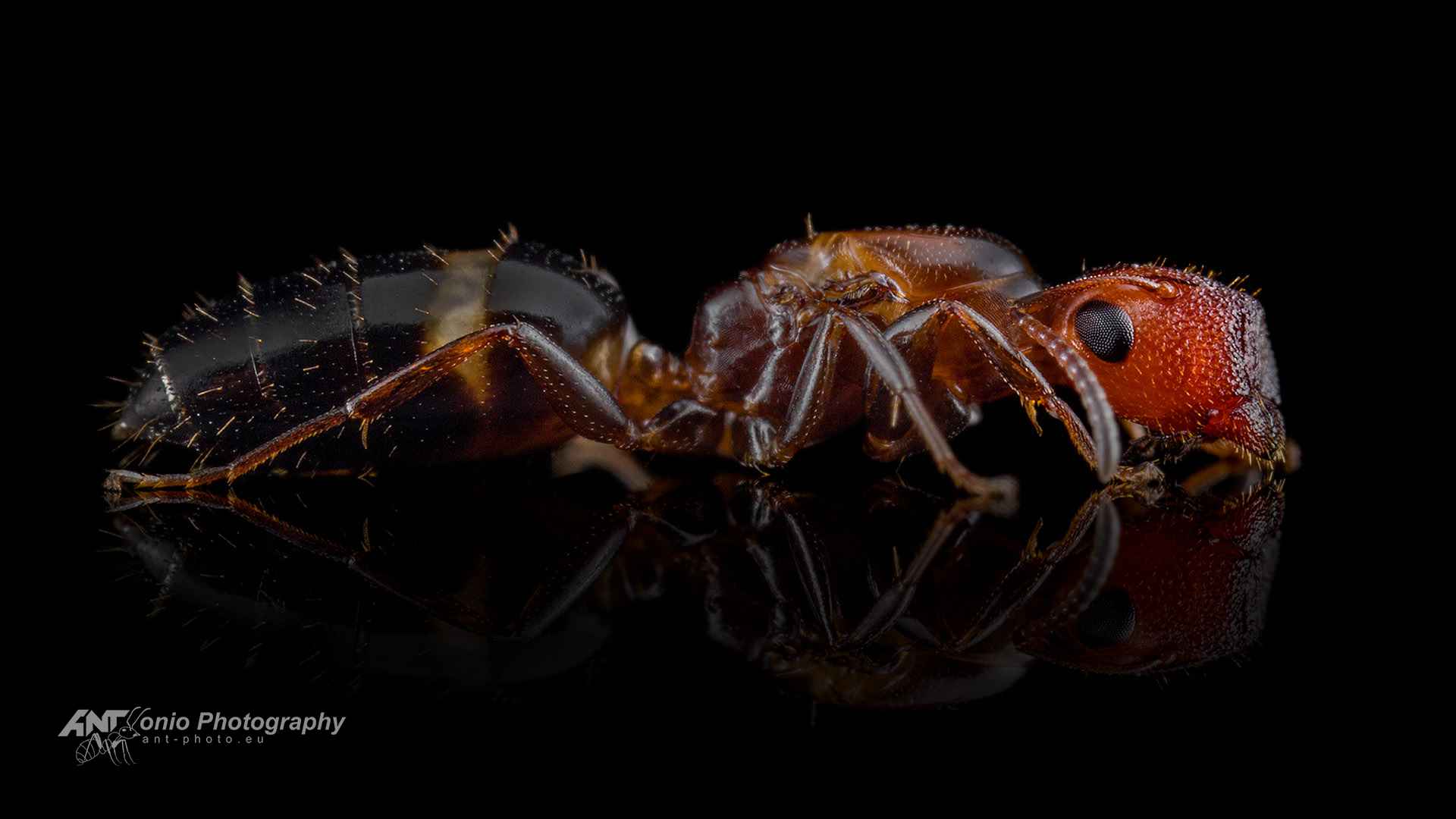
Colobopsis
Colobopsis truncata
Nuptial Flight Calendar
Care Guide
Colobopsis truncata, often called the “door-head ant” or “plug-headed ant,” is one of the most visually distinctive species in the ant world. What truly sets this species apart is the presence of phragmotic workers — soldiers with enlarged, perfectly rounded, cork-shaped heads that they use to physically block the nest entrance. When a threat approaches, these specialized workers plug the tunnel opening with their heads, creating a living door that can seal the colony off from predators, parasites, or even desiccating air. The colony typically consists of a single queen measuring 7 to 9 mm, with workers ranging from 3 to 5 mm. Despite their small size, these ants are bold and highly coordinated, and their unique defensive behavior makes them a constant source of fascination for keepers.
Colobopsis truncata are claustral founders, meaning the queen seals herself inside a chamber after mating and raises her first brood without foraging. This makes the founding stage relatively low-maintenance. Once the first workers emerge, the colony grows slowly but steadily, reaching between 300 and 1,500 individuals at maturity. Their diet is flexible: they eagerly take small insects like fruit flies or mealworms for protein, and they also thrive on sugar water, honeydew, and diluted honey. Offering a varied diet supports brood development and keeps worker activity levels high.
Care difficulty
Keeping Colobopsis truncata is best suited for intermediate keepers. While their claustral founding simplifies early colony establishment, the species has specific humidity and temperature requirements that demand attention. They are also sensitive to disturbance during the early stages. Providing a quiet, stable environment is critical — vibrations and bright light can cause stress, especially when the colony is small.
Housing
A suitable formicarium for Colobopsis truncata should mimic their natural arboreal habitat. They prefer nests with small, snug chambers and narrow tunnels that can be easily blocked by the phragmotic workers. A setup with a test tube or a small acrylic nest connected to an arena works well. Temperature should be maintained between 22 and 27°C, and humidity kept in the 50 to 70% range — the nest area should be slightly more moist than the outworld. These ants also require a hibernation period during winter; gradually lower the temperature to around 10°C for two to three months. Without this rest, the colony’s health and reproductive cycle may suffer.
First days after purchase
Upon receiving your Colobopsis truncata colony, place the formicarium in a calm, dimly lit spot and allow the ants to settle undisturbed for at least 24 hours. During this acclimation period, check that the nest remains adequately moist and that a small drop of sugar water and a protein source are available in the foraging area. Avoid opening the nest or shining bright lights into the entrance. Over the next few days, you may notice a phragmotic worker positioning itself at the opening — this is a good sign that the colony feels secure. With patience and consistent care, these living door-keepers will reward you with a truly unique window into ant behavior.