Polyergus
Polyergus breviceps
Nuptial Flight Calendar
Flight months: Jul, Aug, Sep
Care Guide
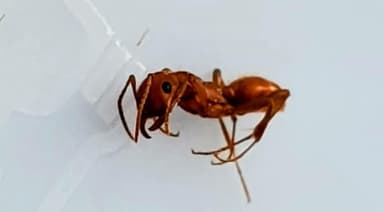
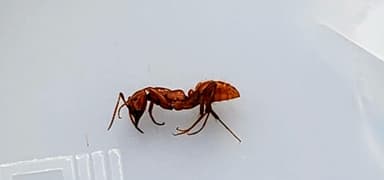
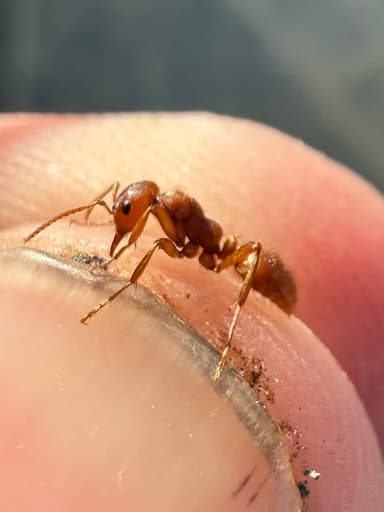
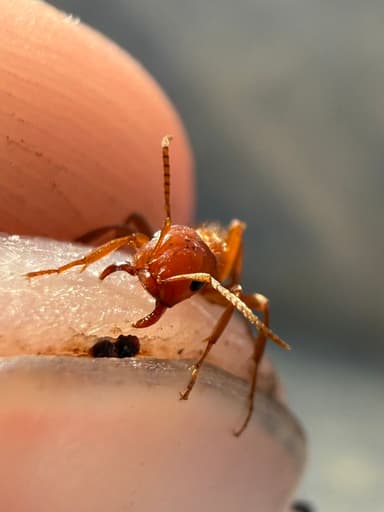
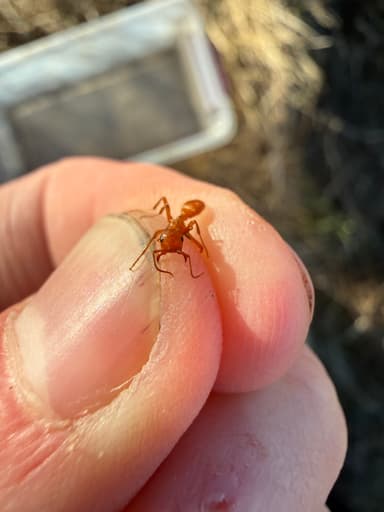
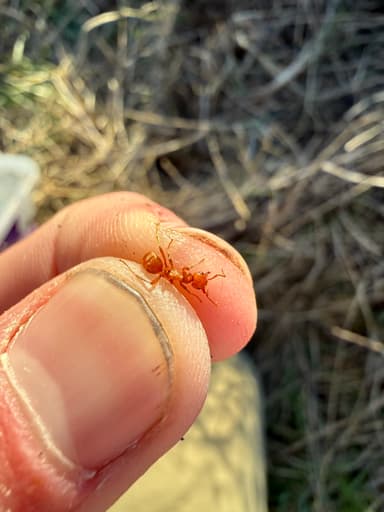
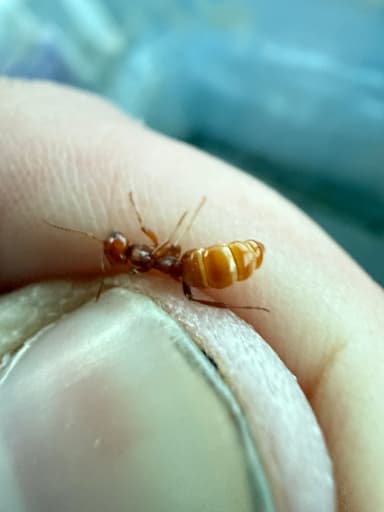
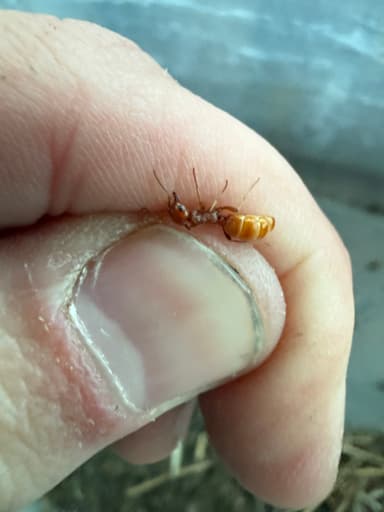
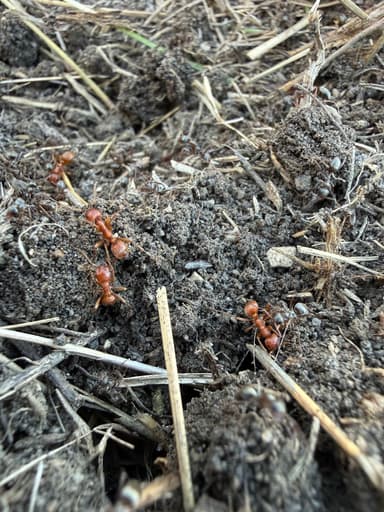
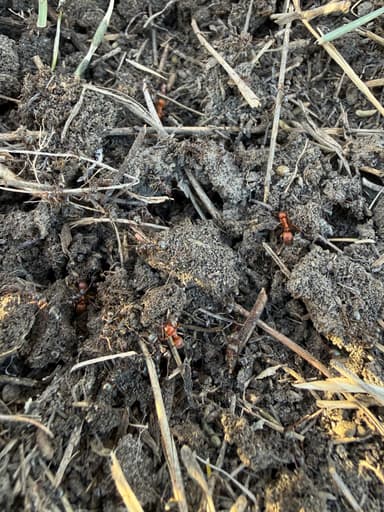
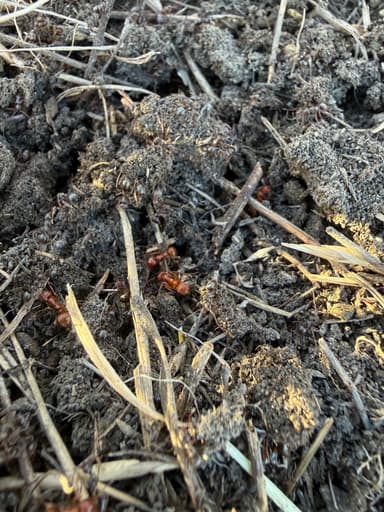
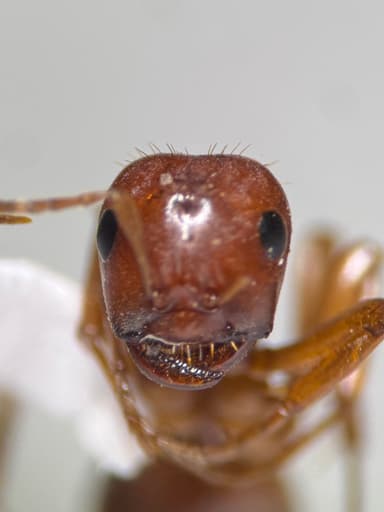
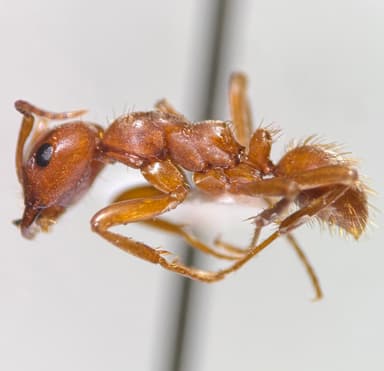
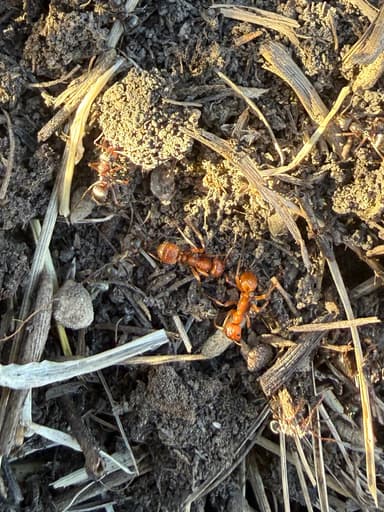
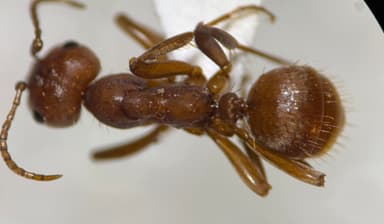
Polyergus breviceps, commonly called the western slave‑maker ant, is a striking and behaviourally complex species that enthralls advanced myrmecologists. The workers, measuring a modest 6–8 mm, and the larger queens at 8–10 mm, are clad in a polished, deep reddish‑brown exoskeleton that gleams under light. Their most arresting feature is the pair of sickle‑shaped mandibles, useless for routine tasks but exquisitely adapted for piercing the exoskeletons of defending ants during their infamous slave raids (Trager 2013). This is an obligate social parasite: a Polyergus breviceps colony cannot survive without a workforce of kidnapped ants from the Formica fusca group. The parasite workers never forage, feed themselves, or care for their own brood; instead, they devote their energies entirely to raiding neighbouring Formica nests, stealing pupae that will eclose into loyal servants. A mature colony can number up to 3,000 individuals, but the majority of that populace consists of the assiduously acquired slave ants, who perform all the domestic chores. This macabre yet mesmerizing interdependence makes Polyergus breviceps one of the most extraordinary ants a keeper can ever experience, revealing the extremes of social evolution in real time.
Given the colony’s total reliance on a healthy supply of host workers and brood, caring for Polyergus breviceps is unambiguously an expert‑only endeavour. You must not only master the husbandry of the slave‑maker but also maintain a robust source of Formica pupae, typically by rearing parallel colonies of a suitable host species such as Formica argentea or Formica subsericea. A single misstep—a failed raid introduction, a decline in slave numbers, or neglecting to provide fresh brood—can doom the entire parasite colony within weeks. This ant is recommended solely for seasoned keepers who have already successfully kept parasitic Lasius or other Formica species and possess the patience and resources to constantly manage host colonies. The reward, however, is unparalleled: witnessing a meticulously organized raid, the parasite workers striding out in a tight column, chemically mimicking their target’s odour (Topoff 1990), and returning with pilfered cocoons is a spectacle no free‑living species can offer.
Housing must prioritize the well‑being of the slave workers, as they are the true logistical heart of the nest. A setup that works beautifully for the host alone will work here. Use a nest with high humidity retention, such as a plaster, ytong, or soil‑lined formicarium, offering a gradient of 40–60% moisture. The temperature should be kept between 20°C and 28°C, ideally with a warm spot around 26°C where the brood can develop quickly. Because slave‑maker workers never dig or build, a foraging arena connected to the nest is sufficient; substrate can be simple sand or fine gravel—though a small layer of soil in a corner may give the slaves a place to deposit waste. Crucial is the physical separation of the slave‑maker queen and her retinue from the host pupae until they eclose and integrate; introduce slave pupae into the foraging area so that newly emerged host workers acclimatise to the odour of the parasite queen and are accepted seamlessly. Provide multiple chambers so that the slaves can move the brood around in response to microclimatic changes, mimicking the deep, secure nests this species inhabits in its western North American range (AntWeb).
Diet is entirely mediated by the slave workers, who behave exactly like their free‑living kin. They require a steady supply of insect protein for larval development: small crickets, fruit flies, or mealworm pieces, freshly killed or flash‑frozen to avoid injury, should be offered several times a week. Carbohydrates are equally vital; slave workers eagerly lap up diluted honey, maple syrup, or sugar water, which should be provided via a cotton‑wicked feeder in the foraging arena to prevent drowning. Fresh water must be available at all times, either through the nest’s hydration system or a separate water tube. Interestingly, the parasitic Polyergus workers cannot feed themselves and depend entirely on the slaves to regurgitate liquid food directly into their mouths. Thus, the keeper’s job is simply to ensure the slave force is well nourished—the rest happens automatically. Overfeeding protein should be avoided to prevent mould, as the slaves will cache leftovers; remove uneaten food after 24 hours.
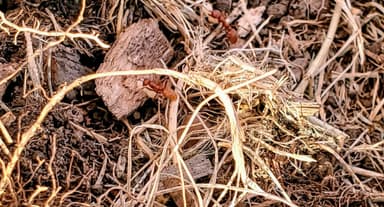
Hibernation is an absolute physiological requirement for Polyergus breviceps, not an optional dormancy. In their native range stretching from the Sierra Nevada to the Rocky Mountains and as far north as southern Canada, colonies experience a prolonged winter. In captivity, they must be subjected to a temperature of around 5°C (40–41°F) for three to four months. Prepare for diapause by ceasing protein feeding two weeks beforehand so the digestive tracts clear, and gradually lower the temperature over a week to avoid shock. Many keepers place the formicarium inside a dedicated wine cooler or a refrigerator that does not freeze, monitoring temperature with a digital probe. During hibernation, the slave workers cluster around the queen and remaining brood; check monthly that some condensation is present but the nest is not waterlogged. A well‑timed, uninterrupted cold period is essential to reset the colony’s internal clock and trigger the queen’s egg‑laying cycle upon warming.
The first days after acquiring a Polyergus breviceps queen are the most delicate. She will arrive with a small retinue of slave workers and a handful of Formica pupae, or you may receive her alone and must immediately introduce host pupae. Place the entire assembly in a small, dark, well‑humidified hibernation cell or starting nest at 22–24°C and leave it undisturbed for 24‑48 hours. Resist all temptation to peek. The key is to watch for acceptance: the slave workers should show no aggression toward the queen, and the newly eclosed hosts should approach her calmly, antennating and beginning to feed her. Offer a tiny dab of sugar water on a piece of foil near the nest entrance on the second day; if the slaves drink, they will transfer it. Keep the foundation nest small—a large space can cause stress and dissociation. Do not provide insect protein until the slave force numbers at least a dozen, as a rush of dead prey can trigger alarm. The greatest danger in these early days is the queen being killed by fearful or unfamiliar host workers; always use pupae from a host species known to be highly compatible, and when introducing fresh pupae in the weeks following, rub them gently against the existing slave workers to homogenise colony scent before placing them inside. With meticulous care and deep respect for their parasitic nature, a Polyergus breviceps colony will not merely survive but will unfold one of the natural world’s most dramatic social narratives right on your desk.