Camponotus
Camponotus parius
Nuptial Flight Calendar
Flight months: May, Jun, Jul, Aug
Care Guide
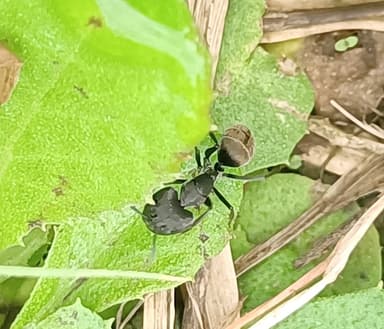
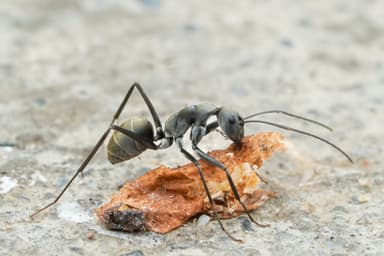
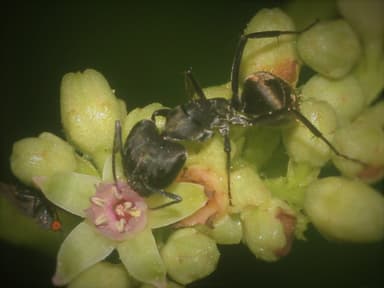
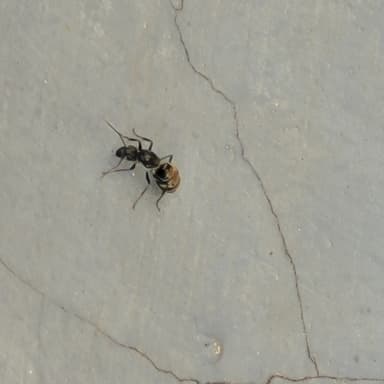
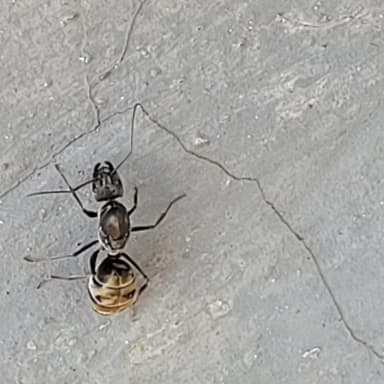
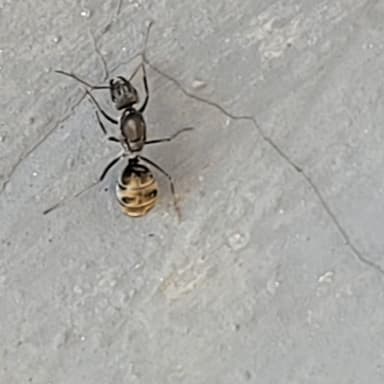
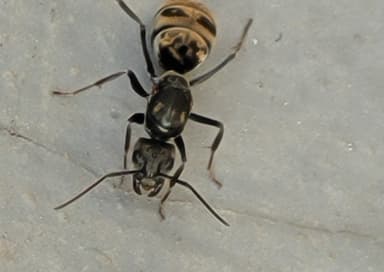
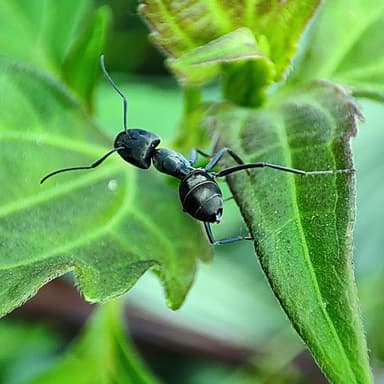
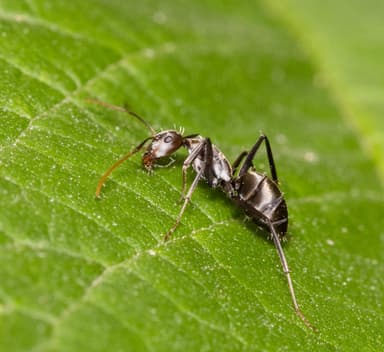
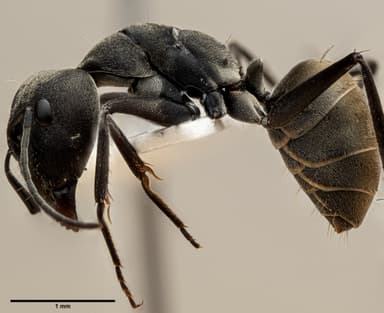
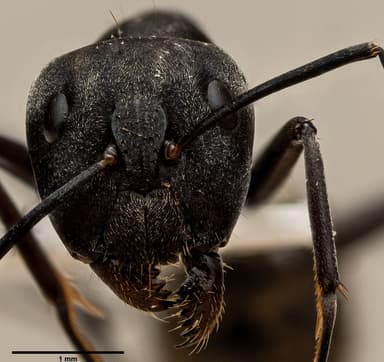
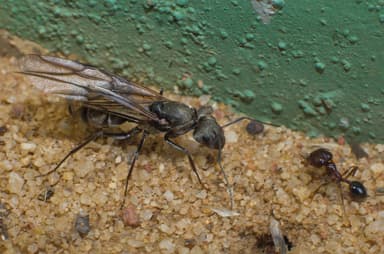
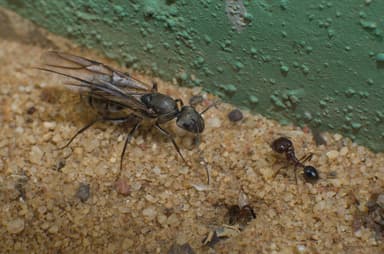
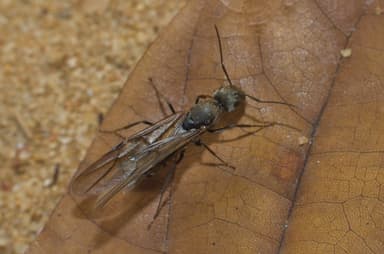
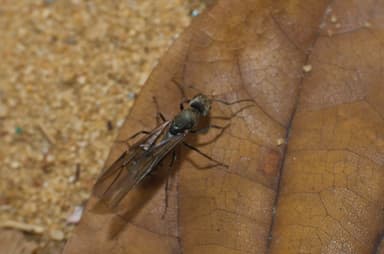
Camponotus parius is a striking carpenter ant hailing from the warm, humid lowlands of South and Southeast Asia, with a native range stretching from India and Sri Lanka eastward to Thailand and Vietnam (Bingham 1903, GBIF occurrence data). Queens are robust and measure between 15 and 18 mm, while workers exhibit a marked polymorphism typical of the genus, with a two‑caste system of minor and major workers spanning 7 to 13 mm. The majors, with their disproportionately large, squarish heads and powerful mandibles, serve primarily as defenders and food processors, whereas the smaller minors handle most foraging, brood care, and nest construction. Their coloration is elegantly understated: a deep, glossy black body contrasts with legs and antennae that are often a rich brownish‑amber, and the gaster may show subtle golden pubescence under proper lighting. Colonies in the wild can reach sizes of around 10,000 individuals, and while that figure is a ceiling, captive colonies regularly develop into impressive, highly active populations that are a joy to observe. For keepers who appreciate species with distinct physical castes and a vigorous, diurnal presence, C. parius offers a fascinating window into the complexity of carpenter ant social life without the sprawling demands of the very largest Camponotus species.
Given its moderate growth rate and sensitivity to environmental swings, Camponotus parius is best classified as an intermediate‑difficulty species. It is well‑suited to keepers who have successfully maintained a beginner‑friendly ant colony through its first year and are ready to engage with slightly more nuanced humidity and temperature management. The queen founds claustrally, meaning she seals herself away and raises her first tiny nanitic workers on her fat reserves alone — a forgiving process for the keeper, as no feeding is required during the founding stage. However, the colony’s tropical origins mean that consistent warmth is non‑negotiable. Without a hibernation period, these ants remain active year‑round, requiring steady care throughout all seasons. This makes them an excellent choice for enthusiasts who enjoy watching foraging activity and brood development even in winter, but it also demands a commitment to maintaining stable conditions without the seasonal break that temperate ants allow.
In captivity, C. parius thrives in a setup that mimics the warm, moderately humid microclimate of its native monsoon‑influenced habitats. A temperature gradient of 22–30°C works perfectly, with an optimal sweet spot around 26–28°C; heating can be provided by a gentle heat mat or cable placed on one side of the nest, allowing the ants to self‑regulate by moving between warmer and cooler zones. Humidity should be kept between 50% and 70%, which can be achieved with a water feeder in the outworld and a moisture gradient within the nest. Carpenter ants appreciate a nest with some humidity pockets, so a grout, ytong, or 3D‑printed nest that allows for regular misting or a water tower is ideal, while ensuring that one area remains drier for seed and rubbish storage. A loose substrate like a sand/clay mix in the outworld helps maintain ambient humidity and gives the ants a naturalistic digging and foraging surface. Ventilation is crucial to prevent mold outbreaks; a fine screen mesh lid on the outworld will keep occupants secure while allowing ample airflow. As the colony grows, be prepared to expand living quarters — a mature colony of several thousand workers will need a multi‑chamber setup or a series of interconnected nests to prevent overcrowding and sanitation issues.
Diet for Camponotus parius should reflect their dual need for protein to fuel brood production and carbohydrates to power the adult workforce. As a carpenter ant, they lack a crop for extensive social regurgitation, so liquid sugars are eagerly lapped up directly from a feeder. Offer fresh honey diluted with water, sugar water, or a commercially prepared ant nectar, but always in small, spill‑proof containers to prevent drowning. For protein, provide small insect prey — fruit flies, pinhead crickets, mealworm segments, or roach nymphs — killed or stunned to avoid injury to the workers. A colony will happily accept cuts of cooked chicken or egg yolk on occasion, though live insects stimulate more vigorous foraging behavior. All fresh food items should be removed after 24–48 hours to prevent spoilage. An always‑available water source is essential; a test‑tube waterer plugged with cotton or a small water tower in the outworld works well. Lightly dusting insect prey with a quality calcium or multivitamin supplement once a week is beneficial, though not strictly necessary with a varied diet.
A distinct advantage of keeping this species is that no hibernation period is required. In their native range, conditions remain warm year‑round, and the colony simply reduces activity slightly during cooler, drier spells without entering a true diapause. In the home setup, this means you should maintain stable temperatures in the 22–30°C band through all seasons. A sudden temperature drop below 20°C for prolonged periods can stall brood development and stress the colony, so a small thermostat‑controlled heater is a wise investment. Because there is no winter rest, the colony will breed continuously, and the queen will sustain a steady rhythm of egg‑laying as long as resources are plentiful. This non‑stop activity is part of the species’ appeal, but it does mean you cannot “pause” care; planning for a reliable heat source during power outages or vacations is a necessary part of responsible keeping.
When your Camponotus parius arrives, whether as a queen with her first few workers or a young colony of a few dozen individuals, the priority is to provide immediate calm and consistency. Transfer them gently into their new habitat without shaking or tapping, and if possible, simply connect the shipping tube or container to the new nest and let them move in on their own. Keep them in dim light or even total darkness for the first three to five days, with only the gentle heat source running; this allows them to settle, deposit brood in a favored chamber, and release colony‑specific recognition pheromones that reduce stress. Offer a tiny drop of sugar water and a water source on day two or three, but do not be alarmed if the workers ignore it initially — they have internal reserves and will forage more boldly once they feel secure. After a week, introduce a small pre‑killed insect of appropriate size, and watch for the telltale signs of acceptance: workers will eagerly carry pieces back to the brood chamber. Avoid jostling the nest or exposing it to strong vibrations during this delicate phase. With patience and stable conditions, you will soon see the characteristic steely black workers patrolling their outworld, and the colony will begin its steady march toward the impressive, layered society that makes C. parius such a rewarding ant to cultivate.