Tetramorium
Tetramorium semilaeve
Nuptial Flight Calendar
Care Guide
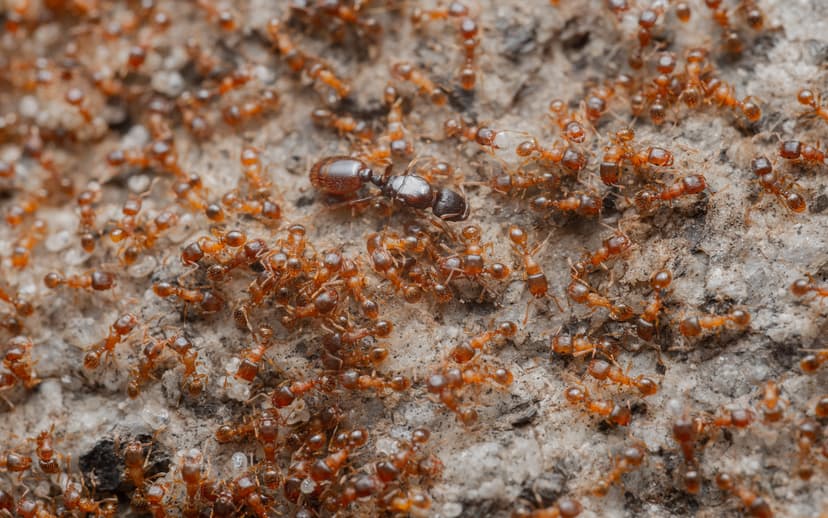
Tetramorium semilaeve is a small but remarkably resilient ant species that has earned a well-deserved reputation as one of the best choices for beginner ant keepers. The queen measures between five and six millimetres, while the workers are notably petite at just two and a half to three and a half millimetres, giving the colony a uniform, tidy appearance. Despite their modest size, these ants are prolific foragers and can build colonies of one to five thousand workers in the right conditions. They are monomorphic, meaning all workers look alike, which simplifies colony dynamics and makes them easy to observe. In the wild, they are often found nesting under pavements, stones, and in dry soil, and they are known for their ability to thrive in disturbed urban environments — a testament to their hardiness.
Their diet is wonderfully straightforward. Tetramorium semilaeve will accept a wide range of foods, including small insects like fruit flies or mealworms, sugar water, and honeydew. They are not picky eaters, which makes feeding them a simple affair. A steady supply of protein and sugar is essential for brood development and worker activity, but they are forgiving if you occasionally miss a feeding.
Care difficulty
Keeping Tetramorium semilaeve is almost as easy as it gets in the ant-keeping hobby. They are claustral funders, meaning the queen seals herself into a founding chamber and raises her first brood without needing any food — she simply metabolises her wing muscles and fat reserves. This takes all the pressure off the keeper during the delicate early stages. Once the first workers appear, the colony quickly gains momentum. These ants are not fussy about temperature, thriving in a broad range from twenty to twenty-eight degrees Celsius, and they tolerate humidity levels between forty and sixty percent without issue. They do require a winter diapause, during which they should be cooled to around eight degrees Celsius for several months, but this hibernation period is straightforward to manage.
Housing
A standard formicarium with a connected outworld works perfectly for Tetramorium semilaeve. They are not particularly sensitive to light or vibrations once established, though it is always wise to minimise disturbance during the first few weeks. The nest should offer moderate moisture — a gradient from dry to slightly damp allows the ants to choose their preferred microclimate. Because they grow into colonies of several thousand workers, plan for a nest that can be expanded over time, such as a modular system with multiple chambers or a large acrylic setup. They are not escape artists, but a tight seal on the outworld is still recommended.
First days after purchase
When your Tetramorium semilaeve colony arrives, place the formicarium in a quiet, dimly lit spot and leave them completely undisturbed for at least twenty-four hours. This allows the ants to overcome the stress of transport. Check that the water source is full and offer a small drop of sugar water or honey on a piece of foil in the outworld. Do not worry if they do not eat immediately — they will explore once they feel secure. Avoid bright lights and vibrations, and resist the urge to peek into the nest constantly. Within a few days, you should see workers confidently foraging and tending to the brood, marking the start of a rewarding and low-maintenance ant-keeping experience.
