Formica
Formica exsectoides
Nuptial Flight Calendar
Care Guide
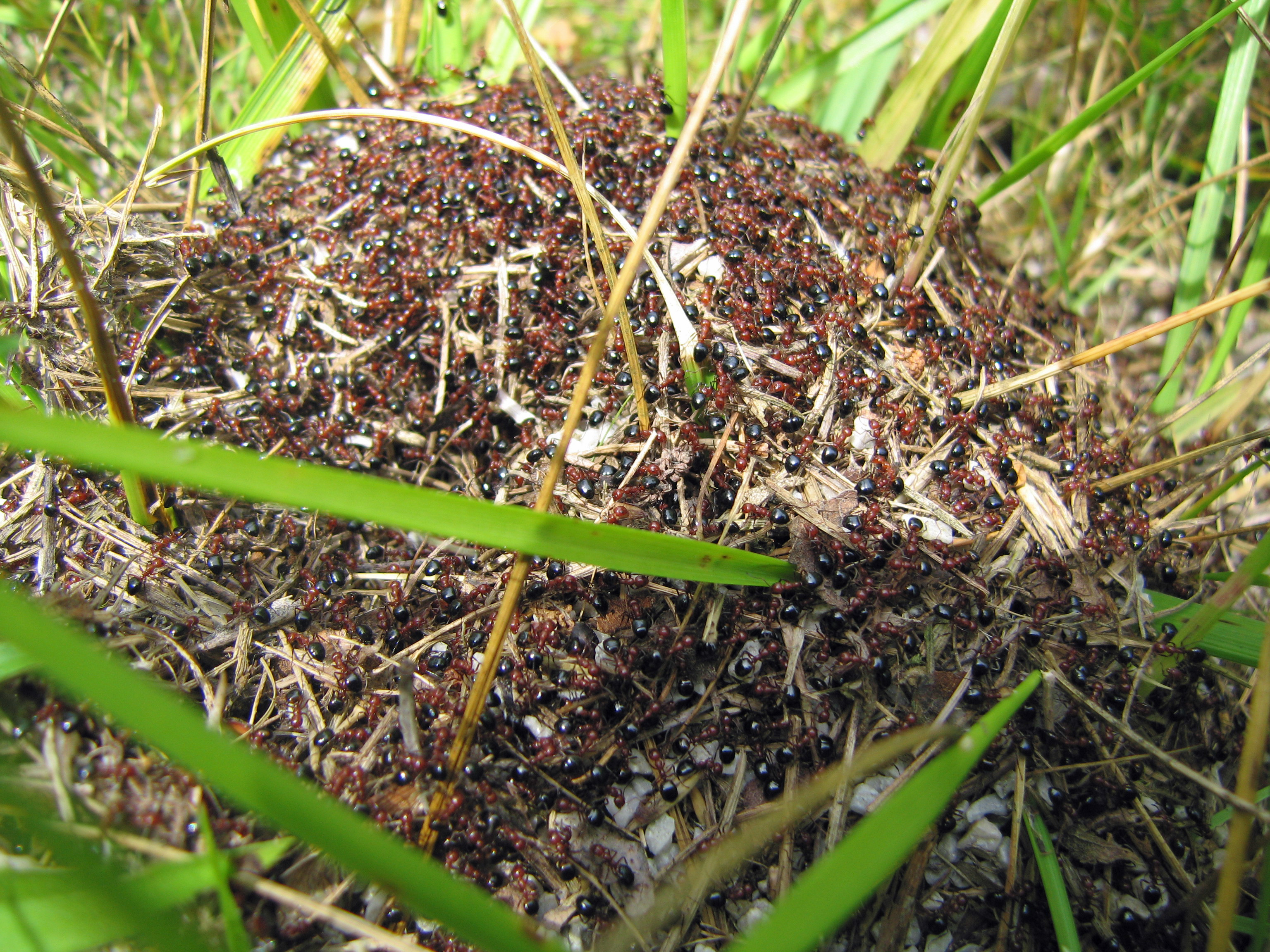
Formica exsectoides, commonly known as the Allegheny mound ant, is a species that commands attention both in the wild and in the formicarium. These ants display a remarkable uniformity in size—workers range from four to seven millimeters, and the queen reaches seven to nine millimeters—but what they lack in polymorphism they make up for in sheer architectural ambition. In nature, they build enormous dome-shaped mounds that can reach over a meter in height, constructed from soil and vegetation and warmed by the sun. This behavior translates into captivity as a strong preference for a well-structured nest with ample space for expansion.
One of the most fascinating aspects of Formica exsectoides is its social-parasitic founding strategy. A newly mated queen cannot start a colony on her own. Instead, she must infiltrate an established nest of a related Formica species, kill the resident queen, and take over the existing workforce. Once the host workers accept her, she begins laying eggs that will eventually replace the original colony with her own offspring. This makes the founding stage particularly challenging for ant keepers, as it requires either providing a captive host colony or acquiring a colony that has already completed this takeover process. For this reason, Formica exsectoides is considered an advanced species, best suited to experienced keepers who are comfortable with the complexities of parasitic founding.
Care difficulty
Keeping Formica exsectoides is not for beginners. The social-parasitic founding alone demands careful planning and a deep understanding of ant biology. Beyond founding, the colony requires stable conditions and a varied diet. They are active, fast-growing, and highly aggressive foragers, which means they need a secure setup to prevent escapes. Patience and attention to detail are essential, especially during the first year.
Housing
These ants thrive in formicariums that mimic their natural mound environment—a combination of dry chambers for brood and workers, and a connected foraging area where they can hunt and scavenge. Temperature should be kept between eighteen and twenty-four degrees Celsius, with humidity in the fifty to seventy percent range. A separate, cooler zone is needed for hibernation, which is mandatory: from late autumn through winter, the colony must be kept at around six degrees Celsius for several months. Without a proper diapause, the queen may stop laying eggs and the colony can decline. The nest should be spacious from the start, as a healthy colony can grow to tens of thousands of workers over time.
First days after purchase
Upon receiving your Formica exsectoides colony, place the formicarium in a quiet, dimly lit location and allow the ants to settle without disturbance for at least forty-eight hours. Offer a small drop of sugar water and a single dead insect to gauge their appetite. Do not open the nest unnecessarily—these ants are sensitive to vibrations and sudden light changes. Check that humidity levels are stable and that the foraging area is escape-proof. In the first week, observe feeding behavior and adjust food offerings as needed. Once the colony is active and accepting food, you can gradually introduce a regular schedule of insects, sugar water, and occasional honeydew mimics. With careful management, your Formica exsectoides will reward you with a bustling, mound-building spectacle that is as educational as it is impressive.