Aphaenogaster
Aphaenogaster tennesseensis
Nuptial Flight Calendar
Care Guide
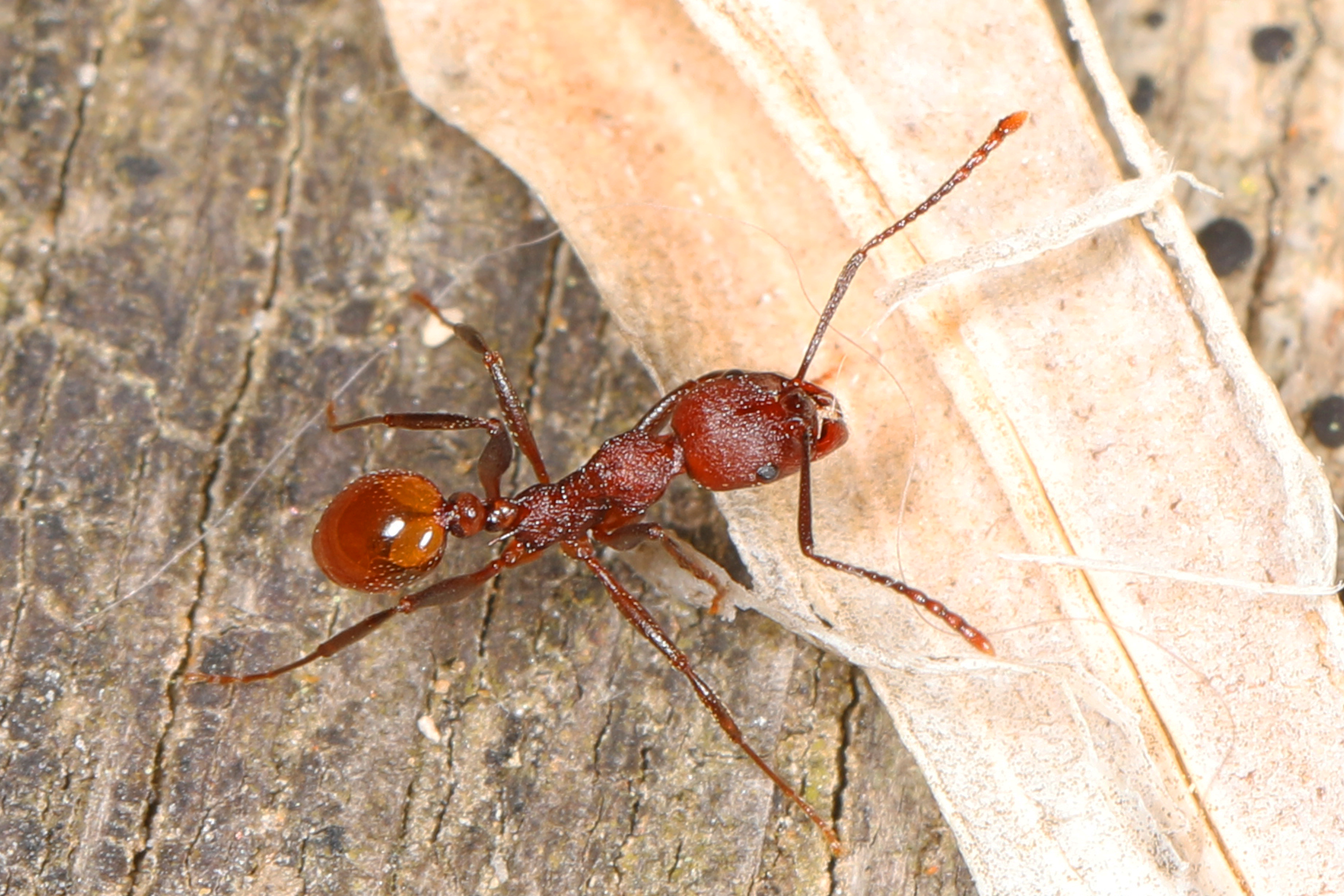
Aphaenogaster tennesseensis is a striking woodland ant native to the southeastern United States, known among keepers for its glossy, almost reflective body. The queen measures 8–9.5 mm, with workers ranging from 5 to 6.5 mm. Coloration is a deep reddish-brown to mahogany, with a polished, smoother integument than most of its relatives — hence the alternative common name "shining woodland ant."
This species prefers nesting in rotting wood — fallen logs, hollow stumps, and dead branches on the forest floor — rather than in soil. Workers forage along log surfaces and through leaf litter, hunting small invertebrates, scavenging carrion, tending sugary food sources, and dispersing seeds bearing elaiosomes. Colonies remain modest, typically 500 to 3,000 workers, and develop slowly compared to many other temperate species.
Founding is semi-claustral. The queen must be offered food during the establishment stage, as she will forage actively rather than relying solely on her metabolic reserves.
Care difficulty
Intermediate. The species is hardy and forgiving once established, but the semi-claustral founding stage and the need for a proper winter hibernation push it slightly above the beginner threshold.
Housing
A wood-based nest or a hybrid wood-and-substrate setup works particularly well for this species, mimicking its natural choice of rotting timber. Maintain temperatures at 22–26 °C during the active season with humidity at 50–70 %. Offer fruit flies, small crickets, occasional protein jelly, and a small selection of elaiosome-bearing seeds. Hibernate at 8 °C from late autumn through early spring for at least two months.
First days after purchase
Settle the colony in a quiet, dimly lit location. Within the first 24 hours offer a small insect and a droplet of sugar water. Avoid frequent disturbance — these ants are shy and easily stressed by vibration or sudden light. Once the colony has roughly 30 workers, transition to a small formicarium with a wood-themed nest.