Lasius
Lasius interjectus
Nuptial Flight Calendar
Flight months: Apr, May, Jun, Sep, Oct
Care Guide
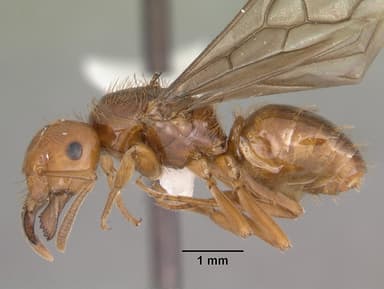
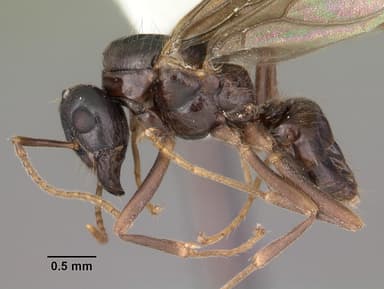
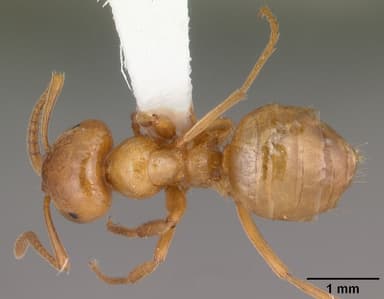
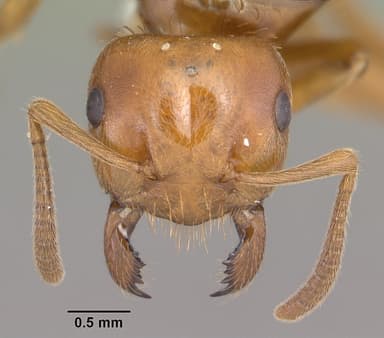
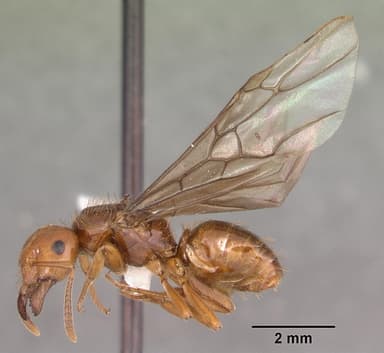
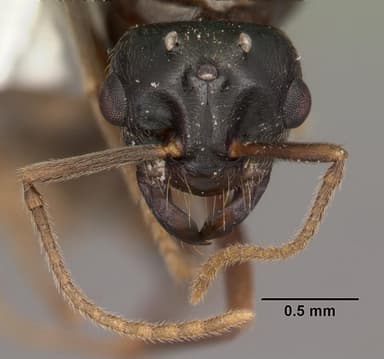
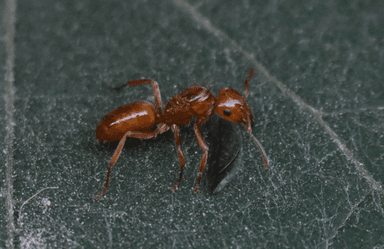
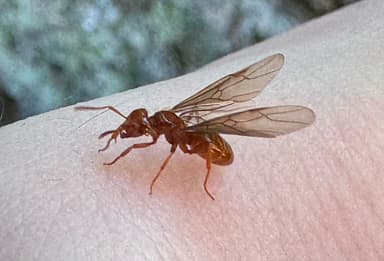
Lasius interjectus, a member of the subgenus Acanthomyops and commonly known as the larger citronella ant, is a fascinating but challenging species for the dedicated hobbyist. The queen is robust, measuring 8–10 mm, while the monomorphic minor workers range from 3–4.5 mm. Their body color is a warm, translucent yellowish-orange, and as the common name suggests, workers emit a distinctive lemon-like odor when disturbed—a trait shared with other citronella ants (Wilson 1955). Mature colonies are subterranean powerhouses, often reaching 50,000 individuals, but their true peculiarity lies in their founding strategy. Unlike fully claustral species, Lasius interjectus is a temporary social parasite. A newly mated queen must infiltrate a host colony—typically of another Lasius species such as L. neoniger—kill or displace the resident queen, and co-opt the host workers to raise her first brood. Over time, the host workers die off and are replaced by her own offspring, eventually yielding a massive, pure colony. In nature, nuptial flights occur across the eastern and central United States (approximately 28°–45°N, 100°–75°W) during warm, sunny afternoons in September and October, especially following rain (AntWiki; Wing 1968).
This reproductive strategy squarely places Lasius interjectus in the expert care category. It is not a beginner’s ant, nor forgiving of casual husbandry. The parasitic founding process is the first hurdle: a queen must be provided with either a suitable host colony or a modest supply of host pupae and a few callow workers, a delicate procedure that requires careful timing, low stress, and prior experience with parasitic ants. Even seasoned keepers can face rejection or failure if the host workers turn on the intruding queen. Acquiring an already-established colony with a laying queen and workers is the far more reliable route, though such colonies are rarely available and demand a keeper who can manage their large final size and strict seasonal rhythms. This ant suits those who have successfully reared other temperate, parasitic Lasius or Formica species and are comfortable with cold hibernation and large-scale nest systems. If you relish the challenge of simulating complex life cycles and have the patience for a slow, multi-year buildup, L. interjectus offers a deeply rewarding window into one of nature’s more cunning adaptations.
Housing must mirror their natural subterranean existence. A soil-based or high-humidity plaster nest with a deep digging layer is essential, as these ants are accomplished tunnelers that create extensive galleries. A common approach is a terrarium-style formicarium filled with a sand-loam mixture (roughly 50-50) kept permanently moist but not sodden, with a gradient allowing them to choose microclimates. Temperature should be maintained between 18°C and 26°C, with 22–24°C ideal for brood development. Humidity levels of 50–70% in the nest environment are crucial; a hydration system that wicks water into the substrate works well. Outworlds can be simpler—a container with a fluon-coated barrier, connected by tubing. Because colonies can grow to tens of thousands, plan for expansibility early: multiple nest modules or a large, partitioned outworld that can accommodate their expansive foraging trails. Avoid open-air foraging areas that dry out quickly; a covered, humidified outworld with a soil floor is preferred.
Feeding Lasius interjectus follows the standard omnivorous ant diet, with some nuance. They avidly seek carbohydrates, and in the wild they are famous for tending root aphids in their deep nests for honeydew (Wing 1968). In captivity, provide a steady supply of sugar water, honey, or byFormica Sunburst Ant Nectar. For protein, offer freshly killed insects—small crickets, fruit flies, mealworms, or roach nymphs—at least two to three times per week, scaling up as the colony grows. All food should be placed in the outworld to prevent mold in the nest. A reliable water source is mandatory; a test tube with purified water stoppered with cotton, replaced weekly, suffices for both drinking and local humidity. Do not let sugar solutions ferment; replace them daily and clean old offerings promptly to prevent harmful bacteria.
Hibernation is not optional—it is a biological imperative for this temperate species, and skipping it will lead to chronic stress, reduced lifespan, and eventual colony collapse. Colonies require a dormant period of three to four months at a stable temperature around 5°C (41°F). Before hibernation, cease protein feeding while gradually lowering temperatures over a week or two. The ants themselves will cluster and cease foraging. A wine cooler or a dedicated refrigerator set to that temperature is ideal, as household fridges can be too cold and fluctuate. During diapause, maintain a slight moisture source (a damp cotton ball) and check monthly for desiccation. In early spring, slowly warm them back to room temperature and resume normal feeding. This cycle mimics their native range, from the Great Lakes to the Gulf Coast, where winter chill is a seasonal certainty (AntWeb).
The first days after acquiring a queen or incipient colony demand minimal interference. If you have a single parasitic queen, introduce her to a small number of host workers (typically Lasius neoniger) inside a standard test tube setup with a water reservoir. Use only callow hosts if possible, as they are less aggressive, and always include a few host pupae. Keep the tube in darkness and silence for 48–72 hours. After this settling period, check briefly for signs of harmony—host workers grooming the queen, no dead individuals—and offer a minuscule drop of honey on a toothpick tip near the cotton plug. Avoid adding protein until the queen has begun ovipositing, which may take weeks. Watch carefully for the host workers attacking the queen; if this occurs, immediately remove the queen and try again with a different host colony or more pupae. For an established colony, simply connect their travel tube to the new outworld, provide a sugar water station, and allow them to explore at their own pace. Never force migration. Patience here is everything, as rushed introductions or frequent disturbances are the most common causes of failure with this demanding yet utterly captivating ant.