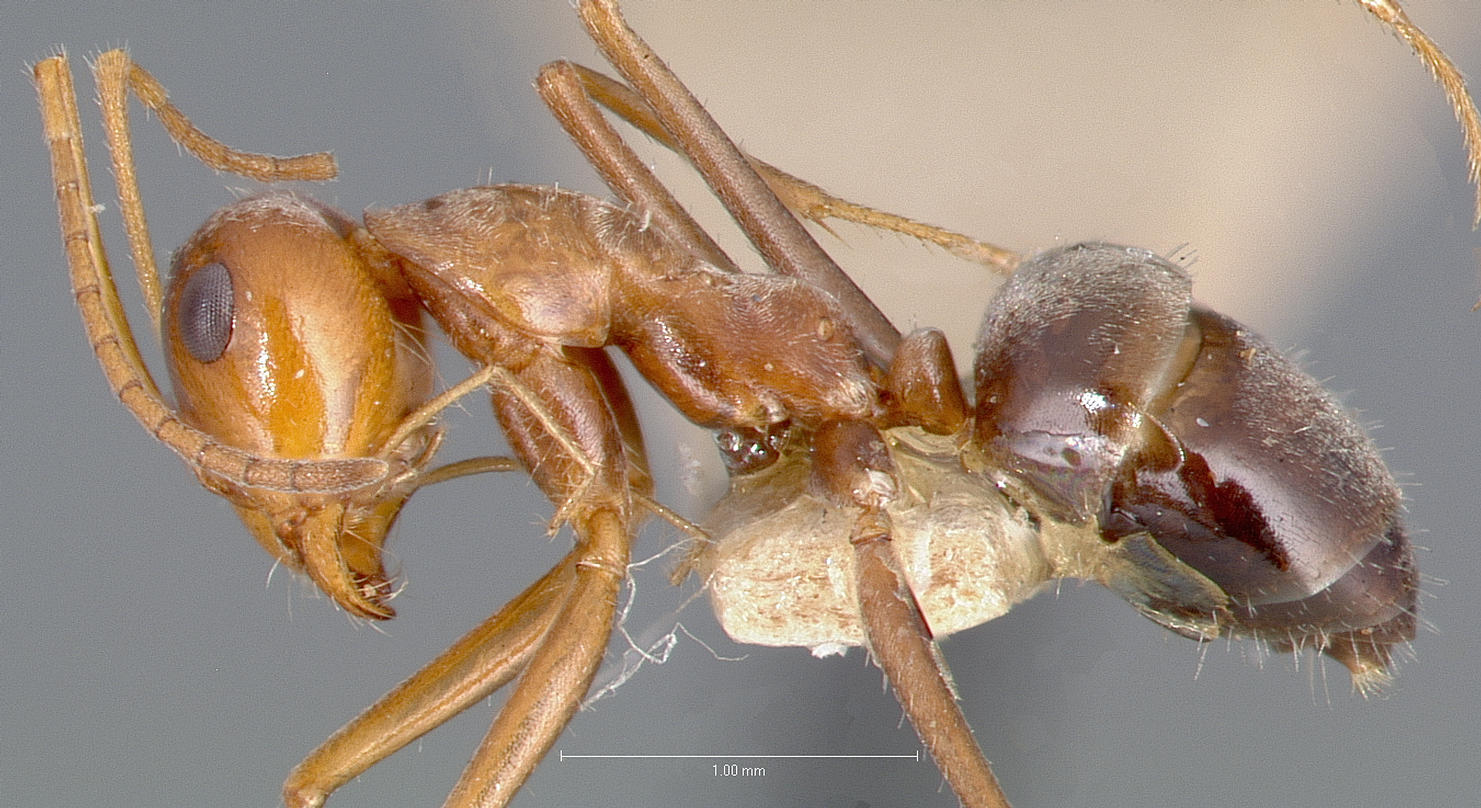
Myrmecocystus
Myrmecocystus romainei
Nuptial Flight Calendar
Care Guide
Myrmecocystus romainei is one of the most fascinating and visually striking species among North American honeypot ants. These desert-dwelling ants display a remarkable adaptation: certain workers called repletes—or “living larders”—suspend themselves from the nest ceiling and are gorged with sugary nectar until their abdomens swell into translucent, amber globes. The queen, measuring 10–13 mm, is a capable claustral founder. Workers range from 4 to 10 mm, with the largest individuals often becoming repletes. Colonies are moderate in size, typically numbering 1,000 to 5,000 workers at maturity, and do not require a hibernation period.
One of the most distinctive features of *Myrmecocystus romainei* is their diet. In the wild, they collect honeydew from aphids and nectar from desert flowers, storing these sugars in their repletes. In captivity, they thrive on a steady supply of sugar water or honey water, which should always be available. Protein is equally important for brood development, so offer small insects like crickets, fruit flies, or mealworms. The repletes will develop naturally once the colony receives a consistent influx of liquid sugar.
Care difficulty
Keeping *Myrmecocystus romainei* is recommended for experienced ant keepers. These desert specialists are highly sensitive to excessive moisture and require careful control of low humidity—maintaining levels between 30% and 50% is critical. They also need a temperature gradient of 24–32°C, with the warm end encouraging brood growth. Without proper ventilation and a dry nesting area, the colony can quickly succumb to mold. The founding stage is claustral, so the queen can be left undisturbed until the first nanitics emerge.
Housing
A formicarium for *Myrmecocystus romainei* must offer a dry, well-ventilated nest area. Materials like sand-clay mixes or plaster with a low water retention work best. The outworld should provide ample foraging space and a source of heat. Regularly refill the sugar water feeder and replace protein items to prevent spoilage. Most importantly, avoid over-humidifying the nest—use a narrow-humidity zone, watering only one chamber lightly if needed. These ants appreciate darkness and peace; vibrations and light disturbances can stress them, especially during early colony growth.
First days after purchase
Upon receiving your *Myrmecocystus romainei* colony, place the formicarium in a quiet, dim location and let the ants settle for at least 24 hours. Offer a small drop of sugar water on a piece of aluminum foil and observe from a distance. Do not disturb the nest or open the setup unnecessarily during the first week. Gradually introduce small prey items once workers are actively foraging. Keep the temperature stable and monitor humidity—a dry test tube setup works well for young colonies. With patience and careful management, you will be rewarded with one of the most unique spectacles in the ant-keeping world: a living honey pot pantry.