Lasius
Lasius umbratus
Nuptial Flight Calendar
Care Guide
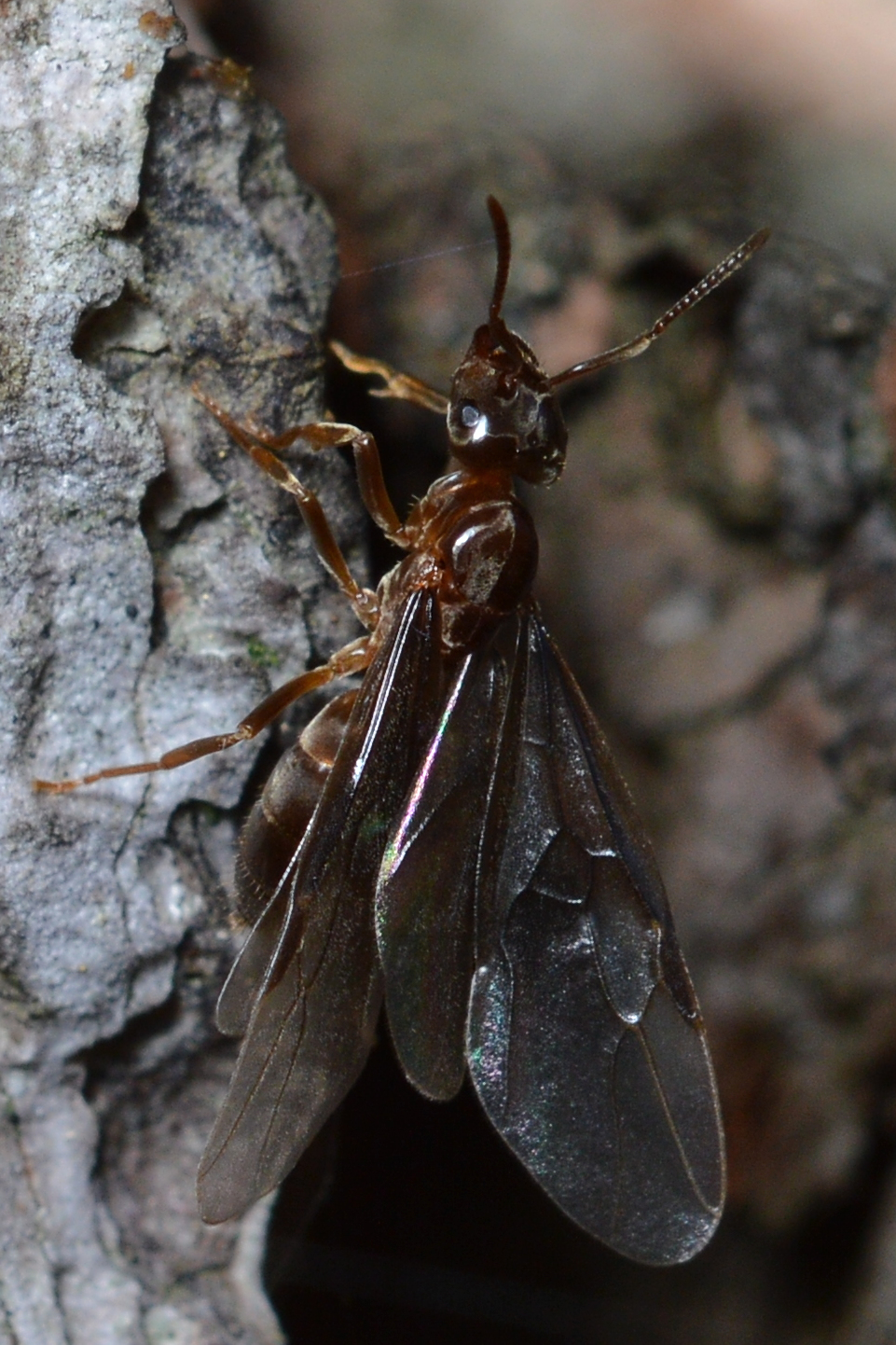
A queen of *Lasius umbratus* may be small at just 7 to 8.5 mm, but her founding strategy is anything but modest. This species is a social parasite — the queen cannot start a colony on her own. Instead, she infiltrates an established nest of another *Lasius* species (most often *Lasius niger*), kills or subdues the host queen, and uses the host workers to raise her own brood. Over time, the host workers die off and are replaced by a pure *Lasius umbratus* workforce. A mature colony can number between 3,000 and 15,000 workers, each measuring 3.5 to 4.5 mm, with a distinctive yellowish-brown coloration that sets them apart from their darker hosts.
*Lasius umbratus* is a classic “yellow meadow ant,” spending much of its life underground. In the wild, these ants tend aphids and other root‑feeding insects for honeydew, which forms the bulk of their diet. They also hunt small insects and readily accept sugar water in captivity. Their foraging is shy and mostly nocturnal, so a well‑connected outworld with soft, diffuse lighting will encourage natural behavior.
Care difficulty
Keeping *Lasius umbratus* is rated as advanced. The primary challenge lies in the founding stage: you must either provide the queen with a supplanted host worker or, more commonly for hobbyists, start with a small colony that has already completed the parasitic takeover. During the first few months, the colony is fragile and dependent on a steady supply of protein and sugars. Once workers number a few dozen, the ants become hardier, but they remain sensitive to disturbance and require consistent hibernation to maintain a healthy annual cycle.
Housing
A nest with moderate humidity (55–75%) and a temperature range of 20–24 °C suits them well. *Lasius umbratus* prefer a closed, dark nesting environment — a ytong or acrylic formicarium with narrow chambers works beautifully. The outworld should offer a source of clean water and a feeding area where honeydew, diluted sugar water (1:4 ratio), and small insects (fruit flies, pinhead crickets) can be offered. Do not overheat; these ants thrive in cooler conditions. Hibernation is mandatory: from late autumn to early spring, gradually reduce temperature to around 6 °C for three to four months. A fridge or cool basement is ideal. Without hibernation, the queen may stop laying and the colony declines.
First days after purchase
Upon receiving your *Lasius umbratus* colony, place the formicarium in a quiet, dimly lit spot and let the ants settle for at least 24 hours. Check that the nest has moderate moisture — the substrate should be damp but not wet. Offer a drop of sugar water near the entrance and a single small insect. Do not open the lid unnecessarily; these ants are easily stressed. Within a week, the colony should be actively foraging and tending brood. Once you see consistent activity, you can gradually expand the feeding regime and begin enjoying one of the most fascinating parasitic species in the ant‑keeping hobby.