Pheidole
Pheidole navigans
Nuptial Flight Calendar
Flight months: May, Jun, Jul, Aug, Sep
Care Guide
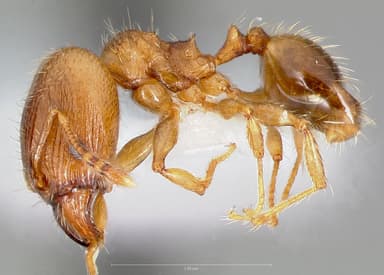
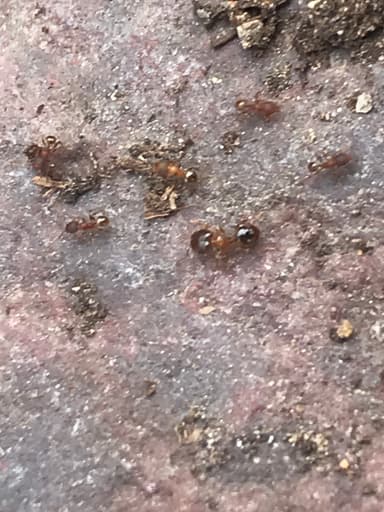
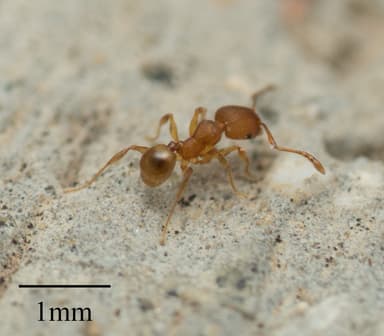
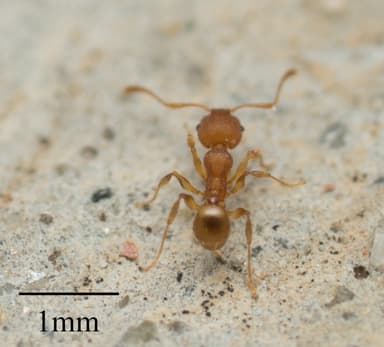
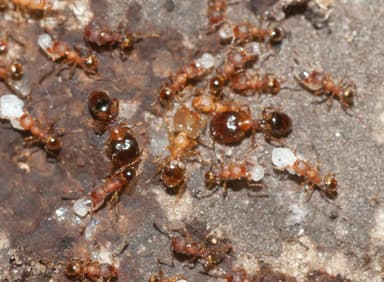
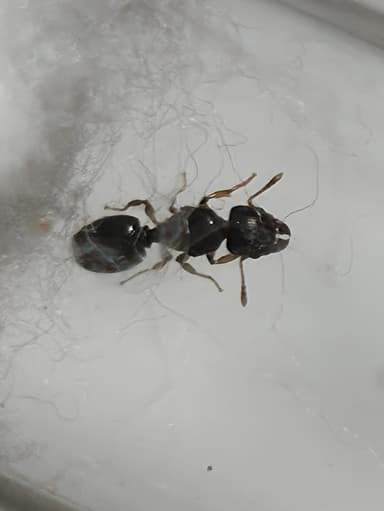
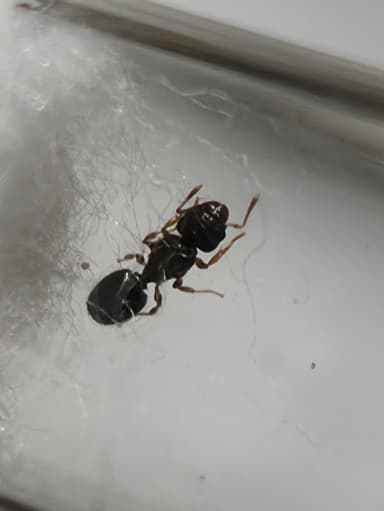
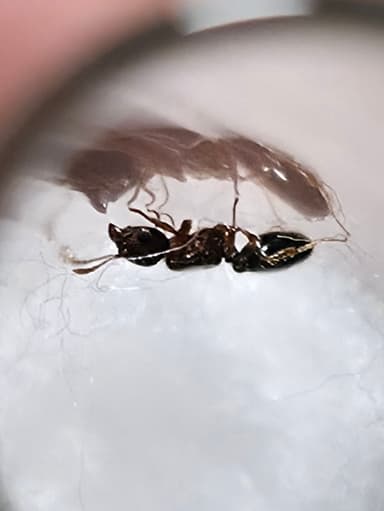
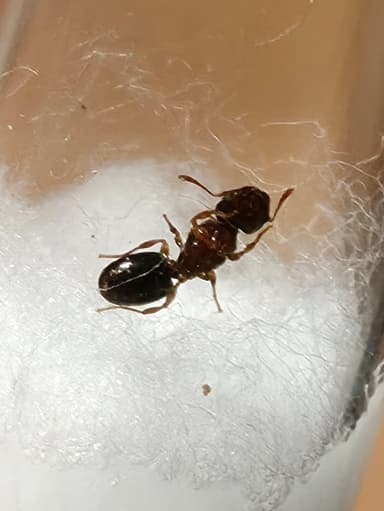
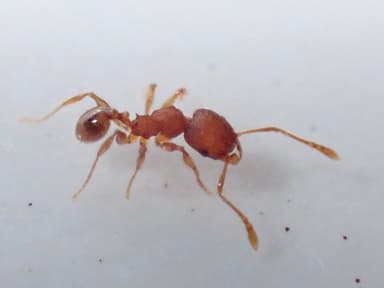
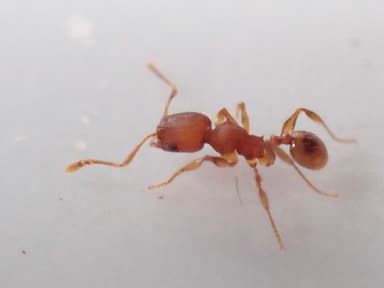
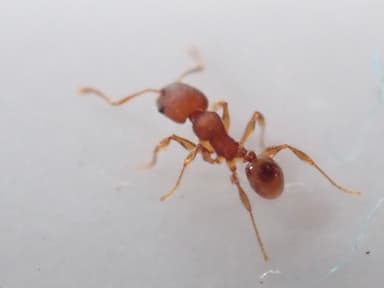
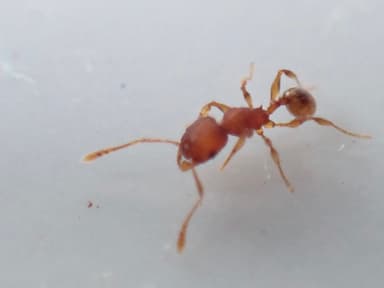
Among the vast pantheon of Pheidole species—a genus that Edward O. Wilson once described as “the dominant, hyperdiverse ant genus” of the New World—Pheidole navigans stands out as a wonderfully manageable ambassador for this diminutive yet dramatic group (Wilson 2003). Native to the warm Neotropical regions spanning Mexico, Central America, and the Caribbean, this ant is a textbook example of claustral founding and pronounced worker polymorphism. Queens reach a modest 4.5 to 5.5 millimeters, yet hold the potential for colonies of up to ten thousand individuals. The true spectacle lies in the two distinct worker castes: the sprightly minor workers, a mere 1.8 to 2.5 millimeters long, which rush about in ceaseless exploration, and the major workers, which push toward 3 millimeters and are crowned with disproportionately large, blocky heads. These majors, sometimes called soldiers, act as living doorways, seed millers, and defensive powerhouses, bringing a fascinating social dynamic right to your desktop or shelf. The stark morphological gap between the two castes makes every observation a lesson in the division of labor, and it is precisely this vivid contrast that draws so many keepers to the species.
As a care subject, Pheidole navigans is a rewarding choice for beginners, but that label comes with a few nuances. The colony is hardy, tolerant of a reasonable temperature and humidity band, and does not require a winter diapause, removing one of the biggest logistical hurdles for new ant keepers. Its claustral founding means a solo queen needs nothing more than a quiet, dark tube during her initial weeks, making the earliest stages fuss-free. The chief challenge is their size: minor workers can exploit impossibly tiny gaps. All enclosures must be meticulously escape-proofed, ideally with a fine-mesh screen or a generous application of fluon barriers. This ant is perfectly suited to a keeper who wants a fast-growing, highly active colony that will rapidly fill out a formicarium with streaming trails of foragers and dramatically oversized majors without demanding complex seasonal cycling. If you have ever wanted to watch caste determination unfold before your eyes and do not mind the permanent vigilance against breakouts, this is your species.
Creating a proper home for Pheidole navigans means thinking small and tropical. A temperature gradient within the nest area between 22 and 30 degrees Celsius keeps the brood developing briskly, with the higher range nudging the colony toward optimal growth. Relative humidity should hover between 50 and 70 percent; this can be maintained by a water source in the outworld and periodic light misting of a nest made from a moisture-retentive material such as ytong, plaster, or grout. Such a nest replicates the humid microclimates they favor under stones or in rotting wood within their natural range (AntWeb; GBIF occurrence records). A thin substrate layer of sand and clay in the foraging arena allows for minor excavation behaviors and gives the ants purchase, but deep soil is not necessary. The nest entrance must be decidedly narrow, because the 1.8-millimeter minors will traverse edges that appear sealed. Many experienced keepers build custom acrylic or 3D-printed nests with extremely tight tolerances, then seal connections with teflon or petroleum jelly. Lighting can be ambient room light, though a red-tinted cover for the nest area reduces stress and encourages the colony to treat their tunnels as interior darkness.
Diet for Pheidole navigans mirrors the omnivorous tendencies of their genus, and a steady supply of both protein and carbohydrates will fuel their explosive brood production. Small insects—freshly killed fruit flies, pinhead crickets, or chopped mealworms—form the protein backbone required by the queen and developing larvae. Major workers use their powerful mandibles to cut prey into manageable pieces, a spectacle worth witnessing. Liquid sugars are equally vital; a drop of honey diluted with water, maple syrup, or a specialized ant nectar placed on a small feeding tray will be eagerly lapped up by minors who then distribute the bounty through trophallaxis. Some colonies also accept finely crumbled seeds, though they lean more heavily on insect protein and sweets in captivity. Clean water must always be available, preferably via a cotton-plugged tube that also boosts humidity. Feed small portions every other day, removing uneaten remains promptly to prevent mold, a particular risk in the humid environment they enjoy.
Hibernation is not on the calendar for this tropical ant. Their native range sits largely between latitudes 35° north and 35° south, with no true cold season cues (GBIF). In captivity, keep them at their standard summer temperatures year-round; a drop below 20 degrees will slow brood rearing and can lead to a gradual colony decline. No artificial chilling period is needed, and attempting one can be fatal. This perpetual activity cycle makes them an excellent choice for keepers who want a display that never goes dormant, though it does mean the colony will constantly require food and moisture—there is no winter slowdown to give the keeper a break.
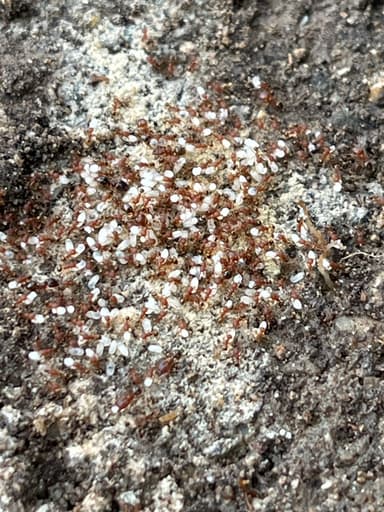
When your Pheidole navigans queen and her first few workers arrive, patience is the watchword. Place the test tube or small founding nest in a warm, dim area and resist the urge to check more than once every couple of days. On day two or three, offer a micro-drop of sugar water on a sliver of foil just outside the brood chamber; if she is still alone, the queen may take a sip, but if workers are present, they will discover it within hours. A similar tiny fragment of insect protein can follow a day later. Within the first week, you should see the queen’s initial pile of eggs growing and the pioneer minors actively tending them. The most critical parameter now is humidity—too dry a tube will halt egg development and stress the queen, so keep the water reservoir topped up. Watch for any sign that workers cannot find the feeding station; a tiny bridge of sand or a pipette-drawn trail can guide them. Let this miniature society find its rhythm, and you will soon be rewarded with a bustling, undeniably impressive colony where the towering major castes stand as living monuments to the wonders of ant social evolution (Wilson 2003).