Crematogaster
Crematogaster biroi
Care Guide
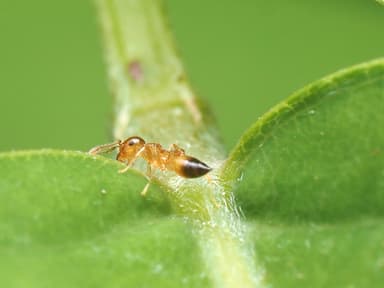
Crematogaster biroi, first described by Mayr in 1903, is a diminutive yet fascinating acrobat ant native to the warm, humid forests of Southeast Asia. Workers measure a mere 2–3 mm, with the characteristic heart-shaped gaster that can be raised over the thorax when alarmed, a trait that gives the genus its common name. Their coloration is typically a uniform pale to medium brown, and the sleek, slender build allows them to slip through the narrow galleries of dead wood or bark, their preferred nesting sites. Colonies are modest in size, rarely exceeding a thousand individuals, and are polygynous, housing multiple queens that cooperate seamlessly. Reproduction occurs through budding, where a group of workers accompanied by one or more queens departs on foot to establish a new nest nearby — a strategy that lacks dramatic nuptial flights and instead relies on slow, local expansion. This species often falls victim to a case of mistaken identity: it is frequently confused with Ooceraea biroi, the clonal raider ant, due to a coincidental homonym. However, the two are entirely unrelated in biology and behavior. While Ooceraea biroi is a blind, army-ant-like predator with parthenogenetic queens, our Crematogaster biroi is a classic arboreal forager with a sweet tooth, building carton nests in twigs and small cavities (AntWiki; Mayr 1903). Its unobtrusive presence and intriguing social flexibility make it a rewarding challenge for the perceptive keeper.
In terms of care difficulty, Crematogaster biroi sits squarely at the intermediate level. It is not an ant for the absolute beginner, primarily because of the colony’s escape-artist tendencies coupled with specific humidity requirements. The workers are so small that they can squeeze through minute gaps in formicarium lids or tubing joints, so meticulous attention to barrier security is mandatory. They also demand a stable, moderately high humidity that can be tricky to dial in without promoting mold, especially in enclosed nests. However, for a hobbyist who has successfully kept a couple of beginner species and is comfortable managing microclimates, this ant offers an excellent entry into the world of tiny, arboreal colonies. Their non-aggressive nature and relatively calm disposition — they rarely sting and rely more on chemical defenses — make observation sessions pleasant rather than nerve-wracking. If you enjoy mastering the finer points of formicarium engineering and watching meticulous foraging trails, C. biroi will not disappoint.
Housing these ants requires a nest that mimics their natural microhabitat: small, humid, and elevated. A plaster or ytong nest with narrow, pre-formed chambers works best, as the material absorbs and gradually releases moisture, helping maintain the necessary relative humidity of 60–80%. Avoid overly spacious nests; these ants prefer tight quarters, and a more compact design reduces the risk of condensation fluctuations and helps them feel secure. The nest should be connected to a well-sealed foraging arena with a smooth escape barrier — a thin layer of talc or PTFE around the lid is non-negotiable. A temperature gradient ranging from 22°C to a warmer basking spot of around 28°C should be provided, though they will tolerate brief dips slightly below if the overall room is warm. A small heat mat placed against one side of the nest (never underneath) achieves this elegantly. Substrate in the arena can be minimal — a sprinkle of sand or coconut fiber — but include a few small twigs or leaf litter pieces that encourage natural foraging behavior and offer cover. Remember that light disturbs them less than vibrations, so place the setup on a sturdy shelf away from foot traffic.
Diet for Crematogaster biroi follows the classic omnivorous pattern but scaled down to match their tiny mandibles. Protein should come from small-bodied prey: freshly killed fruit flies (Drosophila melanogaster or D. hydei) are ideal, as are mincemeat portions of mealworm or small termites. Offer protein two to three times a week, removing uneaten remains within 24 hours to prevent mold. These ants are enthusiastic collectors of liquid carbohydrates. Provide a shallow droplet of diluted honey, maple syrup, or a specialized formicarian sugar paste on a small piece of wax paper to avoid drowning. Some colonies also accept tiny seeds with elaiosomes, though this is not a dietary staple. Clean water must be available at all times, ideally via a water-filled test tube with a cotton plug that also serves as a humidity source. You will quickly learn to gauge the colony’s appetite: a starburst of workers around a honey drop and a steady stream of foragers indicates everything is running smoothly.
One of the most convenient aspects of keeping this Southeast Asian native is that it requires no hibernation. The colony remains active throughout the year, and the thermal regime should stay consistent with the summer-like conditions described above. There is no need for a cold period; indeed, exposing them to temperatures below about 20°C for extended spells can induce stress and brood mortality. This continuous growth cycle means you can enjoy their activity year-round, but it also demands consistent attention to feeding and humidity since the colony never truly pauses. For keepers in temperate climates, a heat mat and a reliable thermostat are essential during cooler months to prevent an unintentional winter chill.
The first days after your Crematogaster biroi arrives are critical for a calm transition. Upon unpacking, keep the colony in a dim, vibration-free spot and resist the temptation to check on them more than once or twice a day. If you received them in a test tube with a queen(s) and workers, you may initially connect this to the prepared nest and let them move at their own pace; rushing them with bright light or heat can cause panic. Offer a minuscule droplet of honey and a single pre-killed fruit fly placed just outside the tube entrance within the first few hours. Most colonies will begin foraging within a day if conditions are right. Watch for heavy clustering near the water source — a sign that ambient humidity is too low — or for workers persistently attempting to climb the barrier, which indicates they haven’t settled in yet. Fine-tune ventilation and moisture, and within a week the colony should start exploratory trails and brood care, signaling a successful establishment. With patience and a steady hand, you’ll soon witness the intricate social life of this lesser-known acrobat ant unfolding before your eyes.