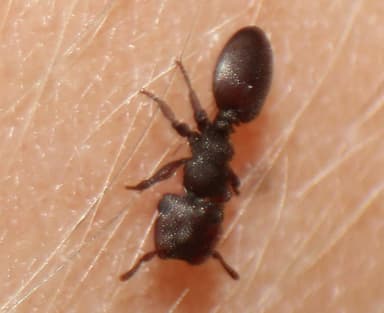
Cephalotes
Cephalotes varians
Nuptial Flight Calendar
Flight months: Jan, Apr, May, Jun, Jul, Aug, Sep
Care Guide
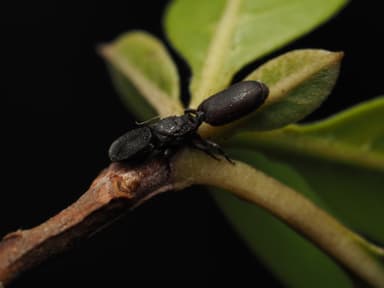
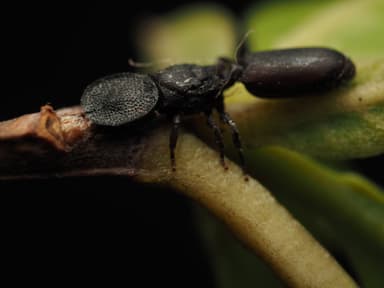
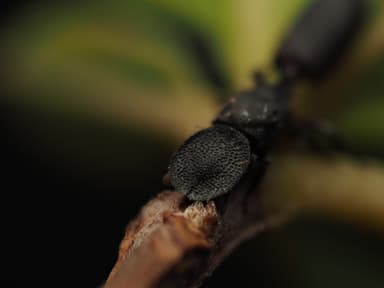
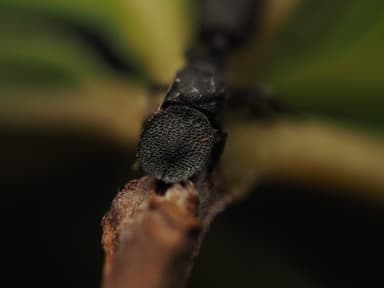
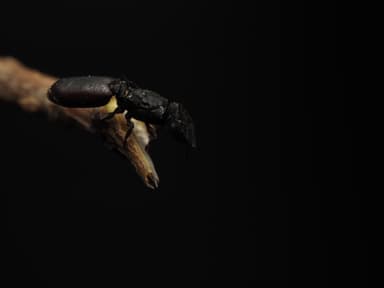
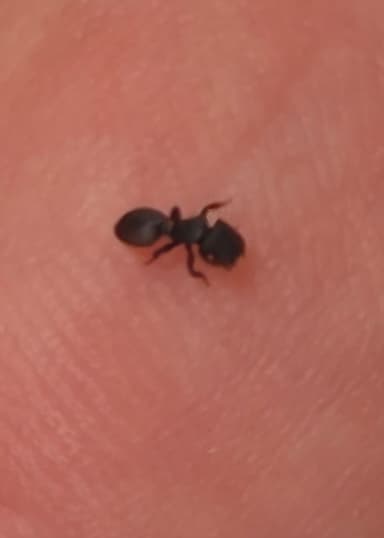
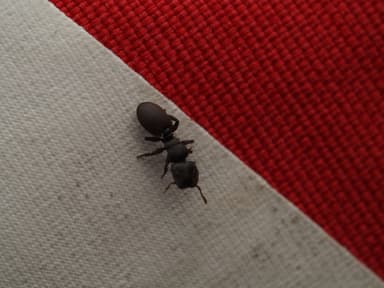
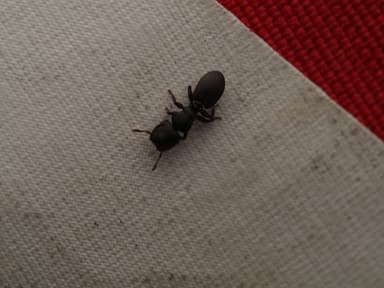
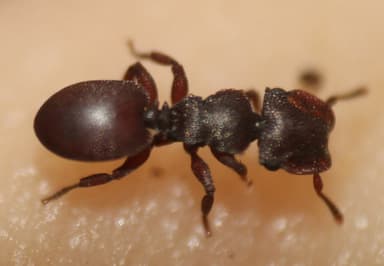
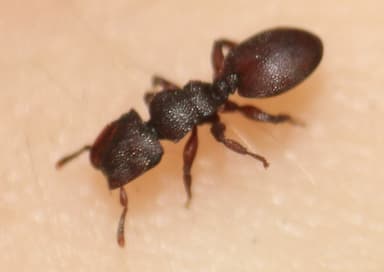
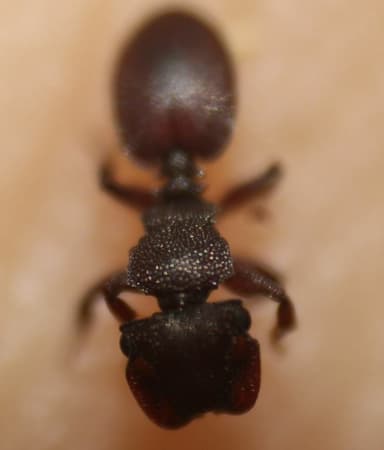
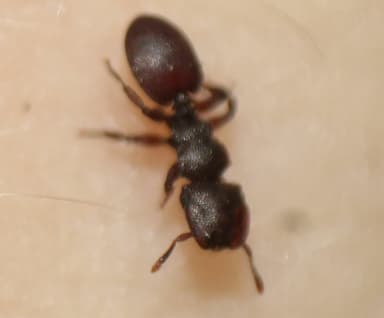
Cephalotes varians, a striking member of the turtle ant genus, is an arboreal species that fascinates expert myrmecologists with its highly specialized defensive adaptations. Workers are polymorphic, with minor workers ranging from 4 to 6 millimeters and a distinct soldier caste that bears a flattened, disc-shaped head—perfectly evolved to plug nest entrances, a behavior known as phragmosis. Queens measure 8 to 10 millimeters and found colonies claustrally, eventually supporting up to 10,000 individuals. Native to the Caribbean and Central America, with an enduring introduced population in southern Florida (Creighton 1950), these ants inhabit pre-existing cavities in trees. Besides their remarkable door-guarding soldiers, Cephalotes varians are also capable of controlled aerial gliding when dislodged, making them a living showcase of evolutionary ingenuity. Their natural history alone makes them a captivating addition to a specialized collection, but it also underpins the precise husbandry they demand.
This species is categorically an expert-only commitment. The care difficulty is high not only because of narrow environmental tolerances, but also due to their escape-artist tendencies and sensitivity to minor husbandry lapses. They require a meticulously maintained tropical microclimate and a nest that replicates their arboreal cavity nest sites. Beginners will find it exceptionally challenging to balance the high humidity with adequate ventilation, often losing colonies to mold or desiccation. Keepers with experience maintaining advanced tropical genera, who are comfortable with daily monitoring and precise moisture control, are the ideal candidates. If you are undaunted by the prospect of a colony that punishes negligence without delay, Cephalotes varians will reward you with a front-row seat to one of nature’s most creative defensive strategies.
Housing is the foundation of successful long-term care. A vertical or steeply inclined nest with a flat internal chamber and narrow, circular entrance holes is essential—cork bark stacked against a glass pane, or a purpose-built arboreal formicarium, mimics tree cavities excellently. The nest should connect to a secure foraging arena; these ants climb smooth surfaces with unsettling ease, so a fluon-lined moat or tightly sealed lid is mandatory. Maintain a temperature gradient between 22°C and 30°C using a thermostatically controlled heat mat placed against one side of the nest, never underneath. Humidity must remain at 50–70%, which is best achieved by hydrating a substrate layer of coconut fiber or vermiculite that does not directly contact the ants, combined with a covered water source. Ventilation is equally critical: stagnant, saturated air invites deadly fungal outbreaks. The ants will collect debris to block entrances with their own bodies and available material, so providing a thin layer of fine sand or powder allows you to observe this natural behavior. Inspect the nest daily for condensation patterns and any hint of mold, adjusting airflow or watering accordingly.
Cephalotes varians are omnivores with a pronounced taste for carbohydrates and insect protein. In the wild, they avidly tend hemipterans and visit extrafloral nectaries (de Andrade & Baroni Urbani 1999), a diet easily replicated in captivity. Offer freshly killed fruit flies, pinhead crickets, or small pieces of mealworm as a protein source; for carbohydrates, provide honey, a sugar-water mix, or slivers of ripe fruit like mango. A saturated cotton wick supplies both moisture and an additional sugar station. Because the warm, humid setup accelerates spoilage, all uneaten food must be removed within 24 hours. Young colonies need only minuscule portions—a single fruit fly and a micro-drop of honey every other day suffices for a queen and her first workers. As the colony grows, increase quantities but remain vigilant about cleanliness to avoid disease.
No hibernation period is required. Cephalotes varians is fully tropical, and the colony remains active year-round as long as stable temperatures are maintained. A cold period, even a brief one, causes brood mortality and irreversible stress. For keepers in temperate regions, simply continue the normal heating routine through winter. This continuous tropical cycle is appealing to those who prefer a colony that does not vanish into a dormancy phase, though it does entail year-round feeding and meticulous environmental maintenance without seasonal reprieve.
Upon arrival, your new colony must be given absolute quiet and darkness for at least 24 to 48 hours. Place the transport container gently into the prepared foraging area, allowing the ants to emerge on their own schedule. Offer a minute smear of honey on a piece of foil near the nest entrance and one pre-killed fruit fly, but avoid any direct disturbance. Watch from a distance for signs of maladjustment: workers huddled motionless outside the nest often indicate humidity distress, while prolonged refusal to forage suggests they need more time to settle. After two days, if no exploration has occurred, verify temperature and moisture levels and make subtle adjustments. Once the ants accept the nest and begin regular foraging, you can gradually acclimate them to brief periods of observation. With restrained patience and exacting care, your Cephalotes varians colony will soon perform its ancient door-guarding rituals, offering a remarkable glimpse into the power of specialized evolution right on your desk.