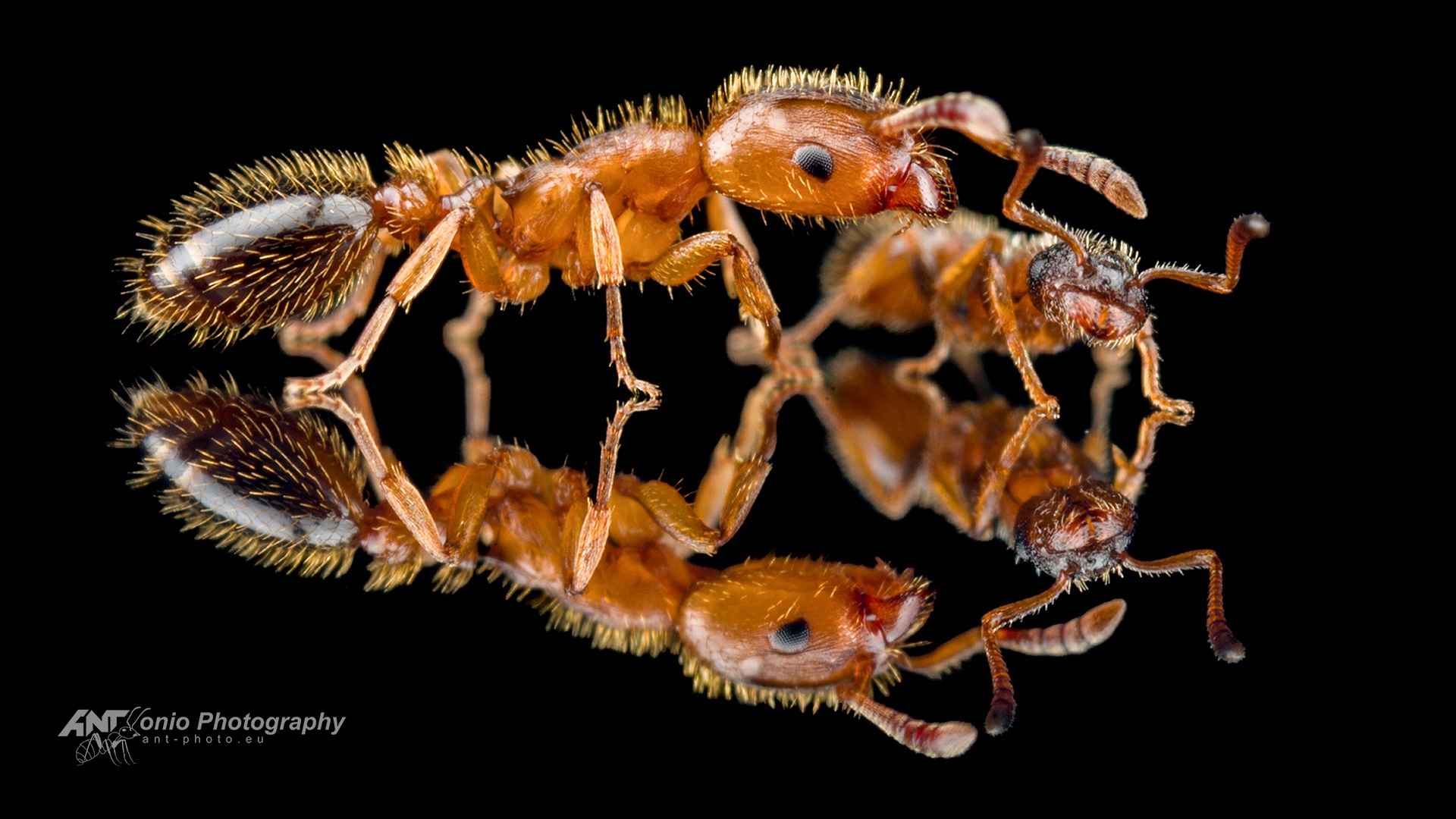
Harpagoxenus
Harpagoxenus sublaevis
Nuptial Flight Calendar
Care Guide
Harpagoxenus sublaevis is a captivating but challenging ant species, best known for its remarkable social parasitic lifestyle. Unlike typical ants that raise their own brood from a single queen, the queen of Harpagoxenus sublaevis must infiltrate a colony of a host species—usually from the genera Leptothorax or Temnothorax—kill or subdue the resident queen, and then use the host workers to raise her own offspring. This founding process is so specialized that it requires a deep understanding of ant behavior and is strictly for expert keepers. Once established, the colony produces its own workers, though host workers continue to support the nest. The colony size remains relatively small, typically between 100 and 500 workers. Both queens and workers are petite: queens reach 4–5 mm, while workers are 3–4 mm, making them elegant but delicate inhabitants of the formicarium.
Care difficulty
Keeping Harpagoxenus sublaevis is an expert-level endeavor. The primary challenge lies in the founding stage: the queen cannot start a colony alone. She must be introduced to a host colony, a process that demands precise timing, careful observation, and a willingness to accept that failure is common even for experienced keepers. Once a mixed colony is established, feeding involves a balance of insects (such as fruit flies or small crickets) and sugar water for energy. Protein is essential for brood development, and a steady supply of small prey items is necessary. Temperature should be kept between 18–24°C, with humidity at 50–70%. Hibernation is mandatory; from late autumn through winter, the colony must be cooled to around 5°C for several months to mimic natural conditions. Without this rest period, the colony will struggle to reproduce successfully in spring.
Housing
Because of their small size and low population, Harpagoxenus sublaevis does not require a large formicarium. A compact nest with small chambers and narrow passages—similar to those used for Temnothorax—works best. The nest area should be kept relatively dry but with localized moisture to maintain humidity. These ants are sensitive to vibrations and light disturbances, especially during the delicate founding phase and during raiding events (when they may steal brood from host colonies). Provide an outworld for foraging, but keep it secure to prevent escapes. Regular feeding of insects and sugar water is needed, but avoid overfeeding as leftover prey can mold quickly in the humid environment.
First days after purchase
After receiving a Harpagoxenus sublaevis colony—typically already established with host workers—place the formicarium in a quiet, dark location. Give the ants at least 24–48 hours to acclimatize before any disturbance. Observe carefully to ensure the queen is active and the host workers are tending to her brood. Provide a small droplet of sugar water and one or two tiny insects. Do not open the nest frequently; stress can cause the host workers to abandon the queen. Patience is key: these ants move slowly and may take days to explore new food sources. With careful attention, the unique slave-making behavior of Harpagoxenus sublaevis offers a fascinating window into nature’s most complex social strategies.