Ponera
Ponera pennsylvanica
Nuptial Flight Calendar
Flight months: Aug, Sep
Care Guide
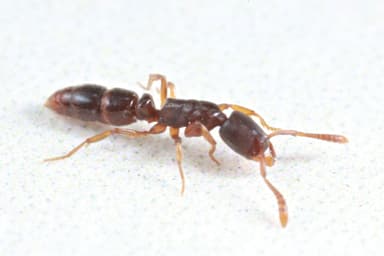
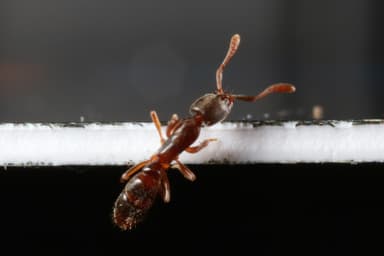
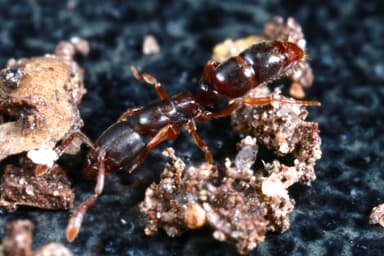
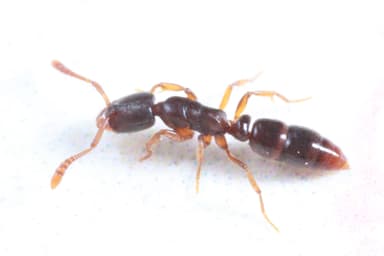
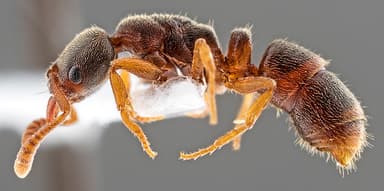
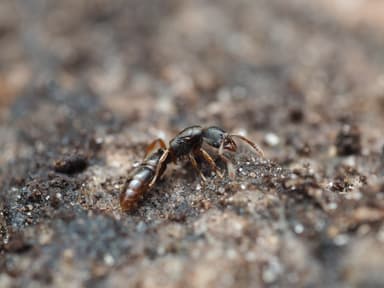
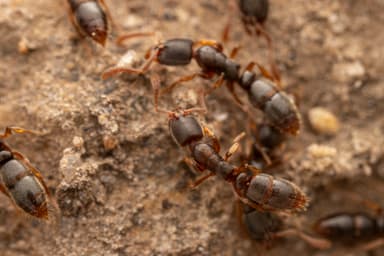
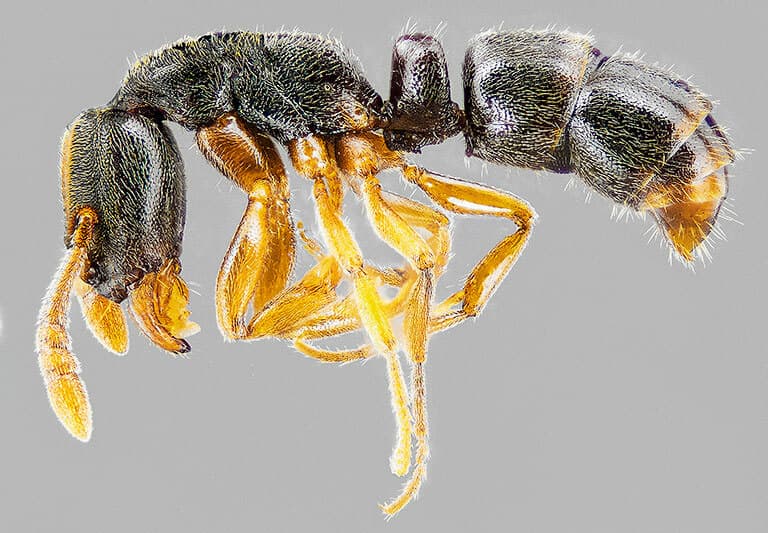
Ponera pennsylvanica is one of North America’s most enigmatic native ants, a small, cryptobiotic species that spends most of its life hidden beneath leaf litter, rotting logs, and soil. Queens measure a modest 3.5 to 4 millimeters, while workers range from 2.8 to 3.5 millimeters, all clad in a polished brown to nearly black exoskeleton that gleams under magnification. Unlike many ants, these are not polymorphic — every worker is a minor, monomorphic worker, perfectly adapted for navigating tight subterranean passages. Colonies remain tiny by ant standards, peaking at around 60 workers, and they are strictly monogynous. What makes Ponera pennsylvanica fascinating to the observant keeper is its ancient lineage; the genus Ponera belongs to the ponerine subfamily, a group with a hunting heritage that predates the elaborate social structures of more familiar formicines and myrmicines. Their reliance on a specialized diet of soft-bodied soil arthropods and their cryptic nesting habits present a window into a primitive, yet highly successful, way of life that has persisted in the forests of the eastern United States, from the Gulf Coast north to the Great Lakes and from the Atlantic seaboard west to the Great Plains (Taylor 1967; Smith 1962).
This species is best suited for the intermediate keeper who has successfully maintained easier claustral founders and is ready to engage with a more reclusive, slow-growing ant. Although the colony’s needs are not overly complex, their sensitivity to disturbance and specific microclimate requirements demand a thoughtful approach. They are not a beginner’s ant because they will not thrive on casual feeding schedules or overly dry conditions, and their minute size can make escapes a real hazard if housing is not meticulously sealed. The reward, however, is the chance to observe a rarely seen slice of native biodiversity up close, with behaviors that include delicate solitary foraging and a larval feeding strategy that involves placing prey directly onto the larvae rather than sharing it between adults (Pratt 1994). If you have patience and a passion for the less conspicuous inhabitants of the soil, Ponera pennsylvanica will richly repay your care.
Housing must replicate the cool, humid, and confined spaces these ants inhabit in the wild. A plaster or ytong nest with a moisture gradient is ideal, allowing the ants to select their preferred humidity between 60 and 80 percent. Temperature should be maintained between 18 and 26 °C, with a gentle gradient toward the cooler end; room temperature is often sufficient, but a small heat pad placed on one side of the nest can be used if the ambient temperature drops below 18 °C, ensuring the ants can escape excessive heat. A fine layer of sandy-loam substrate mixed with bits of decayed wood and leaf litter will encourage natural digging and provide cover; many keepers find success with a naturalistic vivarium setup where the colony can tunnel in a contained soil layer. The foraging area should be small but escape-proof, lined with a thin layer of fluon or a tight-fitting lid with fine mesh, as these ants are astonishingly adept at squeezing through gaps. Lighting is not critical, but they prefer darkness; a red viewing light allows observation without distress.
Feeding Ponera pennsylvanica requires a consistent supply of tiny, live or freshly killed soft-bodied invertebrates. In nature, they specialize on enchytraeid worms, springtails, small millipedes, and insect larvae (Pratt 1994). For the keeper, a staple of fruit flies, pinhead crickets, chopped mealworms, and springtails works well. They are not avid consumers of sugary liquids; while a small drop of diluted honey or sugar water may be accepted occasionally, carbohydrates are not a major component of their diet, and most colonies will ignore them entirely. Protein sources should be provided every two to three days, in amounts small enough to be consumed quickly, as decaying prey can rapidly promote mold in the high humidity they require. Always maintain a clean, constant supply of fresh water via a small test tube setup or a moistened cotton ball within the foraging area.
Hibernation is mandatory for the long-term health of the colony. In their native range, temperatures plummet in winter, and the ants retreat deep into the soil and decaying wood where they remain dormant. To mimic this, the colony should be gradually cooled in late autumn to a stable 5 °C, never allowing a sudden freeze or rapid temperature swings. A wine cooler or dedicated hibernation chamber works well. Keep the nest moist but not wet, and provide a small water source; check monthly for condensation and any sign of mold, but do not disturb the cluster. A three-month diapause is typical, after which temperatures are slowly raised in early spring, mimicking the warming soil. Skipping or shortening hibernation often results in declining colony vigor, reduced egg-laying, and eventual collapse, so this step is not optional. (Taylor 1967; AntWiki).
Upon receiving a newly mated queen or small founding colony, patience is paramount. Place her in a dark, quiet space within her test tube setup — a water tube with a cotton plug and a small amount of fine soil or a narrow bore plaster nest — and resist the urge to check on her for at least a week. As a claustral founder, she will not require food until her first workers eclose; feeding too early merely stresses her and risks mold. Keep the setup at a steady 22 to 24 °C and 70–80 percent humidity. After the first workers appear, wait a few days before offering a single, very small prey item, such as a freshly killed fruit fly or a tiny springtail. Watch for foraging; workers will emerge cautiously, often only at night. If the prey is ignored, remove it after 24 hours and try again a few days later. The founding stage is delicate, and any disturbance can cause the queen to cease laying or even consume her brood. Once the colony reaches ten or so workers, you can begin to slowly increase feeding and offer a larger nest, but always transition gradually. With a gentle hand and close attention to their microclimate, Ponera pennsylvanica will flourish, offering you a rare glimpse into the ancient rhythms of the forest floor.