Acromyrmex
Acromyrmex lobicornis
Nuptial Flight Calendar
Flight months: Jan, Oct, Nov, Dec
Care Guide
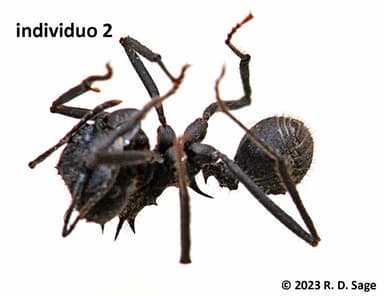
Acromyrmex lobicornis is a true leaf‑cutting ant and a master of agricultural symbiosis, instantly captivating for the advanced keeper. Queens measure 13 to 16 millimetres and are robust, clad in a reddish‑brown cuticle with coarse sculpturing that sets the species apart from its congeners. The most distinctive feature, however, is found on the head: the antennal scapes bear prominent, lobe‑like projections that give the species its name. Workers are markedly polymorphic, spanning a modest 4 millimetre minors through to 9‑millimetre majors, with at least three distinct castes working together. Mature colonies can house up to 5,000 individuals, a manageable size for a leaf‑cutter, yet still a hive of ceaseless horticulture. The ants do not consume leaves directly; instead, they use the freshly cut foliage to sustain their symbiotic fungus garden, which in turn feeds both the brood and adults. Native to the temperate and subtropical latitudes of southern South America, A. lobicornis is one of the few leaf‑cutters adapted to pronounced seasonal shifts, making its care a fascinating window into a mutualism that has evolved beyond the tropics (AntWiki; Farji‑Brener 2000).
Caring for this species is rightly classified as an expert‑level challenge, suitable only for those with a strong background in ant keeping and preferably previous experience with higher attine fungus‑growers. The difficulty does not stem from aggression — they are not particularly defensive — but from the demands of maintaining a thriving fungus garden over the long term. The colony’s health is entirely tied to the vitality of its fungus, which requires strict environmental control and a constant, uncontaminated supply of vegetation. Keepers must be prepared for daily leaf changes, vigilant humidity monitoring, and the gradual art of hibernation. If you have successfully kept other exotic leaf‑cutters or large, sensitive formicaria, you are likely ready for the commitment. Beginners should look to hardier species first, as any failure here will mean the loss of both ants and their fungus, which can happen alarmingly quickly if parameters drift.
A specialized housing setup is non‑negotiable. The nest chamber must mimic the humid, subterranean cavities this species excavates in the wild, where stable moisture protects the fungus garden (Farji‑Brener 2000). A plaster, grout, or concrete nest lined with a thin layer of sand or clay works well; it should include a large, completely dark fungus chamber and a separate foraging arena connected by clear tubing. Temperature needs to be maintained between 20°C and 28°C, with a gradient allowing the ants to choose their preferred warmth. Bollazzi & Roces (2010) demonstrated that A. lobicornis workers actively select resting sites around 25°C when given the option, which correlates with optimal fungus growth. Humidity must be kept high, between 60% and 80%, especially in the fungus chamber. This can be achieved by hydrating the nest material or using a humidity‑boxed setup. The foraging area can be slightly drier but must include a clean water source, such as a test tube with a cotton plug, as the workers drink frequently. Substrate in the foraging arena should be minimal to prevent the ants from dumping refuse there; they will naturally organize a waste pile, which you should remove periodically to inhibit mold.
Feeding is where the leaf‑cutting magic happens. The colony’s sole carbohydrate and protein source is the fungus they cultivate, so you are actually feeding the fungus, not the ants directly. Provide fresh, pesticide‑free leaves daily: bramble, rose, privet, grapevine, and citrus work excellently. Flowers like hibiscus and some fruit pieces can be offered occasionally for variety, but leafy greens should form the bulk of the diet. The ants will cut discs of vegetation and carry them to the fungus chamber, where they carefully masticate the material, inoculate it with fungal hyphae, and build the garden. In captivity, many keepers supplement the fungus with small amounts of dry oatmeal, fish flakes, or crushed seeds, as these can boost fungal biomass without introducing excessive moisture. Remove any uneaten or moldy leaves within 24 hours to protect the garden. Water is provided solely through drinking sources; the fungus gets its moisture from the humid environment, not from wet leaves. Never spray water directly on the garden, as this can cause it to slough.
Hibernation is a strict requirement and reflects the species’ adaptation to the cool winters of Patagonia and the Pampas. At around 15°C, the colony naturally slows down: workers become lethargic, the queen ceases laying eggs, and the fungus garden stops expanding — but it must not die. Plan for a 3‑ to 4‑month rest period, typically aligning with the northern hemisphere winter from November to February if you are in temperate latitudes. Begin reducing the temperature gradually over two weeks, lower the leaf supply to a few small pieces per week, and keep the fungus chamber dark. Humidity should remain high, as the fungus is susceptible to desiccation even in torpor. A dedicated refrigerator or wine cooler with precise control is ideal; avoid placing the nest on a cold floor where temperature fluctuates. Come spring, warm the setup slowly and watch for renewed cutting activity — a sure sign of a successful dormancy.
When your Acromyrmex lobicornis colony first arrives, give them space to recover from shipping stress. Set up the nest at a steady 24–25°C with high humidity and place them in complete darkness for the first 48 hours. Usually, a small starter fungus garden is included, and it is critical that the ants settle near it without panic. Offer a single fresh leaf on the first day and watch from a distance; if the workers begin cutting and carrying within a few hours, they are acclimating well. Do not open the nest repeatedly — a sudden drop in humidity can shock the fungus. Avoid any supplemental feeding beyond a leaf and a sip of water for the first week. Monitor for signs of distress: if workers huddle listlessly away from the fungus, or if the garden develops black, sooty patches, your temperature or humidity is likely off. Be prepared to adjust quickly. With patience and precision, you will be rewarded with one of the most captivating displays of agricultural sophistication the ant world has to offer.