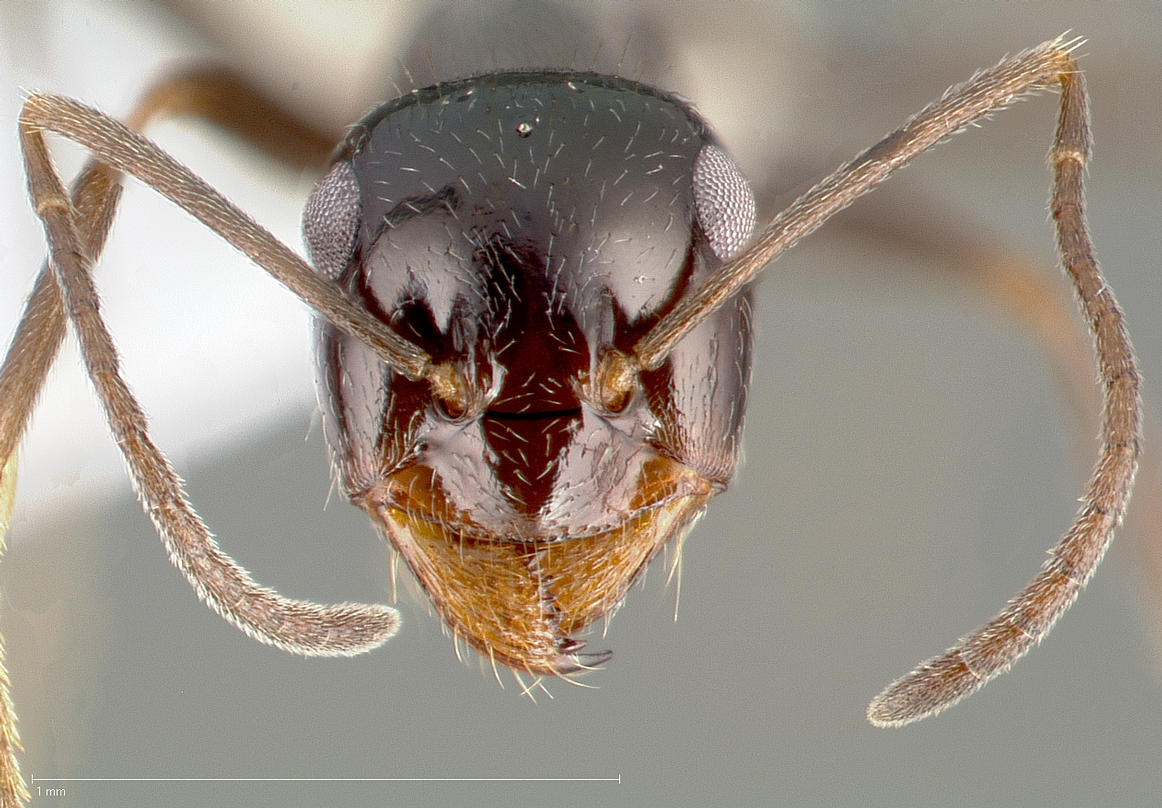
Myrmecocystus
Myrmecocystus creightoni
Nuptial Flight Calendar
Care Guide
Myrmecocystus creightoni, commonly known as a honeypot ant, displays a remarkable adaptation that sets it apart from almost any other species kept by hobbyists. While the queen, measuring 10–13 mm, and the workers, which range from 4–10 mm, show some size variation, the true wonder of this species lies in the development of specialized workers called repletes. These living storage vessels hang from the ceilings of underground chambers, their gasters swollen into golden, translucent globules filled with sugary nectar. A single colony, which can grow to several thousand workers, will maintain a cadre of repletes that serve as the colony’s larder, regurgitating sweet liquid to nestmates during lean times. This unique social structure makes Myrmecocystus creightoni one of the most visually stunning ants to observe in captivity.
Care difficulty
Keeping Myrmecocystus creightoni is considered advanced, and for good reason. While their founding is claustral—meaning the queen raises her first brood without needing food—the colony’s long-term success hinges on precise environmental control and a carefully managed diet. These ants are native to arid regions and require a surprisingly low humidity level of 30–50%, which can be challenging to maintain in typical setups without causing mold or desiccation. They also need a warm temperature gradient between 24°C and 32°C year-round, with no hibernation period required. Their diet is straightforward: a constant supply of sugar water (to encourage replete development) combined with protein-rich insects such as crickets or roaches. However, overfeeding or incorrect sugar concentration can lead to health issues in repletes, so observation and adjustment are key.
Housing
The formicarium must provide ample space for vertical nesting, as these ants dig deep chambers to hang their repletes. A system with a large, dry outworld and a nest section where humidity is carefully regulated works best. Use a substrate that holds shape but drains well, such as a sand-clay mix. The outworld should offer a clean feeding area, while the nest must remain dark and undisturbed. A heating cable or mat placed on one side creates a thermal gradient, allowing workers to choose their preferred temperature. Avoid excessive moisture; a simple water tube or small hydration area is sufficient, as these ants drink droplets rather than needing soaked soil.
First days after purchase
Upon receiving your colony, transfer the queen and her initial workers into the prepared formicarium with minimal disturbance. Place the setup in a quiet, dimly lit location and do not disturb for at least 48 hours. During this acclimation period, provide a small drop of sugar water and a tiny piece of insect on a feeding tray. Observe from a distance; if the ants begin exploring and collecting food, they are settling in. Avoid bright lights and vibrations, as these can stress a founding colony. Once the first batch of larvae is visible, you can slowly increase feeding and begin monitoring humidity levels. Patience is essential—watching your first replete inflate is a reward well worth the wait.