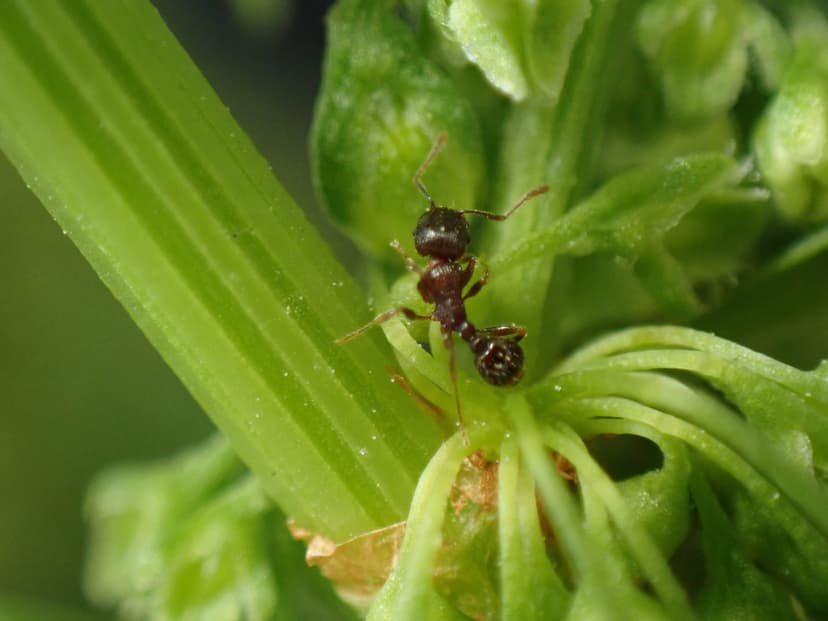
Tetramorium
Tetramorium tsushimae
Nuptial Flight Calendar
Flight months: May, Jun, Jul
Care Guide
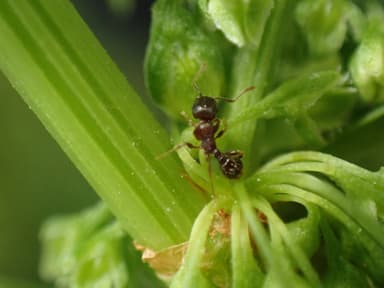
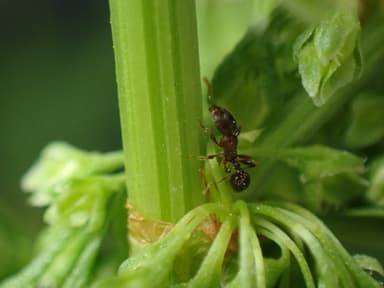
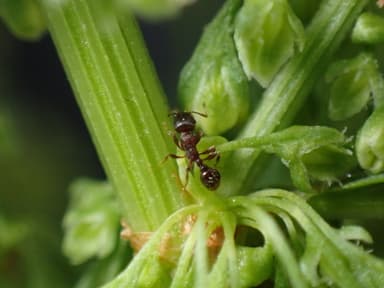
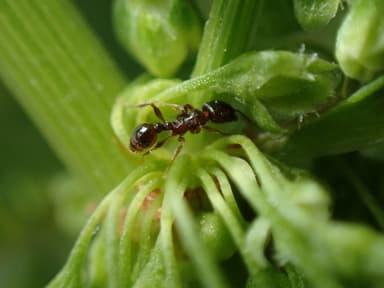
Tetramorium tsushimae, often known as the Japanese pavement ant, is a small but formidable species that has earned a devoted following among ant keepers. Queens measure a robust 5.5 to 7 mm, while the monomorphic workers range from 2.5 to 3.5 mm, all cloaked in a deep brown to black cuticle with faintly striated heads and thoraxes. Colonies can explode to upwards of 100,000 individuals, and while the species is naturally polygynous and sometimes exhibits unicolonial behavior in its introduced range (Sanada-Morimura et al. 2006), captive colonies typically thrive with a single queen. Native to East Asia—spanning Japan, Korea, and eastern China—it has established invasive footholds in North America, notably in Missouri, where nuptial flights occur in May and June during warm, sunny afternoons following rain (Steiner et al. 2006). What makes this ant truly captivating is its pugnacious nature: workers engage in dramatic territorial battles with rival colonies, grasping opponents with their mandibles while delivering potent chemical signals, a behavior that makes them endlessly entertaining to observe in a spacious outworld.
As a care difficulty rated for beginners, Tetramorium tsushimae is an excellent entry point into the hobby or a rewarding project for keepers who enjoy watching a rapidly expanding colony. Its resilience and broad environmental tolerances mean that minor husbandry mistakes are rarely fatal, and its enthusiastic foraging response—workers will swarm a food source within minutes—provides immediate feedback. The species is ideally suited for a modular formicarium that can be expanded as the colony grows. A plaster, ytong, or acrylic nest works well, but these ants truly shine when offered a digging medium such as a sand-clay mix, where they will sculpt intricate tunnels reminiscent of their roadside habitats. Maintain the nest at a steady temperature between 20 and 28°C, with a relative humidity of 40 to 60%. A temperature gradient is beneficial, allowing the colony to self-regulate; a small heat pad placed against one end of the nest is often sufficient. Keep the outworld dry to discourage mold, but always provide a clean water source, either a test-tube waterer or a capillary drinker, refreshed regularly.
Feeding a colony of T. tsushimae is straightforward but requires consistency due to their enormous appetite. Offer a varied protein menu of chopped mealworms, crickets, or Drosophila fruit flies two to three times per week, scaling up with colony size. Workers will quickly dismember prey and carry it back to the larvae. For carbohydrates, a small dab of honey, maple syrup, or sugar water on a feeding tray will be drained eagerly; avoid free liquid drops that could drown foragers. As with all ants, remove uneaten food after 24 hours to prevent mite outbreaks or mold. Water is critical: the nest should have a dedicated hydration source, and the outworld can hold an additional test tube with water plugged with cotton. During periods of high larval growth, colonies may consume surprising quantities, so monitor food intake and increase portions when you see the brood pile swelling.
Tetramorium tsushimae requires a true hibernation period to maintain long-term colony health. In the wild, they endure cold winters across their native and introduced ranges, and without a proper diapause at around 8°C, queens may cease egg-laying and worker lifespans can shorten dramatically. Begin reducing temperatures gradually in late autumn, allowing the colony to clear their digestive tracts over a week or two. Then place the nest in a wine cooler, refrigerator, or unheated room that stays consistently between 5 and 10°C for three to four months. Check periodically for moisture and condensation, but disturb them as little as possible. When spring arrives, warm them up slowly over several days and offer a tiny drop of honey to jumpstart activity. This seasonal rhythm is non-negotiable for a thriving colony.
The first few days after acquiring your colony set the tone for its future. If you have a newly mated queen in a test tube—claustral founding means she will raise her first brood without any food—simply keep her in darkness and quiet, checking only that the cotton plug remains moist. For a colony with workers, immediately transfer them into a prepared formicarium or keep them in the test tube for a week, connecting it to a small foraging arena. Offer a tiny fragment of pre-killed fruit fly and a micro-droplet of sugar water within 24 hours, then retreat. Workers are bold but may be shy initially; if they ignore the food, remove it after a day and try again in another day or two. Watch for the queen to begin laying eggs, evidenced by a small pile of pearly eggs cradled by nurse workers, and for normal waste disposal behavior—workers will pile debris in a far corner. Avoid jostling the setup, and resist the urge to peek more than once a day. With patience, you’ll soon witness the explosive growth that makes T. tsushimae such a delightful captive species, and you’ll be well on your way to managing a bustling metropolis of these energetic pavement ants.