Formica
Formica francoeuri
Nuptial Flight Calendar
Flight months: Apr, May, Jun, Jul
Care Guide
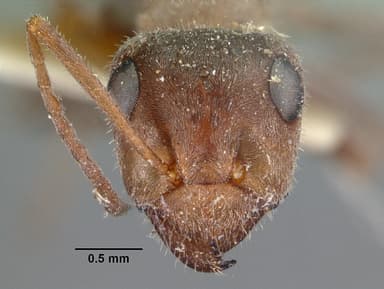
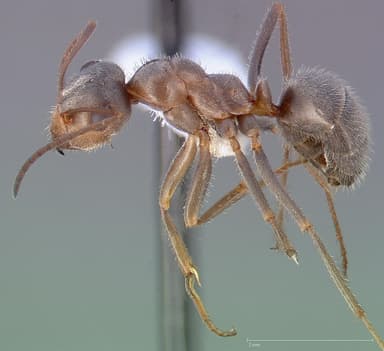
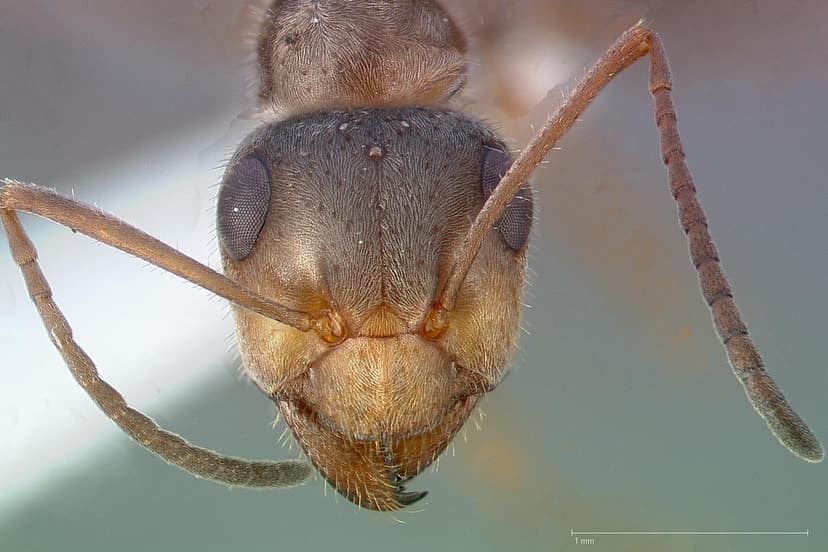
Formica francoeuri is a distinctive and fascinating ant from the slave-making Formica sanguinea group, first described by Snelling and Buren (1985). Endemic to the drier regions of Southern California and possibly northwestern Mexico, its known range stretches roughly from the Central Valley south to the Mexican border, bounded by the coast and the Mojave Desert (AntWiki). Queens are a robust 8–10 mm, while workers, though monomorphic, show a noticeable size gradient from 4.5 to 7 mm, giving the colony a somewhat variable appearance despite the single caste. Mature colonies can reach around 4,000 individuals, a modest size by Formica standards. The most compelling aspect of their biology, however, is their facultative social parasitism: they routinely raid nests of other Formica species—especially those in the fusca group—to steal brood, which ecloses into a mixed workforce that performs foraging and brood-care duties. This behavior, documented broadly for the sanguinea group by Wheeler (1913), makes them a constant source of dynamic activity and a true conversation piece in a myrmecological collection, though it does demand a keeper prepared for their unique requirements.
Because of this parasitic lifestyle and specific environmental tolerances, F. francoeuri is best suited to intermediate keepers who have already successfully maintained a few claustral species. The ant’s need for host workers, precise humidity control, and a mandatory hibernation period push it beyond beginner territory. You’ll need to source a founding queen that has already raised her first workers, or be ready to provide her with a few host pupae—typically from a species like Formica subsericea or similar fusca-group ants—to stimulate colony founding. Once established, the colony’s care becomes more straightforward, but that initial phase requires patience and a good understanding of queen behavior. For an enthusiast who enjoys observing raiding patterns and the complex social integration of host workers, F. francoeuri is hugely rewarding.
Housing must reflect the arid, warm conditions of its native chaparral and coastal sage scrub habitats. A well-ventilated formicarium, such as one made from ytong, gypsum, or a plaster-lined nest, is ideal, as it prevents stagnation while holding a moderate moisture gradient. The temperature should be maintained between 18°C and 30°C—room temperature is fine for much of the year, but a gentle heat cable on one side of the nest during cooler periods helps them thrive. Humidity is surprisingly low for an ant species: aim for 30–60% relative humidity inside the nest. In practice, this means only very light, occasional misting of a small nest chamber, or providing a water source without saturating the medium. A foraging arena filled with a sand/soil mix allows natural digging behavior and gives host workers a familiar substrate. Make sure the outworld is escape-proof, as workers are agile climbers.
Diet for F. francoeuri is uncomplicated: they need both protein and sugars. Offer small insects like fruit flies, chopped mealworms, or pinhead crickets two to three times a week. The colony, especially with host workers, will eagerly accept them. For carbohydrates, everyday dilute honey water or a commercial ant jelly on a small dish works perfectly; the host workers often show more consistent feeding responses than the slave-makers themselves. Always provide a clean water source, such as a test tube with a cotton plug or a drinking tower. Remove uneaten protein promptly to prevent mold, which can be a problem in drier setups where condensation from feed items can locally spike humidity.
An absolute requirement is a proper winter dormancy. In the wild, temperatures in their Southern California range rarely drop below freezing for long, but a cooling period is still essential. Hibernate colonies for at least three to four months at a steady 10°C, using a wine cooler or a dedicated fridge with a thermostat. Begin the cooling in late fall by gradually reducing the photoperiod and temperature over a couple of weeks, and reverse the process in spring. Skipping this dormancy will lead to declining health, queen cessation of egg-laying, and eventual colony collapse.
When your F. francoeuri arrives, the first days are critical. If you’ve acquired a queen with a few workers, provide a small, dark nest with a pre-established humidity gradient and keep the setup in a quiet spot. For a lone founding queen, immediately introduce a few worker pupae from a suitable host species (sources often recommend F. fusca or closely related species); the queen will often open cocoons and begin tending the emerging workers, which will kickstart foraging. Offer a tiny drop of sugar water after the first host workers eclose, and follow with protein a day later. Watch for any signs of excessive stress—constant pacing, refusal to accept host pupae, or aggressive grooming—and ensure the nest isn’t too damp. With gentle handling, a little luck, and strict adherence to their environmental needs, your colony will soon settle in and begin its remarkable parasitic life.