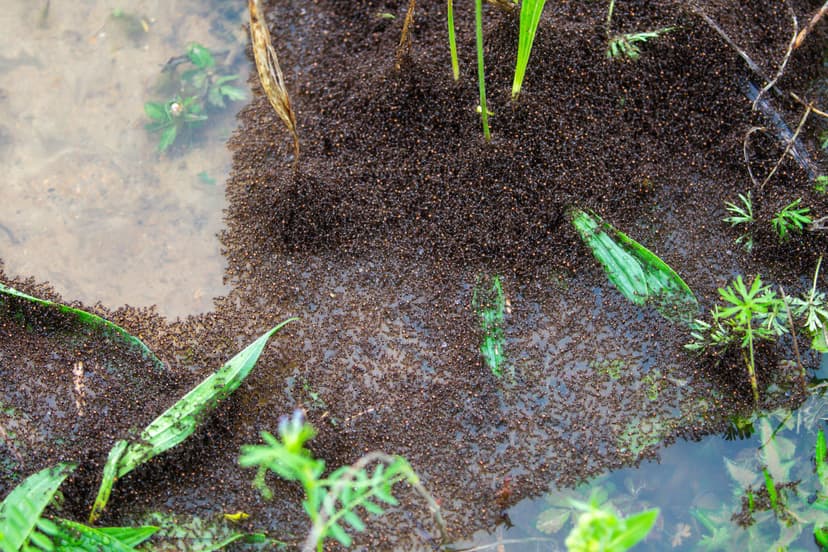
Solenopsis
Solenopsis richteri
Care Guide
Solenopsis richteri, commonly known as the black imported fire ant, is a species that commands respect and careful planning. These ants are famously aggressive, quick to defend their territory, and equipped with a painful sting that can cause a burning sensation lasting hours. The queen measures between 6 and 8 mm, while workers range from 2 to 5 mm and display a subtle size polymorphism – minors handle brood care and foraging, while larger workers serve as defenders and food processors. A mature colony can reach astonishing numbers of 50,000 to 300,000 individuals, forming dense networks of subterranean tunnels and mounds. Like all fire ants, they are claustral founders, meaning the queen seals herself in a chamber after mating and raises her first workers entirely on her own reserves – no feeding required until the first workers eclose and begin foraging.
One of the most defining traits of Solenopsis richteri is their relentless foraging drive and rapid colony growth. Their diet consists primarily of insects for protein and sugar water for carbohydrates, and they will readily accept most soft-bodied prey, roaches, mealworms, and even bits of chicken or egg. This voracious appetite fuels explosive population expansion, which is both a joy to watch and a challenge to manage. Because these ants do not require a hibernation period, they can remain active and growing year-round as long as temperatures are maintained. Their sting is not just a minor nuisance – it can cause allergic reactions in sensitive individuals, so keepers must use extreme caution during maintenance.
Care difficulty
Keeping Solenopsis richteri is considered advanced and is best suited for experienced hobbyists. The primary challenges are their potent sting, their tendency to escape if the setup is not absolutely secure, and the sheer volume of food and space needed as the colony matures. They are also highly sensitive to disturbance, which can trigger defensive rallies. A calm, deliberate approach is essential.
Housing
A spacious formicarium with a large foraging area is critical. These ants build extensive tunnel systems and need deep, moist substrate – a combination of sand and clay works well. Maintain a temperature gradient between 24 and 30°C, with humidity in the nest area between 60 and 80%. The foraging area must be escape-proof: apply a generous coating of fluon or mineral oil, and ensure there are no gaps. Because these ants can chew through softer materials, use glass, hard plastic, or well-cured plaster. Provide a steady supply of live or frozen insects and a sugar water feeder – but be prepared to clean the outworld frequently, as they will scatter debris and food remains.
First days after purchase
Upon receiving your colony, place the formicarium in a quiet, dimly lit spot and resist the urge to check too often. Allow the ants to acclimate for at least 48 hours. Ensure the nest area is kept slightly moist and that a small drop of sugar water and a dead insect are available in the outworld. Observe from a distance – any sudden vibration or light flicker can cause stress. If the queen is still enclosed in her founding chamber, do not disturb her; she will emerge once her first workers are ready. Patience is key: these ants are hardy, but they reward careful, consistent handling with spectacular colony growth and fascinating behavior.

