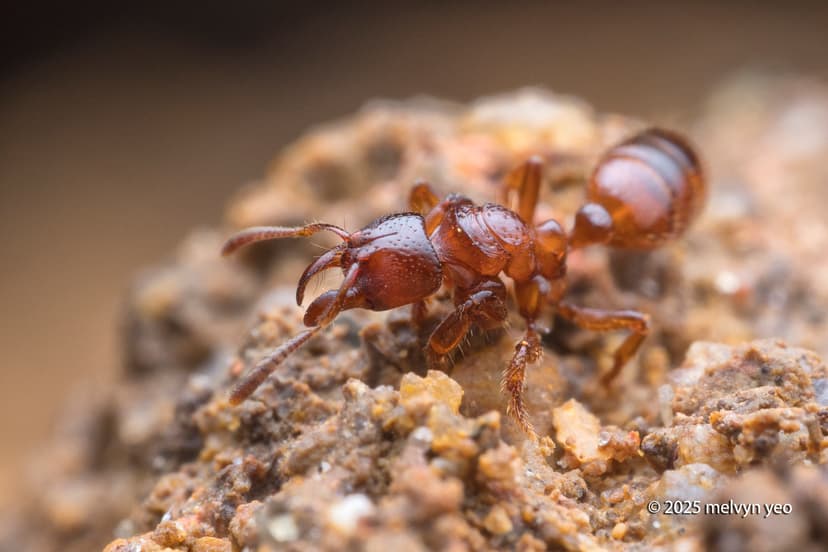
Centromyrmex
Centromyrmex feae
Care Guide
Centromyrmex feae is a remarkable species of subterranean ant that has evolved into a highly specialized hunter. Unlike the seed-storing granivores or fungal farmers, these ants are dedicated predators, primarily targeting termite colonies in their natural tropical habitats. The queen, measuring 8–10 mm, is the largest individual in the colony, while workers are uniformly sized at 5–7 mm and show little polymorphism. Their bodies are robust, with powerful mandibles and reduced eyes—perfect adaptations for a life spent in constant darkness beneath the soil.
The most distinctive feature of Centromyrmex feae is their hunting behavior. These ants are termite specialists, using a combination of stealth and coordinated group attacks to overwhelm their prey. Workers infiltrate termite tunnels, grasping termites with their jaws and injecting venom to immobilize them. In captivity, this diet must be replicated with high-quality insect protein: live termites are ideal, but crickets, roaches, and mealworms can also be offered. Despite being claustral founders, the queen will need protein-rich prey early on once the first workers emerge, making this species particularly demanding for the keeper.
Care difficulty
Keeping Centromyrmex feae is considered advanced. While the claustral founding stage is straightforward—the queen seals herself in her chamber and does not need feeding until her first workers appear—the subsequent care requires precise environmental control and a constant supply of live insects. The colony is sensitive to stress, especially during its early growth, and any deviation from the required humidity and temperature can stall development or cause queen mortality.
Housing
These ants thrive in a warm, humid environment. Maintain a nest temperature between 24–28°C using a heating cable or mat, and keep humidity levels consistently at 70–80%. A substrate-based formicarium with deep soil or a clay-like medium works best, as it mimics the ants’ natural underground tunnels. Regular moisture of the nesting area is essential, and a water source in the outworld should always be available. Because Centromyrmex feae are highly sensitive to light and vibration, the nest must be kept in a dark, quiet location. Red film over the viewing area or complete blackout is recommended. Do not provide a hibernation period—this species is active year-round.
First days after purchase
After receiving your Centromyrmex feae colony, place the formicarium in a stable, warm, and dark spot without any disturbances. Do not open the test tube or nest for the first few days to allow the ants to acclimatize. Offer small pieces of crushed insect prey near the entrance once workers are active, but avoid overfeeding. Observe the colony’s behavior from a distance; any signs of stress, such as clustering or abandoning brood, indicate that humidity or temperature needs adjustment. Patience and a steady hand are your best allies with this fascinating but challenging hunter.


