Pheidole
Pheidole moerens
Nuptial Flight Calendar
Flight months: Apr, May, Jun, Jul, Aug, Sep, Oct
Care Guide
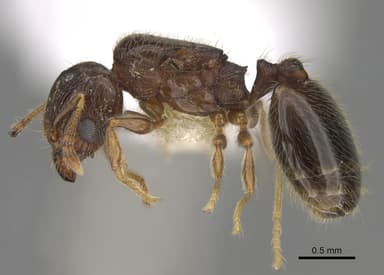
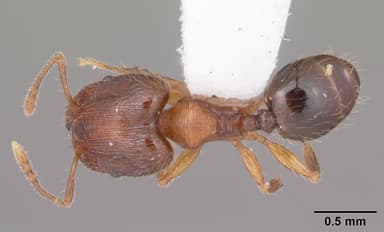
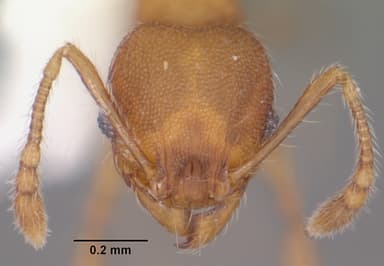
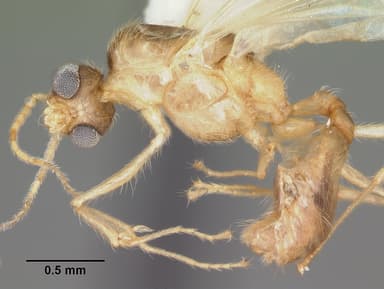
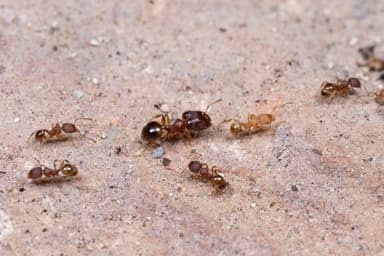
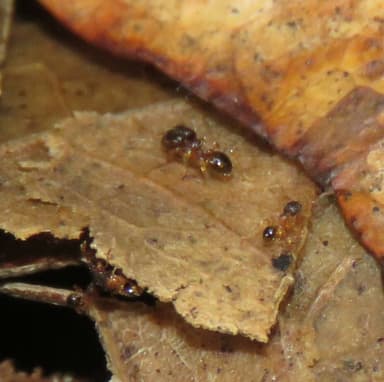
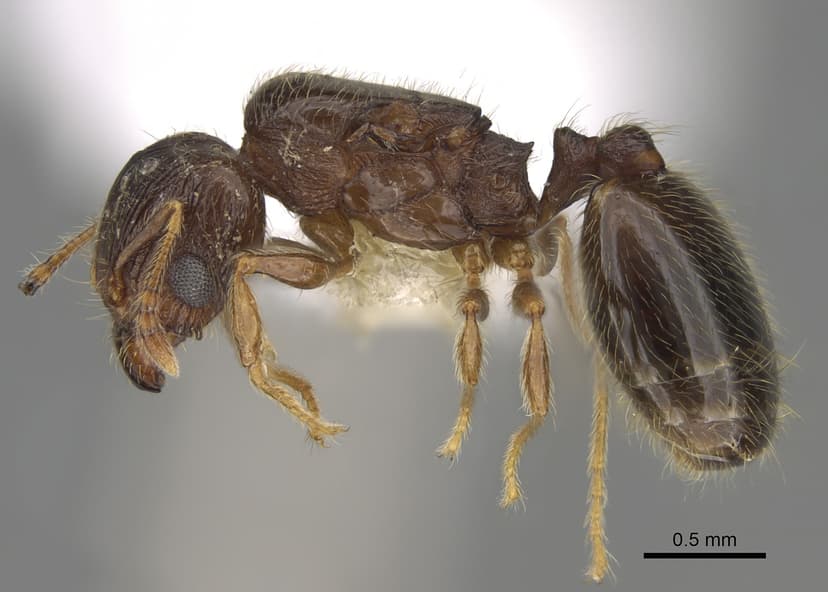
Pheidole moerens is a small but endlessly captivating ant that punches well above its weight in the world of ant keeping. Originating from the Caribbean and now firmly established across the southeastern United States, particularly Florida, this species exemplifies the classic big-headed ant body plan (Wilson 2003). Queens measure a modest 3.5 to 4.5 millimeters, while the true stars are the workers: a diminutive minor caste of just 1.5 to 2.5 millimeters, and strikingly polymorphic majors whose heads seem almost comically oversized for their bodies. That head is packed with mandibular muscles, giving them the power to crush seeds or dismember prey that the minors subdue. Mature colonies can reach a bustling 10,000 individuals, and observing the seamless division of labor between the quick, ever-moving minors and the lumbering, broad-headed majors is a daily reminder of the complexity that a simple dimorphic system can generate. They are a model organism for understanding caste determination and task allocation, yet their adaptability and hardiness make them an absolute joy for the beginner hobbyist.
With a care difficulty firmly in the beginner category, P. moerens is an excellent choice for first-time ant keepers or anyone seeking a low-maintenance species that still delivers a dramatic visual spectacle. Their claustral founding means a newly mated queen requires nothing more than a test tube setup with a water reservoir to raise her first brood; no stressful supplemental feedings are needed during this delicate stage. The species forgives minor husbandry errors that would send more sensitive ants into decline, and they are not prone to the sudden, inexplicable collapses that can plague other small Pheidole. Because they do not require a hibernation period, the colony remains active and engaging year-round, offering a continuous window into their world without the months of quiet downtime that temperate species demand. This also means you can start a colony at any time of year, provided you can source a queen, though the primary nuptial flights in North America occur on warm, humid evenings from May through September, often after rain (Deyrup 2003). Their tropical ancestry means they thrive in the very temperatures that many homes naturally maintain, so no expensive cooling or heating gear is strictly necessary.
When it comes to housing, P. moerens is remarkably adaptable, though anticipating their colony growth is essential. A nest with high visibility, such as a glass or acrylic formicarium with a thin cavity, will let you appreciate the minors’ constant activity and the majors’ imposing presence. The recommended temperature range is 22 to 30 degrees Celsius, with a sweet spot around 26 to 28 degrees where brood development is swift and foraging activity peaks. Humidity should be kept between 50 and 70 percent; a simple test tube setup naturally provides a gradient for the founding queen, while established colonies benefit from a nest with a hydration reservoir or a light misting. Because these ants are small, pay close attention to escape-proofing: a tight-fitting lid and a barrier of liquid PTFE or a thin oil line are non-negotiable. While a substrate is not mandatory in the nest itself, a thin layer of sand or grout in the foraging area gives workers purchase and makes cleaning easier. As the colony nears the thousand-worker mark, the minors’ exploratory zeal can test any barrier, so a well-designed outworld with a secure lid and ventilation that does not allow gaps larger than a fraction of a millimeter is wise.
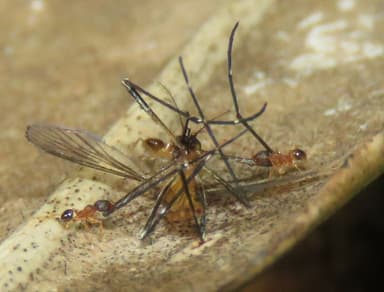
Dietarily, P. moerens is an enthusiastic generalist. They require a steady supply of protein for brood production, with crushed insects such as fruit flies, small crickets, or mealworm pieces eagerly accepted. Because the minors are tiny, freshly killed or pre-cut prey items work best; the majors, with their powerful mandibles, will then macerate the offering into a form the larvae can consume. Carbohydrates can be provided via sugar water, honey water, or a small slice of apple, but always offer these in a shallow feeder or on a piece of wax paper to prevent drowning. A constant supply of fresh water in a test tube or a drinking station is vital. Interestingly, P. moerens colonies do not store large liquid reserves in the same way some honeypot ants do, so they need access to moisture daily. A small feeding dish with a sponge or cotton wick works well. For protein, a feeding schedule of two to three times per week is appropriate for a growing colony; reduce frequency slightly during periods of lower brood production. Remove uneaten food after 24 hours to prevent mold, to which this species is not especially sensitive but which can signal poor ventilation.
One of the great pleasures of keeping P. moerens is that hibernation is completely absent from their annual cycle. These ants have no programmed dormancy period, so you will never need to refrigerate them or fret over winter temperatures. This means brood piles will persist through the coldest months as long as you maintain their environmental parameters, and you can expect to see foraging activity every single day. The lack of a chilling requirement simplifies care enormously and makes them an ideal species for a classroom or office desk display where a constant, vibrant presence is desired. Just remember that even without hibernation, colonies may naturally slow down if temperatures consistently drift to the low end of their range, so a small heat mat placed on one side of the nest during winter can maintain optimal activity levels if your home runs cool.
When your new P. moerens queen arrives, her reclusive nature and small size can lead to undue worry. Place the test tube setup in a quiet, dimly lit area and resist the urge to check on her for at least a week. She is fully claustral, so she will break down her wing muscles to nourish her first batch of eggs; no food is necessary until the first minim workers eclose, which typically takes four to six weeks at 26 degrees. Once the first tiny workers appear, introduce a minute droplet of sugar water on a sliver of paper and a pinhead-sized piece of freshly killed fruit fly. Watch for the workers to discover these offerings within a few hours; their exploratory nature kicks in quickly. The most common mistake at this stage is overfeeding, which leads to mold and stressed ants. Provide tiny amounts, and only increase as the worker count grows. Look for the first major workers to appear when the colony numbers a few hundred individuals; these are a sign that the colony feels secure and well-fed. With patience and minimal interference, a single queen will soon blossom into a teeming metropolis that never fails to impress.