Strumigenys
Strumigenys rogeri
Nuptial Flight Calendar
Flight months: Mar, Apr, May, Jun, Jul, Aug, Sep, Oct
Care Guide
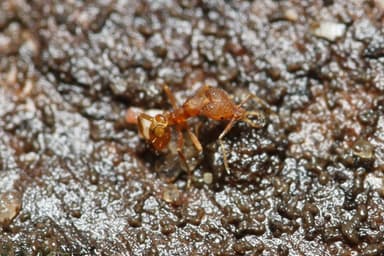
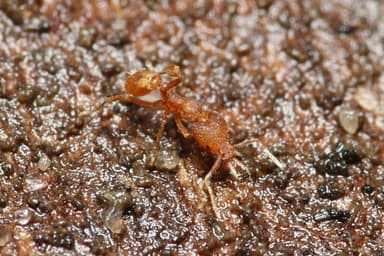
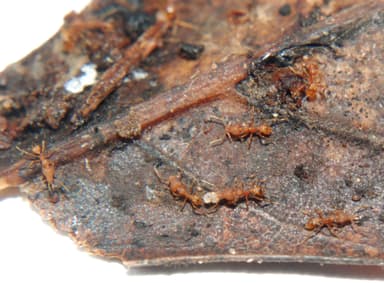
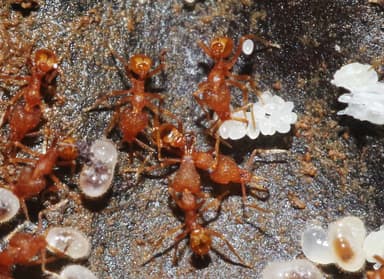
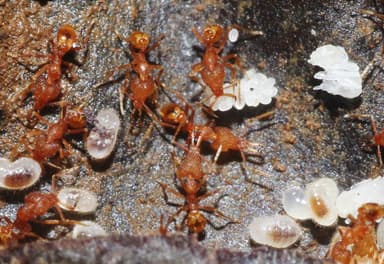
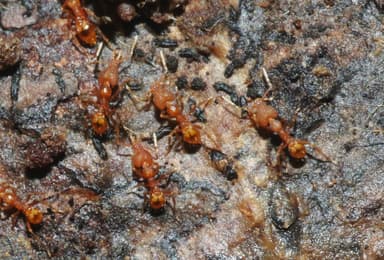
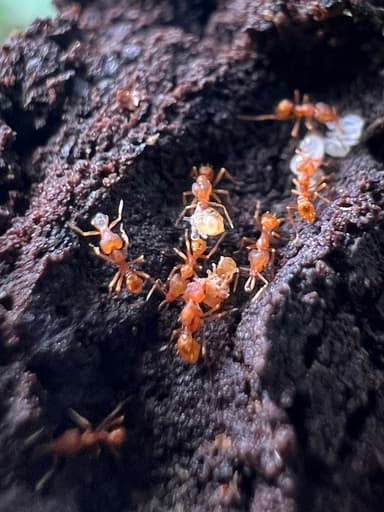
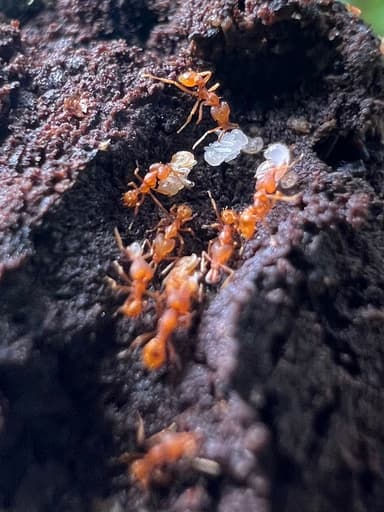
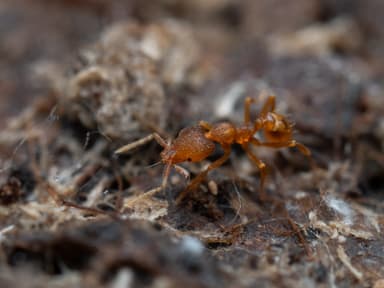
Strumigenys rogeri is a minute and captivating member of the dacetine ants, a group renowned for their extraordinary mandibular specializations. Workers measure a mere 2.0–2.4 mm, while the queens reach 2.6–3.0 mm, both clad in a sculptured, predominantly brown cuticle that makes them true gems of the leaf litter (Bolton 2000). Their most arresting feature is the elongate, snapping mandibles, held at a wide angle when hunting and triggered with breathtaking speed to impale springtails. Unlike some related species, S. rogeri is monomorphic, with all workers belonging to a single minor caste, and colonies are small by formicid standards, peaking around 200 individuals (Wetterer 2012). The species has become a pantropical tramp, hitching rides in soil and plant material to establish populations from Florida to the Pacific islands, though it never attains pest status and remains a discreet inhabitant of humid microhabitats.
This is an ant for the expert keeper, and candidly I must stress that point. The care difficulty is ranked as expert primarily because of the strict dietary requirements and the challenge of maintaining the high humidity this species demands. It is wholly unsuitable for beginners or anyone who cannot dedicate daily attention to a living microenvironment. Success with S. rogeri demands a sound understanding of microarthropod culturing and a feel for the subtle rhythms of a closed-system terrarium. If you have previously mastered genera like Discothyrea or tiny Pheidole with specialized needs, and you relish the prospect of observing intricate predatory behaviours, you will find this a deeply rewarding species. For those considering their first exotic ant, however, I strongly recommend starting with a hardier, more generalist formicine or myrmicine.
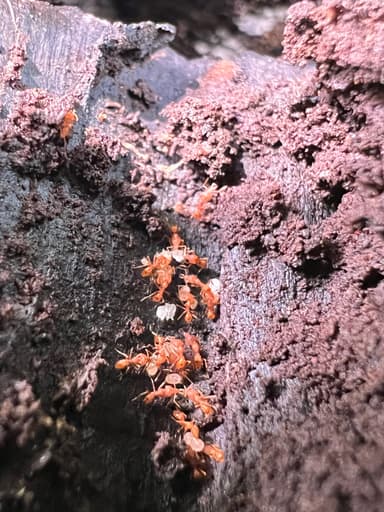
Housing must replicate the warm, sodden conditions of tropical leaf litter. A temperature range of 22–28°C is ideal, and humidity should be kept between 80 and 95%, which practically speaking means the substrate should never dry out. The best enclosures are glass or acrylic vessels with a tight-fitting lid and a micro-perforated ventilation strip to prevent stagnation while curbing evaporation. The nest itself can be a naturalistic setup: a deep layer (at least 5 cm) of humus-rich soil mixed with coconut fibre and decaying hardwood leaves, covered with a generous blanket of whole leaf litter. The ants will nest in small preformed cavities or hollow stems within this substrate; they do not require elaborate plaster or ytong nests, though a small test tube with humid cotton can serve as an initial retreat. Escape prevention is critical because these ants are so tiny: a fluon-coated rim and fine-mesh screening over any gaps are non-negotiable.
Diet is the aspect that defines this ant’s captive care. Strumigenys rogeri is an obligate predator of tiny soil arthropods, with a near-exclusive reliance on springtails (Collembola) (Bolton 2000). They will not take standard ant sugars, seeds, or insect fragments. You must maintain a thriving, self-replenishing culture of small, soft-bodied springtails — Folsomia candida or similar temperate species are adequate — and seed the enclosure with them regularly. The ants hunt by stalking their prey in the leaf litter, using their spongiform petiolar structure to perhaps aid in sensory detection, and they will typically subdue and consume several springtails per day. Some success has been reported with offering tiny mites or the smallest first-instar fruit fly larvae, but springtails remain the staple. Water should be provided as droplets misted onto the sides of the container or via a small test tube waterer with cotton; a shallow, membrane-covered water dish also works, but never allow open water deep enough to drown these surface-dwelling ants.
There is no hibernation requirement for this tropical tramp species. Colonies remain active year-round, given stable warmth and humidity. Do not attempt to cool them; exposing the ants to temperatures below approximately 18°C for extended periods can be fatal, as they lack any diapause physiology (Wetterer 2012). Simply maintain the environmental parameters described and the colony will follow its endogenous rhythm, with egg-laying and larval development continuing without seasonal interruption.
When your S. rogeri colony arrives, transfer it into its prepared enclosure with the very minimum of disturbance. The ants will be highly stressed from transit; place the opened shipping container directly inside the larger setup and allow them to emerge and explore on their own terms. Do not introduce the queen forcibly or prod at the workers — their tiny bodies are fragile and they will retreat deep into the leaf litter if they feel threatened. After a few hours of settling, mist the enclosure lightly to raise the humidity and add a small culture of springtails near the entrance to the colony’s chosen retreat. The ants may not feed immediately, but within 24 hours you should observe workers adopting the characteristic predatory posture, mandibles agape, patrolling the leaf crevices. Keep the enclosure in a dim, vibration-free location for the first week, checking only once daily to replenish moisture and prey. With delicate handling and a watchful eye on that precious living substrate, you will soon be rewarded with glimpses of one of the ant world’s most elegant specialized hunters.