Leptothorax
Leptothorax tuberum
Nuptial Flight Calendar
Flight months: Jul, Aug, Sep
Care Guide
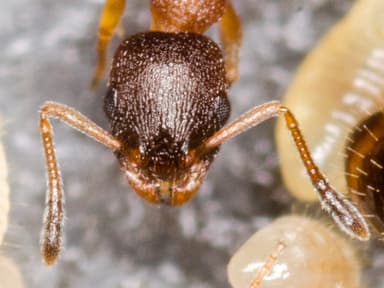
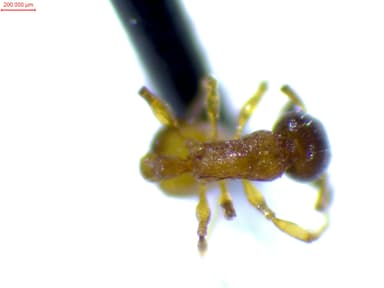
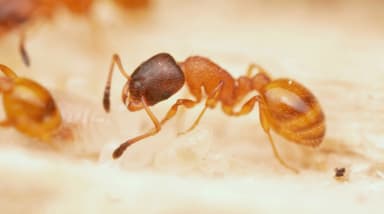
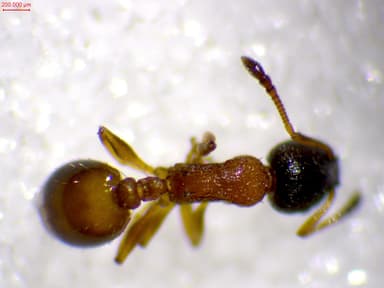
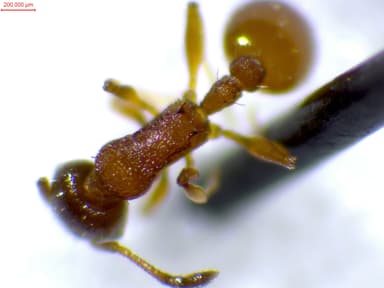
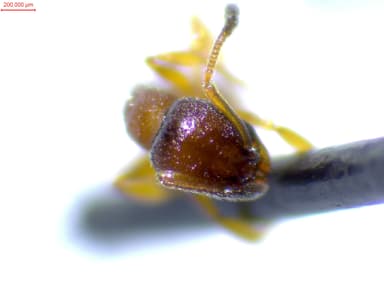
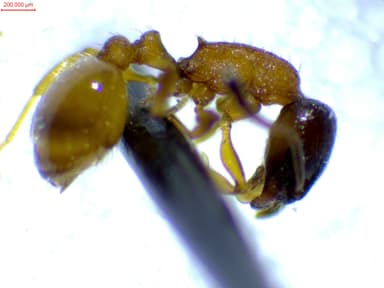
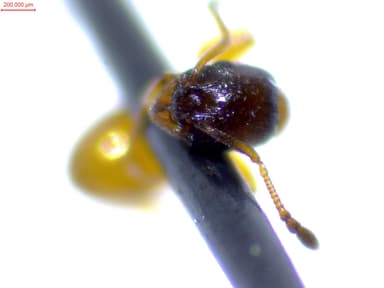
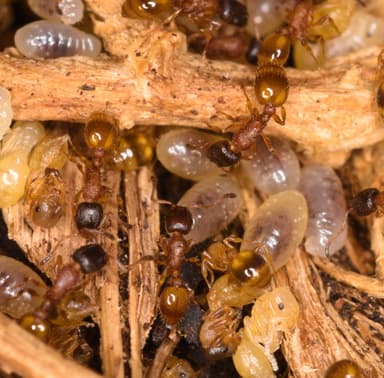
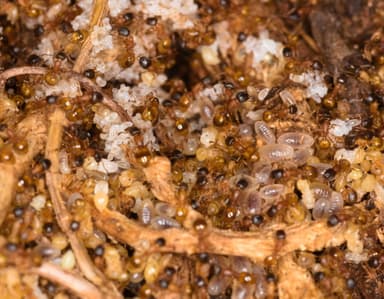
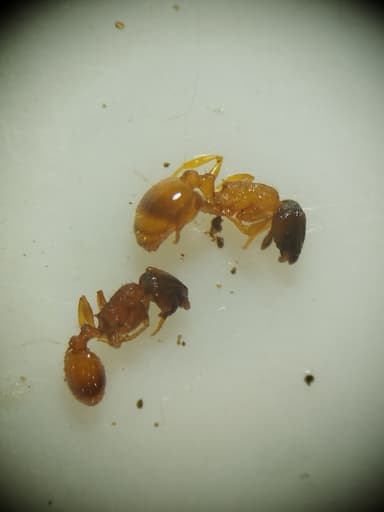
Leptothorax tuberum, a diminutive jewel of the European ant fauna, embodies the art of understated complexity. Often discussed under its modern genus Temnothorax (Seifert 2018), this species is one of the continent’s most widespread twig-nesting ants, found from the British Isles and Iberia eastwards to the Caucasus, thriving between latitudes 36° and 60° N. The workers are tiny, measuring just 2.5 to 3.5 millimetres, while the queen is only slightly more robust at 3.5 to 4.5 millimetres. Their colouration ranges from a deep, lustrous brown to almost black, with fine sculpturing that catches the light. Unlike many ants, L. tuberum displays no worker polymorphism — only minor workers exist — and a mature colony rarely exceeds 200 individuals. The colony’s lifeline is a single, claustrally founding queen who rears her first brood in complete seclusion. What makes this ant so captivating to the hobbyist is its cryptic lifestyle in the wild: entire societies often occupy abandoned beetle burrows in deadwood, hollow acorns, or even nooks within stone walls, and their unassuming nature has made them a model organism for studying social organisation and navigation (Czechowski et al. 2012). The nuptial flights paint an idyllic picture: on warm, sunny, calm afternoons between July and September, often following a rainfall, the tiny alates ascend to mate, offering a perfect collecting window for the patient keeper.
For the ant keeper, Leptothorax tuberum sits at an intermediate difficulty level, best suited to those who have already kept a beginner species through at least one full hibernation cycle. The primary challenge lies not in aggression or rapid growth — they are exceptionally docile — but in their minute size and specific environmental needs. A keeper must be comfortable managing temperature gradients, maintaining adequate but not excessive humidity, and ensuring absolute escape-proofing, as a 2.5-millimetre worker can squeeze through minute gaps that a larger species would never find. This ant rewards observational patience, and because colonies remain modest, they are a superb choice for keepers with limited space who delight in studying the intricate social behaviours of a small, self-contained kingdom.
Housing must replicate the secure, narrow cavities these ants prefer. A well-ventilated plaster or Ytong nest with chambers no more than 3–4 millimetres in height works beautifully, as does a cork-lined glass tube or a test tube setup with a sliver of wood as a scaffold. The foraging arena can be modest, but it must include a dry area for carbohydrate feeding and a moistened section for brood care. Temperature should be maintained between 18°C and 26°C; a gentle gradient from a small heating pad at one end of the nest is ideal, allowing the ants to thermoregulate. Relative humidity is best kept between 40% and 60%, easily achieved by providing a drinking tube and lightly misting one part of the nest every few days, but never allowing condensation to build to a sopping wetness, which invites fungal issues. A loose sand-clay mix makes an excellent substrate in the outworld, though many experienced keepers opt for a bare bottom to simplify cleaning and monitoring. Escape barriers are non-negotiable: a thin layer of fluon or talcum powder along the rim of the arena, inspected regularly for gaps, will keep these tiny explorers contained.
Diet must be adjusted to their Lilliputian scale. In the wild, L. tuberum forages for minute arthropods and laps up honeydew, so in captivity, small fruit flies (Drosophila), freshly killed springtails, or finely chopped mealworm segments are superb protein sources. Offer these sparingly, as a piece too large will be ignored or allowed to spoil. Carbohydrates can be provided as a tiny drop of sugar water, diluted honey, or a commercial ant jelly on a piece of foil to prevent drowning. A small water test tube plugged with cotton must always be available, both for drinking and to maintain humidity. The colony’s foraging activity is often tentative and crepuscular, so food is best placed near the nest entrance at dusk; remove any uneaten protein within 24 hours to deter mites and mould. Because the queen and young larvae rely heavily on protein for egg production and growth, a steady, moderate supply is more important than a feast-and-famine routine.
A pivotal element of keeping this species is its obligatory hibernation. In their native range, winter temperatures plummet and the ants enter a deep diapause necessary for the queen’s reproductive longevity and the colony’s annual rhythm. You will need to provide a cold period of three to four months at a steady 5°C — a dedicated wine cooler or the vegetable compartment of a refrigerator is ideal. Begin gradually reducing temperatures in late autumn; stop feeding a week before the cool-down so workers empty their crops, reducing the risk of gut fermentation. During hibernation, the nest must never go completely dry, but a very light hydration once every four to six weeks is sufficient. When the temperature is slowly raised in spring, resume feeding only after the ants have become active again. Skipping this cold rest will lead to a weak, dwindling population and an unproductive queen.
The first days after your Leptothorax tuberum colony arrives are a period of quiet acclimatisation. Set up their new home beforehand, ensuring temperature and humidity are within the target ranges. When you introduce the ants — usually via a plug of cotton in a travel tube — place the tube into the foraging area, open it gently, and allow them to discover the nest on their own terms. Immediately cover the setup with a dark cloth and leave it undisturbed for at least 24 hours. After this settling period, check that the queen is calm and that a few workers are exploring; resist the urge to move or tap the nest. The very first feeding should be a minute droplet of sugar water near the entrance, followed the next day by a freshly killed fruit fly no larger than the workers themselves. Watch for subtle signs of distress: persistent huddling in a corner away from the nest, the queen moving erratically, or workers refusing to forage. If all appears serene, you can gradually establish a twice-weekly feeding schedule, always remembering that with this species, restraint in both feeding and interference is the path to a thriving, long-lived colony.