Formica
Formica moki
Nuptial Flight Calendar
Flight months: Jun, Jul, Aug
Care Guide
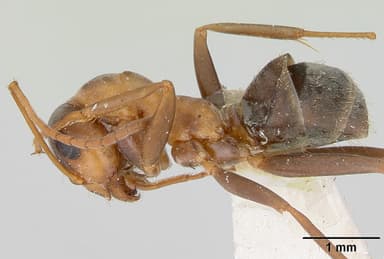
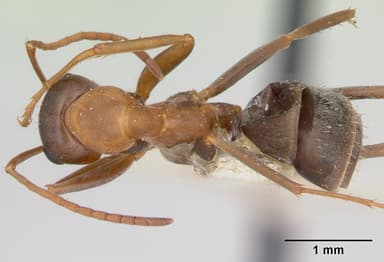
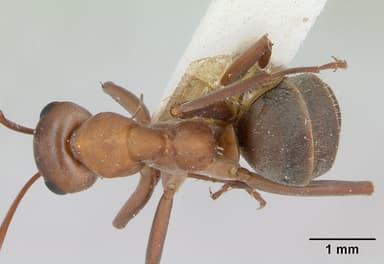
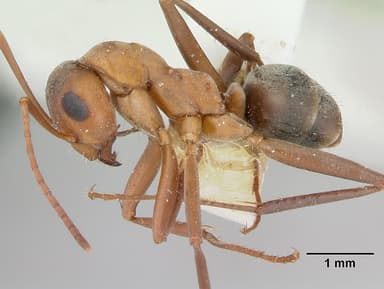
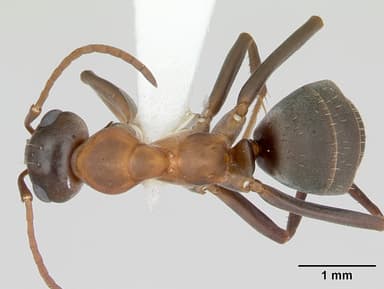
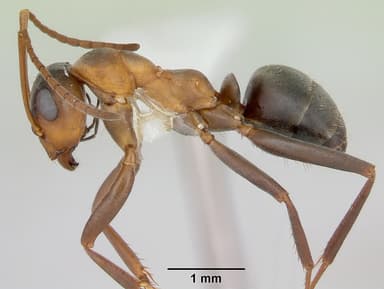
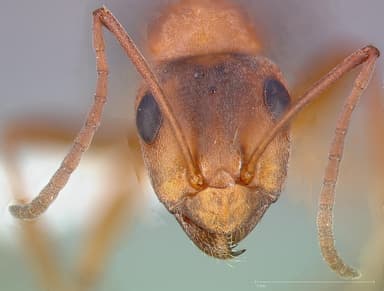
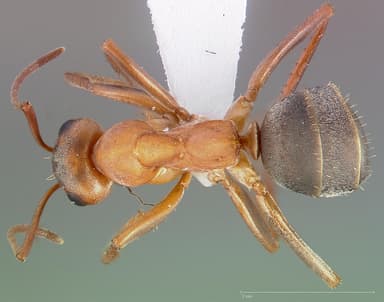
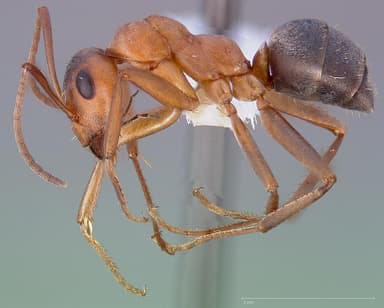
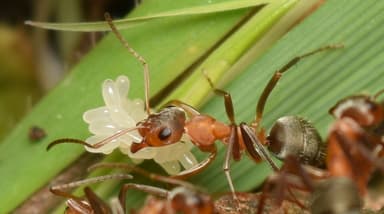
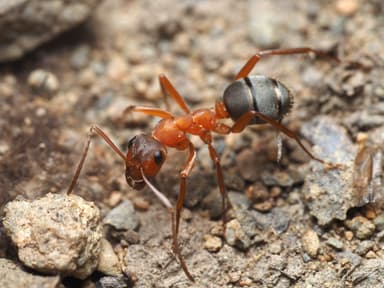
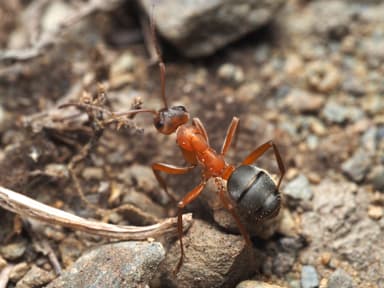
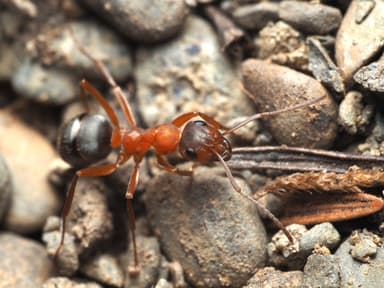
Formica moki is a sleek, fast-moving ant endemic to the arid and semiarid landscapes of the western United States, ranging from the Pacific coast states eastward to the Rocky Mountain foothills. Queens are robust and measure 7 to 9 mm, while the monomorphic minor workers span 4 to 6.5 mm, their slender bodies clothed in a variable sheen of silvery pubescence over a dark brown to black cuticle — an appearance that can make them shimmer in light, earning them occasional comparison to Formica fusca group species, though their behavior and habitat preferences set them distinctly apart. Colonies are relatively compact for the genus, peaking at around 10,000 individuals, and they exhibit the claustral founding mode, meaning a newly mated queen seals herself away to rear her first workers without foraging. What makes F. moki especially interesting to the observant keeper is their highly opportunistic foraging style and brisk, almost nervous tempo; they are not aggressive toward larger intruders but readily recruit to food, frequently establishing long, conspicuous trails across exposed rock or soil in nature. This combination of modest colony size, clean nesting habits, and a pronounced need for a winter rest period offers an engaging challenge that mirrors the seasonal pulse of their native chaparral and woodland edges (Wheeler 1906; Mackay & Mackay 2002).
As an intermediate-care species, Formica moki is best suited to hobbyists who have successfully kept a beginner-level ant colony for at least one full annual cycle and are comfortable managing a hibernation requirement. The ants’ sensitivity to prolonged high humidity and their rapid escape response when disturbed demand a keeper who can provide a stable, well-ventilated setup and exercise patience during maintenance. They are not forgiving of consistently wet nests or sudden temperature swings, which can trigger restlessness and brood die-off. However, for those ready to take the next step, F. moki rewards careful husbandry with active diurnal foraging, clear brood development patterns, and the quiet satisfaction of maintaining a species that remains underrepresented in captivity.
Housing must prioritize ventilation and a sharp gradient between a modestly humid nest interior and a dry outworld. The ideal nest for F. moki is a horizontal formicarium made of inert materials such as plaster, fired clay, or aerated concrete; ytong nests with a single shallow hydration chamber work exceptionally well, as they tend to wick moisture slowly and allow the ants to arrange their brood along the humidity profile they prefer. Maintain the nest’s relative humidity between 40% and 60% — never higher — and keep the foraging arena almost entirely dry. Temperature should be held within a comfortable 18 to 28°C, with a warm spot of 26 to 28°C near one nest exit via a gentle heat cable or mat placed externally; this encourages brood development without overheating the colony. A substrate of fine sand mixed with a small amount of clay in the outworld helps replicate the mineral soils of their native range, provides footing, and can be misted sparingly on the surface for drinking water. The ants’ natural distribution across a broad latitudinal band (from roughly 31°N to 49°N) indicates they are adaptable, but they are not tropical — they rely on that daily air exchange to stay healthy.
Feeding Formica moki calls for a balanced diet of insect protein and liquid carbohydrates. Workers avidly accept small, freshly killed insects: fruit flies (Drosophila hydei), small crickets, mealworm pieces, and termites are all excellent staples. Protein should be offered two to three times per week in amounts the colony can consume within a day to prevent spoilage. For carbohydrates, a dilute honey-water solution, maple syrup, or a commercial ant nectar works well; a small droplet provided inside the outworld on a clean foil or plastic tray will quickly attract foragers. Be mindful that these ants do not store liquid food in large quantities, so offer sugars in small portions every two to three days. Water is critical, especially in a dry setup: supply a test-tube waterer or a small plaster plug saturated with fresh water at all times, as workers will drink frequently. During active brood production, a tiny pinch of pollen powder or a crushed seed occasionally can be investigated, but the rapid, protein-hungry growth of larvae is the best indicator of good nutrition.
Hibernation is not optional for Formica moki — it is a biological necessity. In the wild, these ants experience cool winters, and captive colonies must be given a minimum of three months of dormancy at a steady temperature around 8°C, with a permissible range of perhaps 5 to 10°C. Begin the winding-down process in late autumn by gradually ceasing protein feeding and reducing temperatures over two to three weeks. Once the colony is clustered and inactive, move the nest into a cold room, insulated container inside a refrigerator, or a wine cooler, ensuring the nest remains just slightly humid but never wet. Check monthly for condensation and to confirm the water source has not frozen. When spring arrives, warm the colony slowly, reintroducing sugar water first, then protein once foraging resumes. Skipping or shortening hibernation typically results in dwindling worker populations, failed brood, and a queen that ceases egg-laying altogether, so treat this annual rest as the keystone of long-term success.
The first days after acquiring a founding queen or a small colony are decisive. If you receive a newly mated queen in a test tube, place her in a dark, quiet spot at 20 to 24°C and resist the urge to check on her more than once every two weeks. Clasustral queens of this species need nothing but their internal reserves; feeding her before workers arrive often causes fatal stress or mold. Once the first nanitics eclose and the queen resumes laying, you may attach the tube to a small outworld. Wait until at least five to ten workers are foraging before offering the first tiny dab of honey water and a pre-killed fruit fly. Watch that the colony does not panic — they can be skittish at first. If workers scatter and hide for hours, reduce light exposure and vibrations. A healthy, settling colony will quickly establish a refuse pile and begin patrolling the outworld, signaling that they are ready to transition into a proper formicarium. With steady conditions and a light hand, a newly started F. moki foundation will soon display the bustling, silvery trails that make the species so delightful to observe.