Odontomachus
Odontomachus chelifer
Care Guide
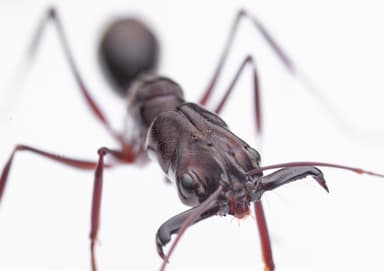
Odontomachus chelifer belongs to the aptly named trap-jaw ants, a group renowned for their lightning-fast mandibles that snap shut on prey in under a millisecond. This species is native to the tropical forests of Central and South America, where it hunts a variety of arthropods with a combination of speed, venom, and mechanical force. The queen, a robust and imposing figure, measures between 14 and 18 mm, while workers range from 10 to 14 mm. Despite their fearsome appearance, colonies of Odontomachus chelifer remain relatively modest in size, typically numbering between one hundred and a thousand individuals. They do not exhibit strong polymorphism; instead, workers are fairly uniform in size, with all members capable of delivering a painful sting when threatened.
One of the most fascinating aspects of this species is its hunting strategy. The mandibles are held open at a wide angle, locked by a specialized mechanism, until sensory trigger hairs on the inside of the jaws detect movement. The jaws snap shut with tremendous force, pinning or even impaling prey. This strike can also be used defensively or to launch the ant backwards in a rapid escape maneuver called a “jump.” In the nest, workers are active and coordinated, but they are also known for their alertness and can be easily startled by vibrations or sudden movements.
Care difficulty
Keeping Odontomachus chelifer is rated as intermediate, largely due to their semi-claustral founding and their need for a steady supply of live protein. During colony foundation, the queen must be fed regularly, as she does not seal herself in a chamber but leaves the nest to hunt. This means the keeper must provide small insects (e.g., fruit flies, small crickets) until the first workers eclose. Once the colony is established, feeding remains straightforward: offer a variety of insects such as roaches, mealworms, or flies, supplemented with sugar water for energy. Meat-based feeders are essential; seeds will not be accepted.
Housing
A formicarium for Odontomachus chelifer should maintain a warm, humid environment. Temperatures between 24 and 28°C are ideal, with humidity levels kept high at 70–80%. A heat mat on a thermostat and regular moistening of the nesting substrate will help achieve these conditions. Because these ants are prone to stress from vibrations and light, the setup should be placed in a quiet, dim location. A test tube setup works well for founding and small colonies, but as the colony grows, a larger nest with a cleanable outworld becomes necessary. Ensure the outworld has a secure lid, as workers are capable climbers and jumpers.
First days after purchase
Upon receiving your Odontomachus chelifer colony, transfer them gently into their new home (if not already in a suitable setup). Place the formicarium in a calm, dark spot and refrain from disturbing them for at least a couple of days. During this acclimation period, check that water is available and offer a small insect if the queen or workers appear active. Observe from a distance—sudden lights or tapping can cause panic. Once the colony settles, you will witness the spectacular predatory behavior of these ancient hunters, making them a truly rewarding species for the attentive keeper.