Messor
Messor aciculatus
Care Guide
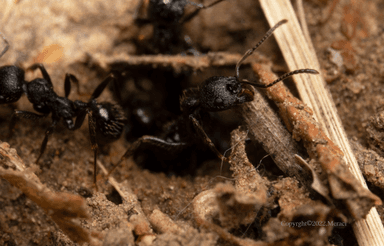
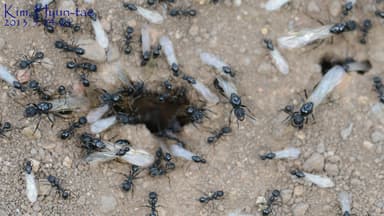
Messor aciculatus is a classic harvester ant species that displays the remarkable seed-based lifestyle typical of the genus. While not as dramatically polymorphic as some of its larger relatives, Messor aciculatus still shows clear size variation among workers. The queen, the sole reproductive in the colony, measures between 10–12 mm, making her noticeably larger than the worker force. Workers range from 3 mm in the smallest minors up to 10 mm in the largest majors. These larger workers possess robust heads and powerful mandibles, adapted for cracking open tough seed husks — a task they perform with impressive efficiency.
The defining feature of Messor aciculatus is its diet, which revolves almost entirely around seeds. Foraging workers venture out in long trails, collecting a wide variety of seeds from grasses and plants. Back in the nest, seeds are stored in designated chambers and processed into what is often called “ant bread” — a nutritious paste that serves as the colony’s staple food. This seed-based diet makes feeding remarkably simple. In addition, the colony benefits from occasional protein in the form of small insects, which supports brood development and queen egg-laying. Unlike many ant species that require constant live or sugary prey, Messor aciculatus offers keepers a forgiving feeding schedule.
Care difficulty
Keeping Messor aciculatus is well suited to novice ant keepers who have gained a little experience. Their intermediate rating comes from specific environmental needs rather than complex feeding requirements. The main challenges are maintaining stable humidity levels between 40–60% and providing a proper hibernation period — these ants require a winter diapause at around 5°C for several months. Without a cool rest, colonies may fail to thrive or experience stunted growth.
Housing
A suitable formicarium for Messor aciculatus must accommodate a colony that can eventually reach up to 20,000 workers. Space for seed storage chambers is essential, as these ants hoard large quantities of food. The nest area should be kept moderately dry, with a separate outworld providing access to water and foraging resources. Regular moistening of the nesting substrate is necessary to maintain humidity for larval development, but avoid waterlogging. Temperature should be maintained between 22–28°C in the active season. These ants are sensitive to vibrations and bright light, especially during early colony growth. Place the formicarium in a quiet, dimly lit location and avoid unnecessary disturbance.
First days after purchase
Once your Messor aciculatus colony arrives, transfer them to their new formicarium and place it in a calm, stable environment. Allow the ants several days to acclimatize without interference. Provide a shallow water source (such as a test tube with a cotton plug) and a small supply of seeds — millet, poppy, or commercial ant seed mixes work well. Observe from a distance; minor exploratory activity is a good sign. Avoid feeding insects for the first few days to prevent stress. With patience and minimal disturbance, your colony will quickly settle and begin building their seed stores.