Formica
Formica polyctena
Nuptial Flight Calendar
Care Guide
Formica polyctena is a truly remarkable species, offering an advanced challenge that rewards the dedicated keeper with a glimpse into the complex social dynamics of Europe’s forest ants. Unlike the straightforward founding of most species, the queen of *Formica polyctena* is a temporary social parasite. She must infiltrate an established colony of a host *Formica* species (typically *Formica fusca* or *Formica rufibarbis*), kill or subdue the host queen, and then rely on the host workers to raise her first brood. Only after the first generation of *polyctena* workers emerges does the parasitic queen dispose of the remaining host workers, and the true colony begins its explosive growth. This founding phase is extremely delicate and requires precise timing and a deep understanding of ant behavior, making this species unsuitable for beginners.
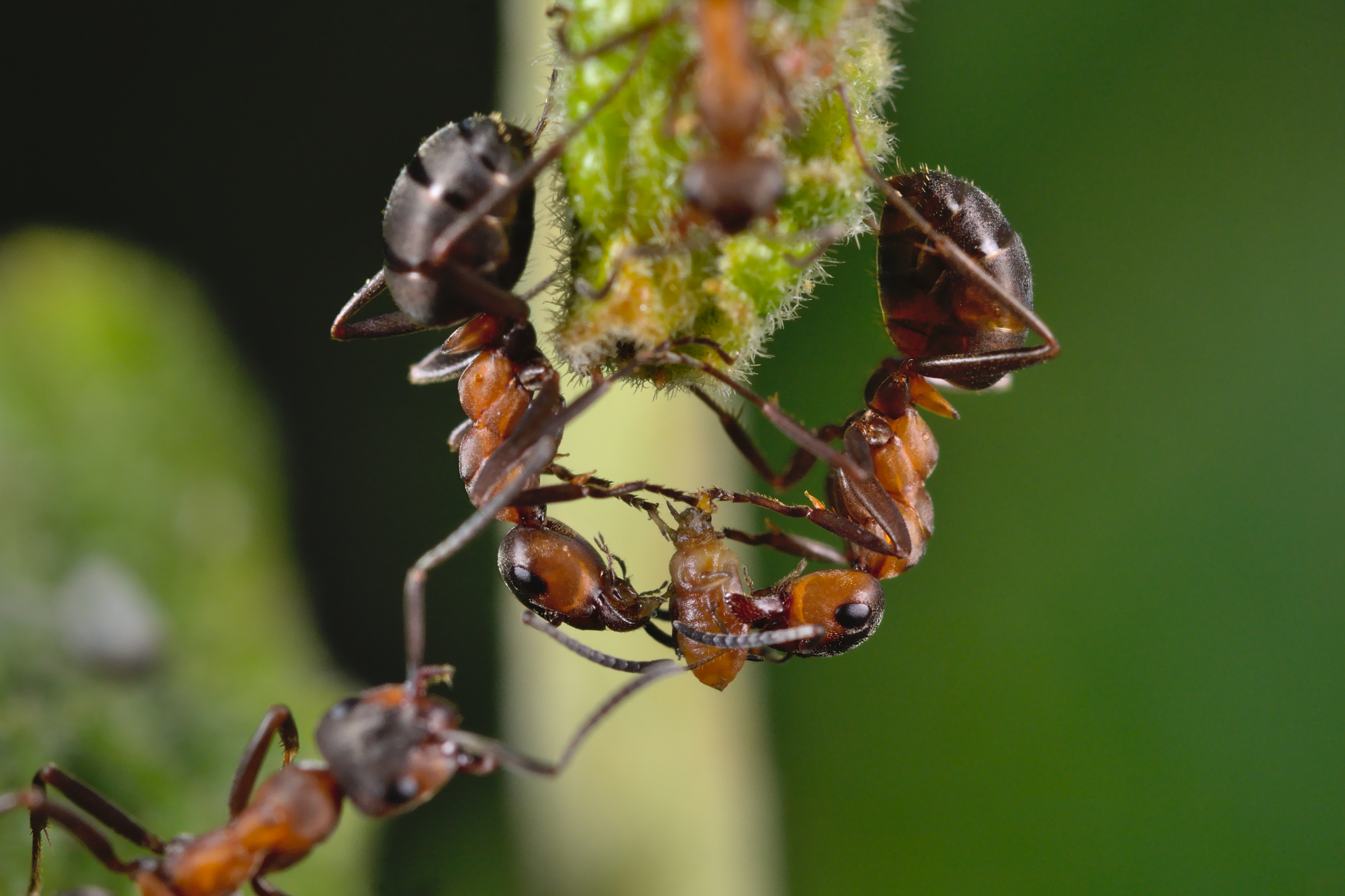
Once established, a *Formica polyctena* colony can grow to truly staggering proportions, numbering anywhere from one hundred thousand to over a million workers. These are fast-moving, highly active ants that build large domed nests of pine needles and twigs in the wild. The queen measures between nine and eleven millimeters, while the workers range from five to nine millimeters, showing some size variation but no dramatic polymorphism. Their most striking feature is their aggressive, cooperative foraging style: large, busy trails of workers will swarm insect prey, defend territory fiercely, and even engage in slave-raiding behavior against other ant species to supplement their workforce. They are voracious predators and require a constant, abundant supply of protein in the form of insects, as well as sugar water and honeydew to fuel their high metabolism.
Care difficulty
Keeping *Formica polyctena* is firmly in the advanced category, not only because of the complex parasitic founding but also due to the colony’s immense size and high energy demands. They require a very large formicarium setup with ample foraging space and a secure escape-proof barrier, as these ants are excellent climbers and escape artists. Their need for a cool hibernation period at around five degrees Celsius is critical for annual brood development, and any failure to provide a proper winter rest can lead to colony decline.
Housing
A suitable nest environment should offer a temperature range of eighteen to twenty-four degrees Celsius and a humidity level between fifty and seventy percent. The nest itself should be spacious, with multiple chambers to accommodate the growing supercolony. The foraging area must be large enough to support their active hunting and feeding behavior. Regular cleaning of the foraging area is essential to prevent mold from leftover prey. The most important aspect of housing *Formica polyctena* is ensuring the enclosure is absolutely escape-proof—these ants will find and exploit the smallest gap.
First days after purchase
Upon receiving your *Formica polyctena* colony, place the formicarium in a quiet, vibration-free location and allow the ants to settle for at least one to two days without disturbance. Ensure they have access to fresh water and a sugar source. Do not attempt to feed live insects until the colony has calmed down and resumed normal activity. Observe from a distance; any sudden shocks or bright lights can cause stress and aggression. Once they are confidently foraging, you can gradually introduce small prey items. Patience and a gentle hand are essential for the first weeks of acclimatization.