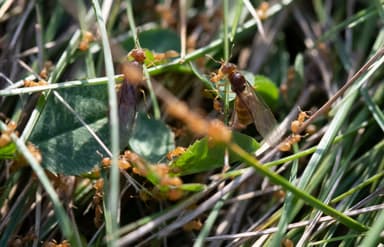
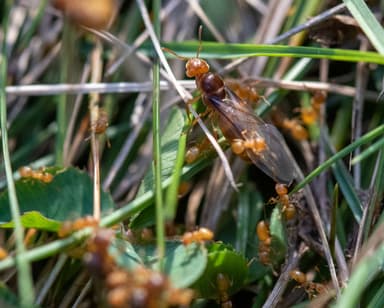
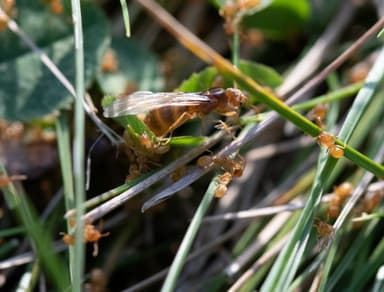
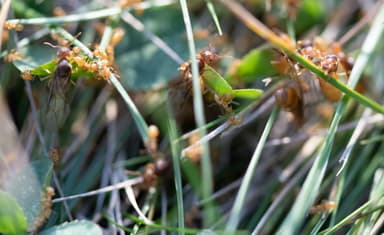
Lasius
Lasius brevicornis
Nuptial Flight Calendar
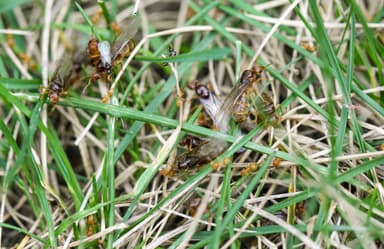
Flight months: Jun, Jul, Aug, Sep
Care Guide
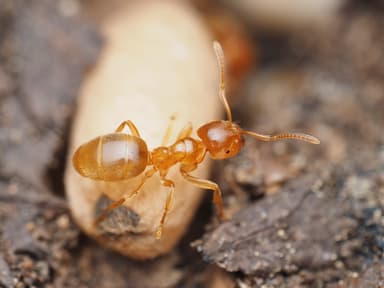
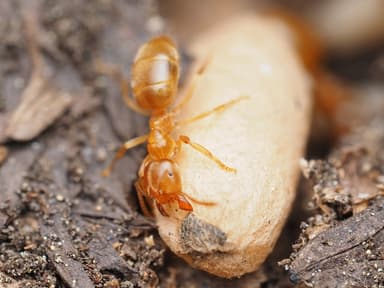
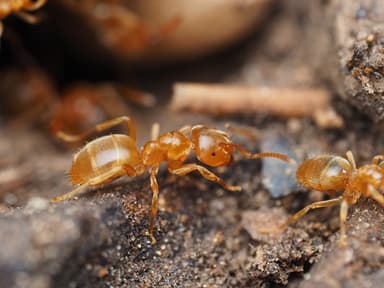
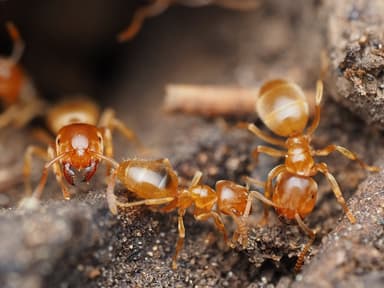
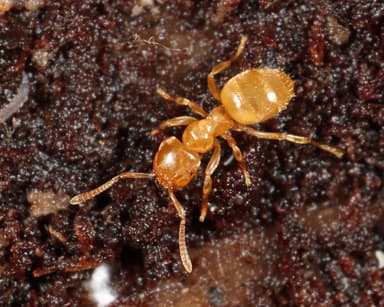
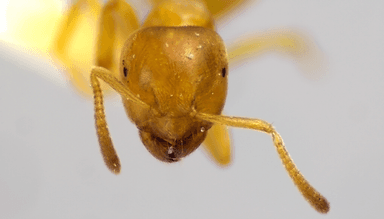
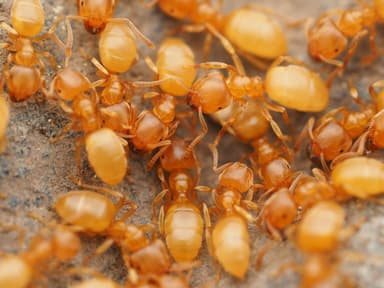
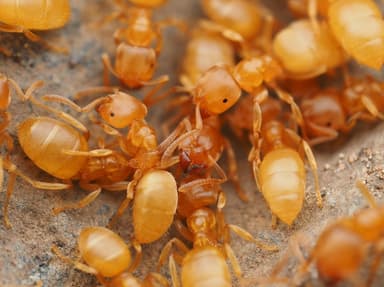
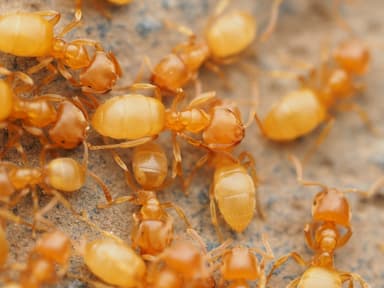
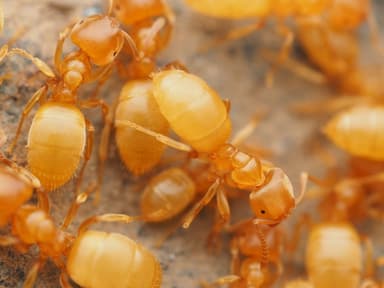
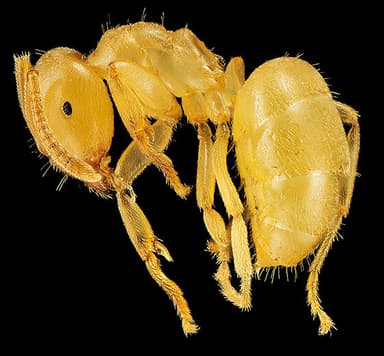
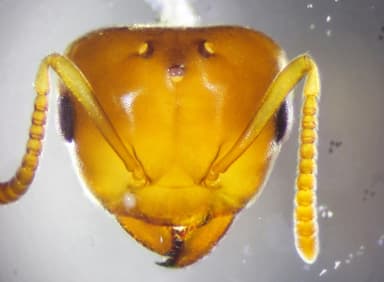
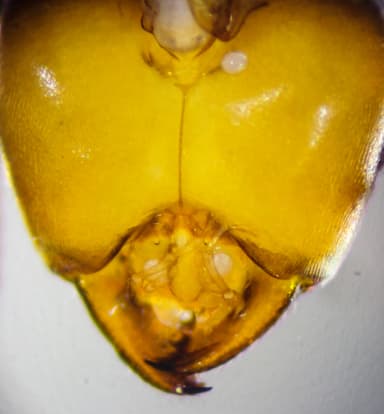
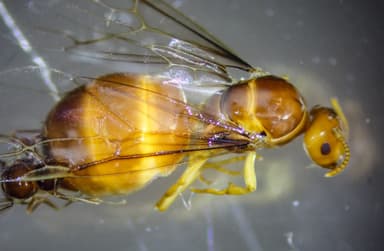
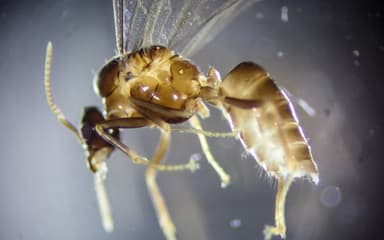
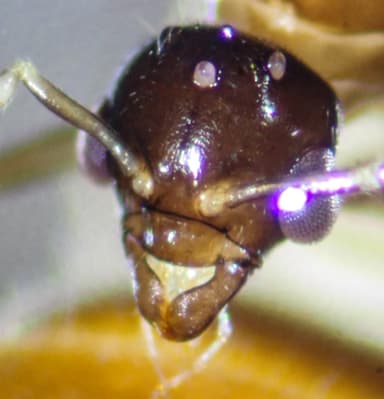
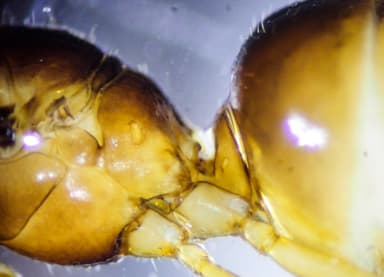
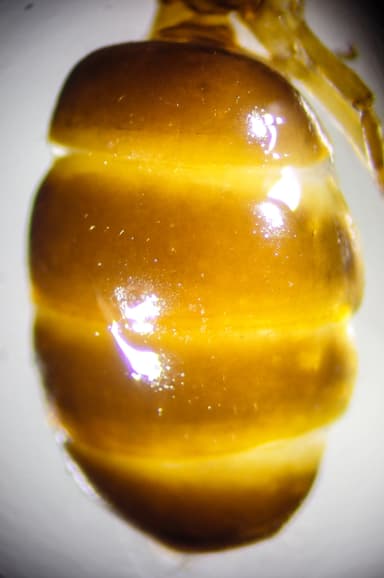
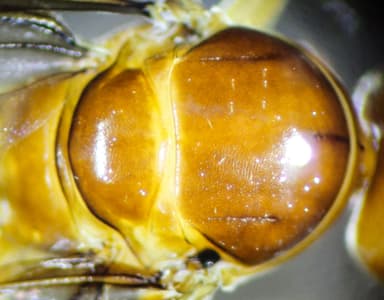
Lasius brevicornis is a modestly sized but endlessly engaging member of the familiar Lasius niger group, easily recognised by its uniformly dark, polished appearance and trim, agile workers measuring just 2.5 to 4.5 millimetres. Queens are appreciably larger at 7 to 9 millimetres, and a well-established colony can eventually swell to around twenty thousand monomorphic minor workers, all descended from a single claustral foundress. As Seifert (2020) clarified in his thorough revision of the Palaearctic representatives, the species is reliably separated from close relatives by subtle pilosity and sculptural details, but for the keeper, its charm lies less in taxonomy and more in behaviour. These ants are natural-tending generalists that in the wild collect honeydew from root aphids and above-ground homopterans, a trait that manifests in captivity as a seemingly endless appetite for sugary liquids and a vigorous, bustling foraging tempo. The distribution is remarkably broad, with GBIF records spanning a bounding box from 36° to 71° north and extending across both Europe and North America, highlighting an adaptable nature that serves them well under a wide range of conditions.
When it comes to care difficulty, L. brevicornis comfortably earns its reputation as a beginner-friendly species. It is forgiving of typical novice errors such as minor temperature swings, irregular feeding schedules, and the occasional over-disturbance, making it an ideal first ant for anyone wanting to experience the full cycle from founding queen to populous colony. Their steady growth and visible activity level reward casual observation without demanding intricate daily management, so they suit children, classrooms, and busy adults equally. The same resilience that allows them to thrive from southern Canada to Scandinavia means they will not collapse if your room cools a few degrees overnight or you forget to mist for a day. Patient, watchful and robust, these ants exemplify why the Lasius niger complex remains the gateway for so many hobbyists.
Housing for L. brevicornis is an exercise in simple, thoughtful mimicry. The optimal temperature window sits between 18 and 26 degrees Celsius, which conveniently overlaps with the average human living space, while humidity should be maintained in the 50 to 70 percent range — a level easily achieved in a nest with a steady moisture gradient. They are enthusiastic tunnelers and will make good use of a diggable medium such as a mixture of fine sand and pesticide-free loam, either in a classic plaster nest or within a soil-based formicarium. An acrylic or ytong setup with a hydration reservoir works equally well, provided there is a distinct wet end for brood care and a drier area for seed or waste storage. A secure outworld is essential for foraging, and it is wise to offer a layer of substrate there too, as workers often prefer to drag food items onto a familiar surface. Because this species readily accepts both naturalistic and minimalist designs, keepers can experiment freely, but always ensure adequate ventilation to prevent stagnant, saturated air.
A balanced diet is straightforward. Protein should come from small insects: fruit flies, freshly killed or pre-frozen baby crickets, and chopped mealworms are all eagerly accepted. For younger colonies with only a handful of workers, mince the prey finely and remove uneaten scraps within a day or two to prevent mould. Carbohydrates are where L. brevicornis truly shines, as they are highly responsive to sugar feeders. Offer a shallow droplet of organic honey, a dilute sugar‑water mix, or a commercial ant nectar in a small liquid feeder, and you will soon see workers’ gasters visibly distend. A separate clean water source, such as a test tube with a cotton plug or a water tower, must always be available because they will metabolise many sugary meals on hot days. During periods of rapid brood development, protein can be offered three times a week, with sugars replenished as they are consumed; a twice-weekly rhythm often suffices when growth slows.
Hibernation is an absolute requirement, not an option. In nature, these ants endure a long winter dormancy, and in captivity they need a cold rest of roughly three to four months at around 5 degrees Celsius to reset their biological clocks and allow queens to resume spring egg‑laying. Begin the process in late autumn by ceasing protein feeds for a week or two and gradually lowering their ambient temperature. Once the colony is sluggish, move the nest into a dedicated fridge, wine cooler, or an insulated box in a cold garage where you can reliably hold 5 degrees without freezing. Check periodically that the nest retains some humidity and that a water source remains liquid, but avoid shining lights on them. When days lengthen in early spring, slowly warm the colony back to room temperature and offer a tiny drop of sugar water to gently break their fast.
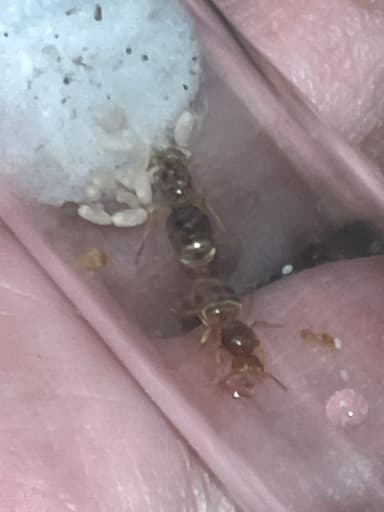
The first days after your parcel arrives can be delicate. If you are starting with a single freshly mated queen in a test tube, place the tube in a dark, quiet spot within the 20 to 24 degree range and resist every urge to check on her; she will not need food until her first nanitic workers eclose in four to six weeks, and disturbance is the greatest danger. Should you receive a small colony with a dozen or so workers, allow them to settle for at least twenty‑four hours in dim light while they acclimatise to vibrations and air pressure. After that period, place a bead of sugar water on a tiny foil raft and a pinhead-sized piece of pre-killed fruit fly just outside the nest entrance. The workers may be shy initially, so watch for a scout tentatively tapping the offering — that first forager is your sign that the colony is ready to engage. Keep hydration stable, never let the outworld breach become a highway to freedom, and within a week you should see a steady, confident stream of dark little figures busily mapping their new world.