Pogonomyrmex
Pogonomyrmex tenuispinus
Nuptial Flight Calendar
Care Guide
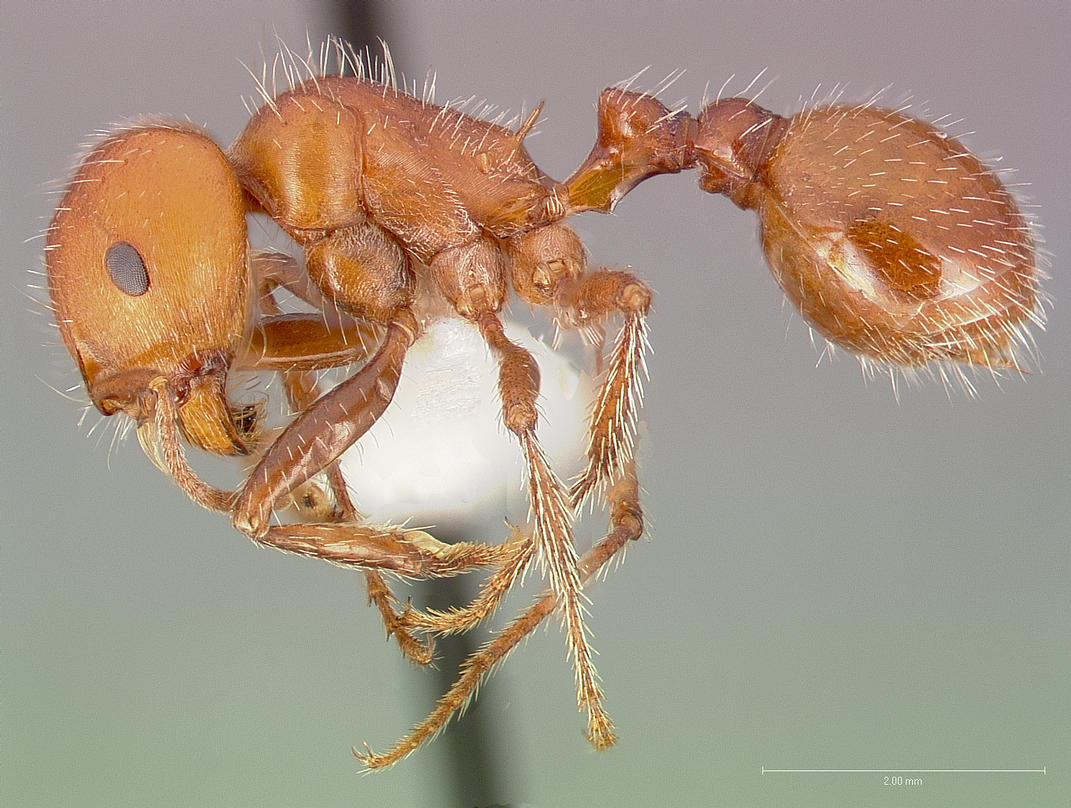
Pogonomyrmex tenuispinus, known as the desert harvester ant, is a fascinating species native to the arid regions of the southwestern United States and Mexico. These ants are robust and strikingly beautiful, with workers displaying a rich reddish-brown to dark brown coloration. The queen, measuring 8–10 mm, is noticeably larger than the workers (5–7 mm), but the colony is monomorphic — meaning all workers are roughly the same size, unlike the polymorphic seed harvesters you may be familiar with. One of the most remarkable features of this species is its powerful sting, which they use effectively for defense. While not aggressive toward keepers if handled properly, they are alert and will defend their nest vigorously, so respect their space.
Their diet is typical of harvester ants: seeds form the staple, but Pogonomyrmex tenuispinus also requires a steady supply of protein in the form of insects (crickets, mealworms, roaches) to support brood production. They are industrious foragers and will eagerly collect seeds from a feeding arena, storing them in granary chambers within the nest. Unlike some other seed-eaters, they do not mill seeds into “ant bread” but rather consume the endosperm directly after removing the husk. Providing a varied seed mix — millet, poppy, flax, and sunflower — will keep them happy. Remember that a lack of protein can stall colony growth, so offer small insects at least every few days.
Care difficulty
Keeping Pogonomyrmex tenuispinus is best suited for intermediate keepers. The semi-claustral founding stage requires regular feeding of the queen — she must leave the nest to forage, making her vulnerable to stress and desiccation. Once the first workers arrive, the colony becomes more resilient, but the need for both seeds and protein means you cannot simply leave a bowl of seeds and walk away. Additionally, their potent sting and sensitivity to vibrations mean they are not a “handle” species. However, for those prepared to offer attentive care, they are rewarding, fast-growing, and highly active.
Housing
Provide a formicarium with a dry nest area — humidity should be kept low (30–50%) and high humidity can lead to mold and disease. A connected outworld or foraging arena is essential for seed collection and insect hunting. Temperature is critical: maintain a gradient from 24°C to 32°C, with the warmest part near the nest to encourage brood development. They do not hibernate, so year‑round warmth is necessary. Ensure the nest has multiple chambers for seed storage and brood rearing. A red filter or dark cover over the nest area will make the ants feel secure, as they are light‑sensitive.
First days after purchase
Upon receiving your colony, place the formicarium in a quiet, dimly lit location. Let the ants settle for at least 24 hours without disturbance. During this acclimation period, ensure the nest is slightly moist (but not wet) and the outworld has a water source (test tube or small drinker). Offer a few seeds and a tiny piece of insect protein near the entrance. Avoid opening the lid unnecessarily; observe through the glass. If the colony is still in a test tube during founding, carefully transfer them to the formicarium only after the first workers appear. Patience is key — these ants will reward you with a bustling, thriving colony.