Myrmecia
Myrmecia croslandi
Nuptial Flight Calendar
Flight months: Oct, Nov, Dec
Care Guide
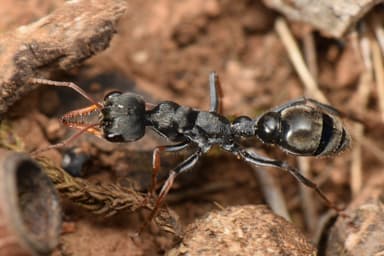
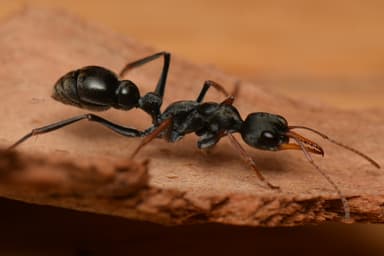
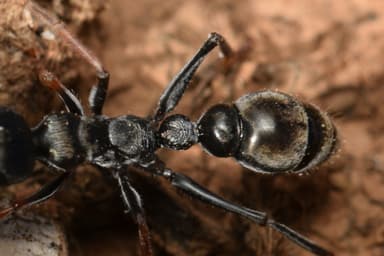
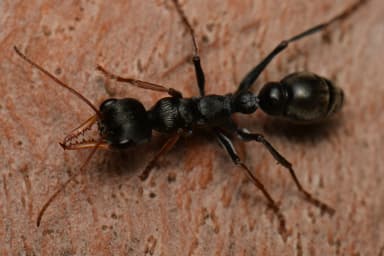
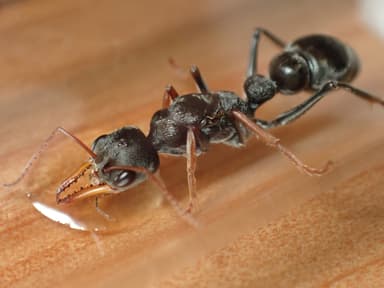
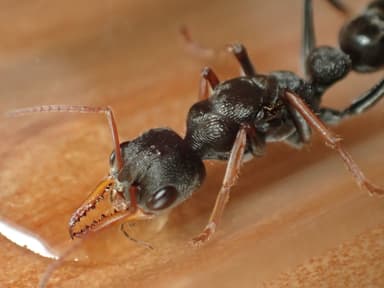
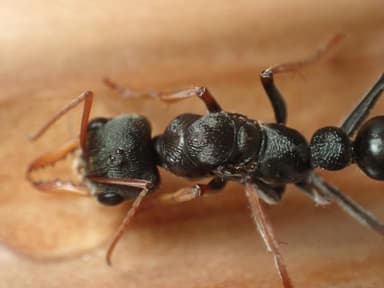
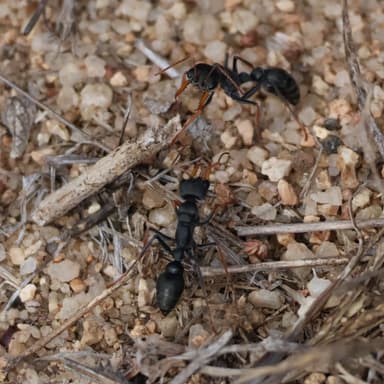
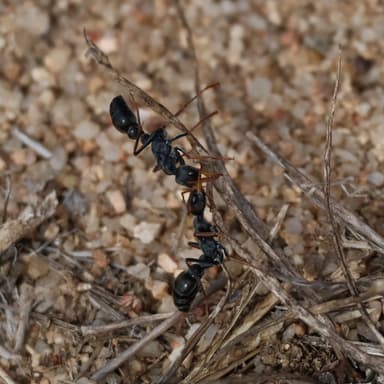
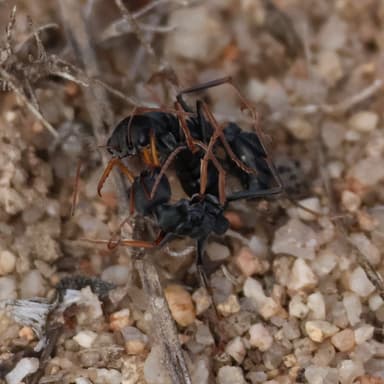
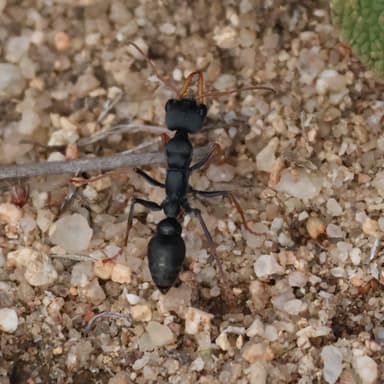
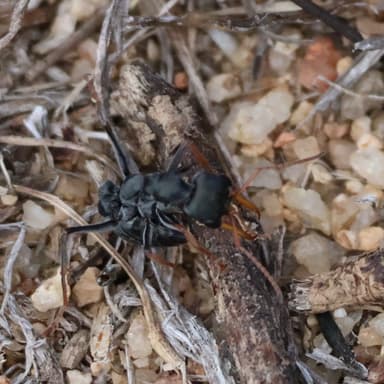
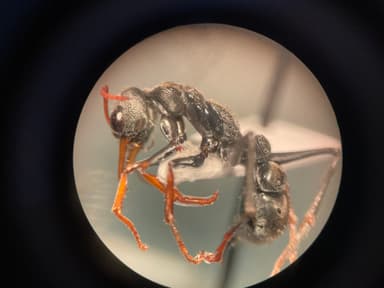
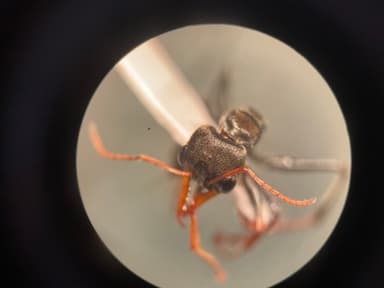
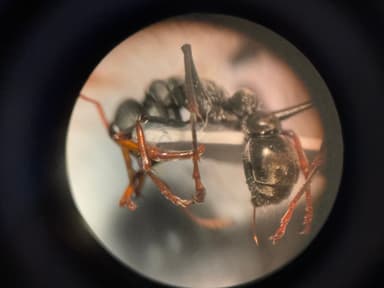
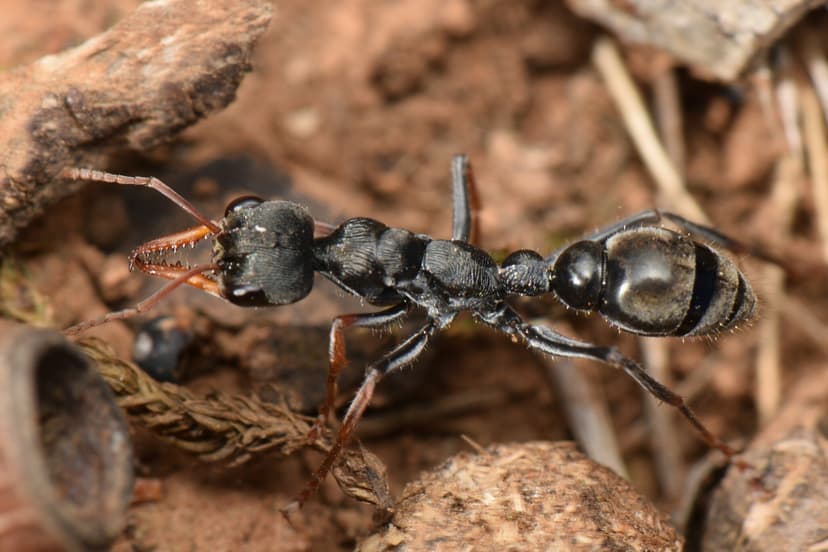
Myrmecia croslandi, commonly known as a jack-jumper ant, is a captivating species first described by Taylor in 1991 from populations in south-eastern Australia, where it attracted immediate attention for its unusually low chromosome number — a karyological quirk that makes it a favourite among myrmecological researchers (Taylor 1991). Workers measure a robust 10–12 mm, while queens reach 12–14 mm, their bodies a deep glossy black with powerful mandibles and enormous forward-facing eyes that betray a reliance on acute vision. Like all jack-jumpers, they possess a famously potent sting capable of triggering serious allergic reactions in sensitive people, a trait that demands respect from any keeper. Colonies are relatively modest in size, typically reaching up to 1,000 individuals, and they lack physical castes — all workers are of a single minor type, monomorphic yet highly capable. What truly sets M. croslandi apart, however, is its celebrated navigational prowess. Studies by Narendra et al. (2013) have shown that these ants navigate using landmarks and the pattern of polarised light across the sky, memorising visual routes with a fidelity that rivals honeybees. Watching them forage becomes a masterclass in insect intelligence, and their willingness to leap several centimetres when threatened adds a dash of adrenaline to every interaction.
Owing to their demanding requirements, powerful sting, and the escape risk posed by a jump-prone species, Myrmecia croslandi is firmly an expert-level ant. It is suited only to keepers who have already mastered more docile genera and are comfortable working with fast, visually aware animals that will not hesitate to defend their nest. Anaphylaxis awareness is non-negotiable; anyone with known insect sting allergies should not keep jack-jumpers, and an epinephrine auto-injector should always be available nearby just in case. Beyond safety, the colony’s reliance on precise seasonal cues and a carefully structured foraging environment means that half-hearted setups fail quickly. If you are a hobbyist who relishes the challenge of replicating the rhythms of a temperate Australian woodland and are willing to invest in escape-proof containment, this ant offers a deeply rewarding window into the evolution of sophisticated vision and navigation.
Housing must replicate the warm, dry woodlands of the species’ native range, which spans altitudes from the ACT across the Southern Tablelands of New South Wales (occurrence data from GBIF and AntWiki). A naturalistic formicarium works best: a nest chamber filled with a sandy loam substrate that mimics the soil they excavate in the wild, connected to a spacious foraging arena. While some keepers successfully use plaster or ytong nests, offering at least a section of soil allows the ants to regulate humidity and engage in natural digging behaviours, especially during founding. Temperature should be maintained at 18–28°C, with a daytime basking spot around 26–28°C and a slight night-time drop; a heat mat placed under one corner of the nest provides a gentle gradient. Humidity in the nest should sit between 40% and 60%, easily achieved by using a substrate that retains moisture and providing a small water source. The outworld must be tall, smooth-walled and tightly sealed, because these ants can spring vertically, and they rely heavily on panoramic vision — offering a few vertical twigs or stones gives them elevated vantage points to survey their domain. Good ventilation prevents mould, and a simple test-tube waterer or a shallow dish filled with pebbles and water keeps drinking hazards at bay.
Diet for M. croslandi is straightforward but must be supplied with care. In nature they are fierce solitary hunters, and in captivity they thrive on a rotation of live or freshly killed insects: crickets, small roaches, mealworms, and termites all make excellent protein sources. Feeding live prey in the outworld stimulates their natural hunting behaviour, but always supervise the interaction to prevent a large cricket from harming the ants; for newly founded colonies, pre-killed food is safer. Carbohydrates can be given as a weak honey-water solution or pure maple syrup diluted with water, provided via a cotton wick or a small dish with a clean sponge to prevent drowning. Fresh, clean water must be available at all times. A small colony will typically accept protein two to three times per week, with sugary liquids offered in between, while larger colonies may require more frequent feeding. Remove any uneaten remains after 24 hours to keep the setup hygienic and deter mites.
A true seasonal hibernation is essential for the long-term health of Myrmecia croslandi colonies. In their native range, winter temperatures reliably dip to around 12°C, and failing to provide this cool period often results in dwindling brood production and eventual queen death. Begin the diapause in late autumn by gradually lowering the temperature over two to three weeks until the nest reaches a steady 12°C. Maintain this for at least two to three months, typically June through August in the Southern Hemisphere (adjust timing if your colony originates from the opposite season). During this time the queen will stop laying eggs, workers will cluster together and activity will become almost imperceptible. Offer only a tiny drop of honey water once a month and check the water source occasionally, but otherwise leave the colony undisturbed. In early spring, slowly warm them back to normal active temperatures, and within a few weeks the queen should resume egg-laying and foraging will recommence.
The first days after acquiring your colony are critical for minimising stress and establishing a safe routine. Transport them home in a securely sealed, darkened container, and when you arrive, place the transport tube or container inside the prepared outworld and carefully open it, letting the ants emerge on their own. Provide a small dab of honey water close to the entrance and a fresh water source, but avoid introducing any protein for the first day. After 24 to 48 hours, offer a single pre-killed fruit fly or a tiny cricket leg; this gentle start lets the queen recover from journey without the commotion of a live prey item. Keep the outworld dimly lit initially, and resist the urge to check on them frequently — every disturbance risks triggering a defensive response. Watch from a distance to ensure they locate the water and that the queen appears settled within the nest. Over the next week, gradually extend their photoperiod to match a natural diurnal cycle, and you will soon witness the remarkable daily foraging marches that make this species such a privilege to observe.