Crematogaster
Crematogaster depilis
Nuptial Flight Calendar
Flight months: Jun, Jul, Aug
Care Guide
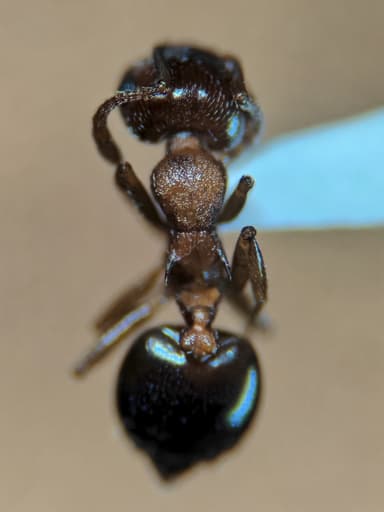
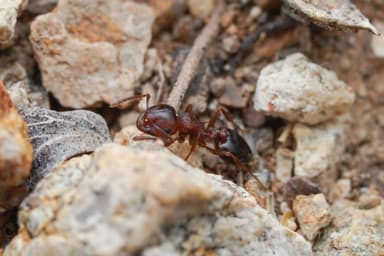
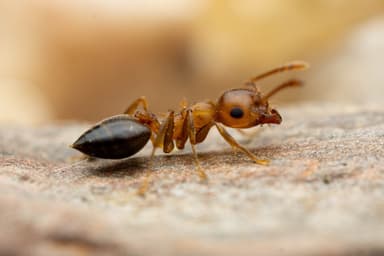
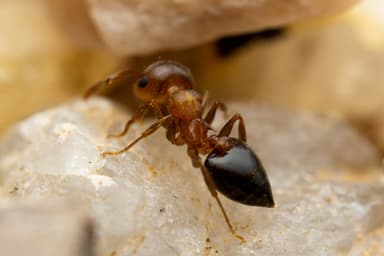
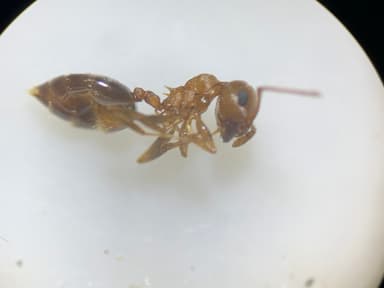
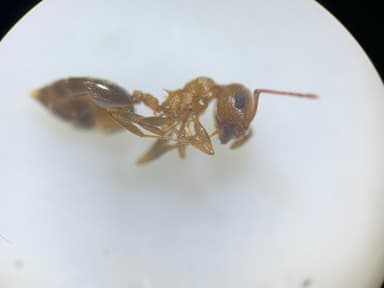
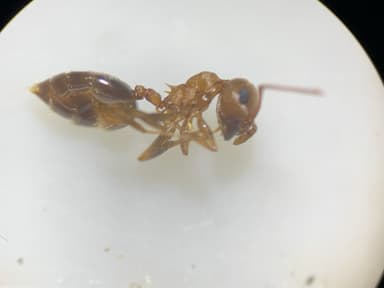
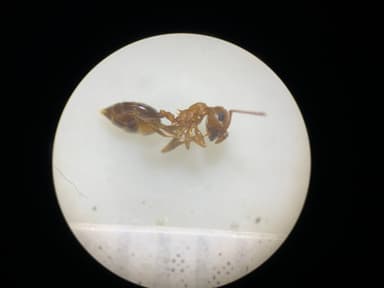
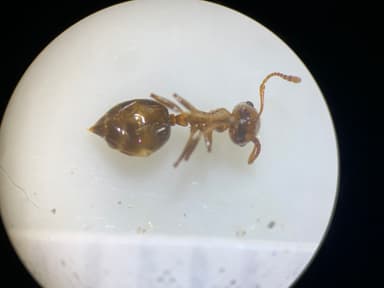
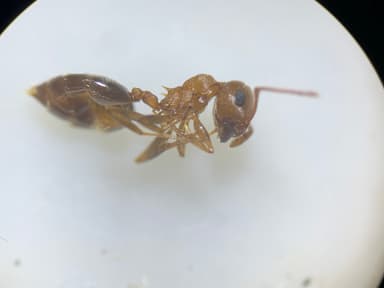
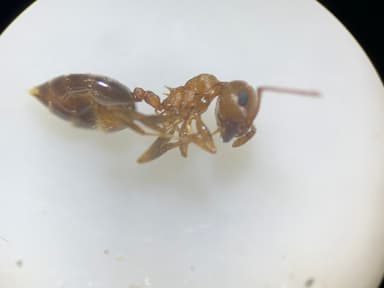
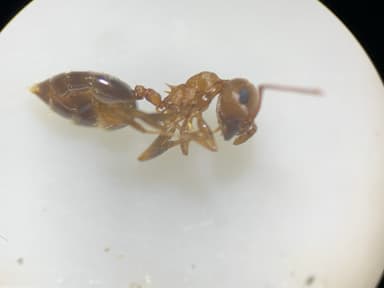
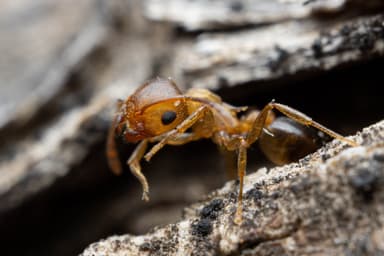
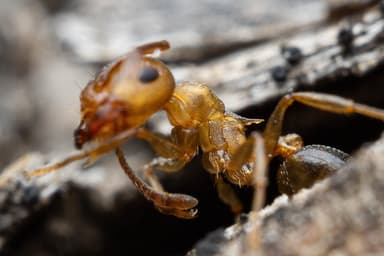
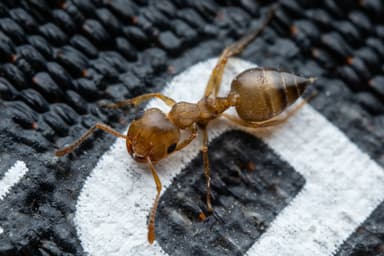
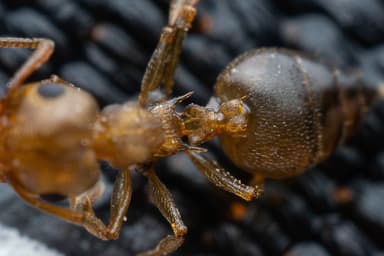
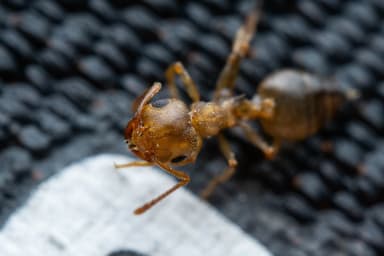
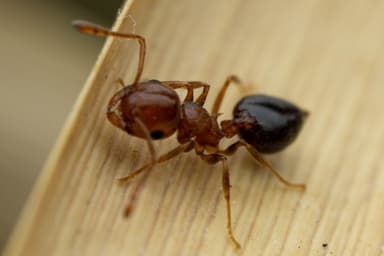
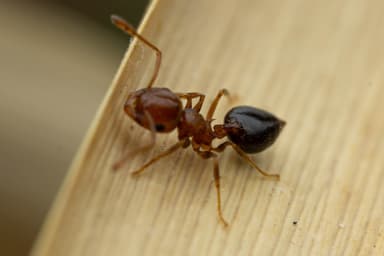
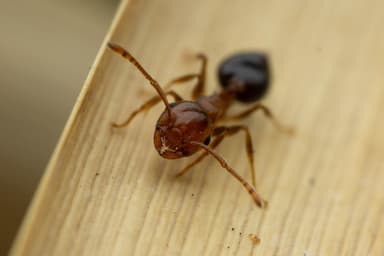
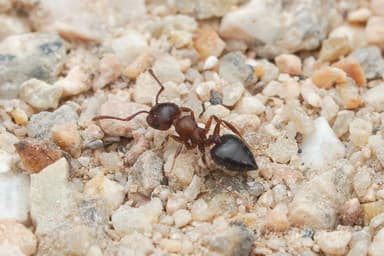
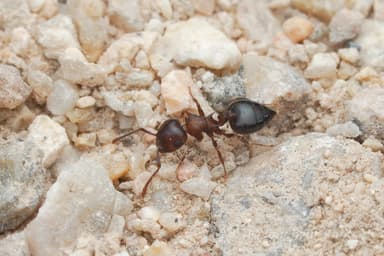
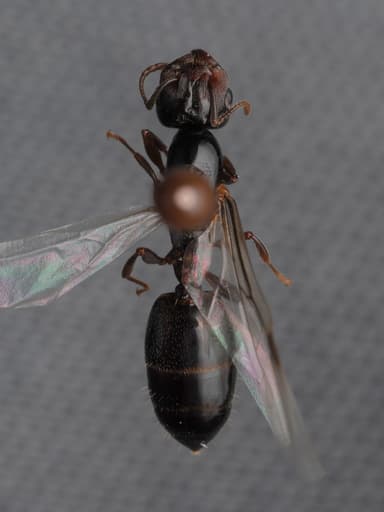
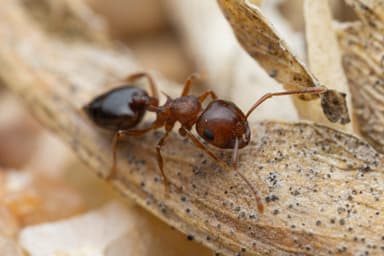
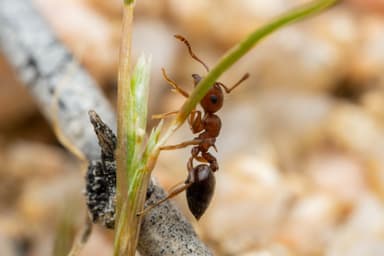
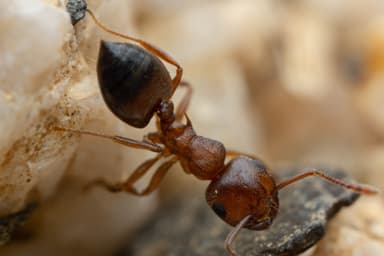
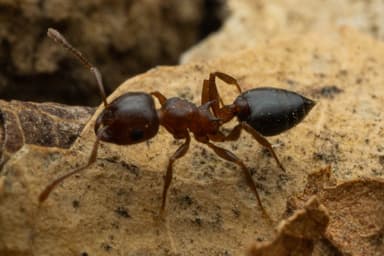
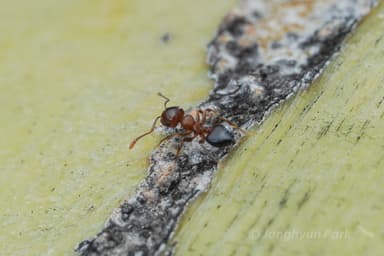
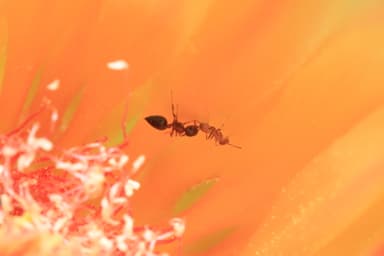
Crematogaster depilis is a jewel of the southwestern United States, a small but captivating acrobat ant that has slowly gained appreciation among keepers who admire its sleek appearance and resilient nature. Workers measure a modest 2.5 to 4 mm, while queens are notably larger at 6 to 8 mm, and the entire colony is characterized by a remarkably smooth, shining exoskeleton. The specific epithet “depilis” means hairless, a feature Wheeler (1919) emphasised when first describing this ant; the sparse pilosity gives them a polished, almost glass-like quality under magnification. Like all Crematogaster, they hold their heart-shaped gasters aloft when agitated, a defensive posture that instantly identifies them. Despite its delicate look, this is a purely monomorphic species with a single worker caste, yet mature colonies can swell to around 10,000 individuals—an impressive number for such a small-bodied ant. Their natural range, stretching from west-central Texas to southern California and as far north as central Nevada (Mackay & Mackay 2002; AntWeb), reveals an animal finely tuned to arid and semiarid environments, and this desert heritage shapes everything about their captive care.
The care difficulty is best described as intermediate. A beginner who has successfully kept a hardy Camponotus or Tetramorium species and is ready to pay closer attention to humidity boundaries and seasonal cycles will find C. depilis deeply rewarding. They are not as forgiving as the most temperate generalists; desiccation or overwatering can cause rapid decline, and their small size makes escape a real possibility. Still, with consistent monitoring, they adapt well to captivity and exhibit fascinating foraging behaviours and brood relocation antics. This species suits the naturalistic keeper who enjoys recreating a slice of the Chihuahuan or Sonoran Desert on a desktop, and who is willing to provide a carefully planned winter rest period. Their nuptial flights appear to occur during the summer months of June through August, typically in the afternoon warmth after monsoon rains (AntWiki), though details are sparse and confidence in flight timing remains low, meaning captive breeding is uncharted territory for most.
Housing demands a nest that reflects their subterranean, rock-adapted habits. Mackay & Mackay (2002) recorded colonies nesting under stones in well-drained, sandy soils, so in captivity a plaster, ytong, or sand-clay formicarium with a distinct humidity gradient works beautifully. One side of the nest should be kept slightly drier (around 40% relative humidity) while the other can be gently moistened to approach 60%, mimicking the microclimates beneath a rock slab. Temperature is crucial: maintain the foraging arena and nest at a steady 22 to 30°C, with an optimal sweet spot of 26–28°C during the active season. A small heat pad or cable placed under one corner of the nest allows workers to thermoregulate. Ventilation is paramount because stale, saturated air invites mould and mite issues; a mesh-covered outworld with a deep substrate of sand mixed with a little loam and scattered pebbles will encourage natural digging and reduce stress. Since workers are notably tiny, every seam and access port must be sealed with fine mesh or a proven escape barrier such as a wide fluon band, as these ants can exploit the smallest gaps.
Feeding C. depilis mirrors the diet of many generalist ants, but with a strong preference for insect protein to fuel brood production in a warm, active colony. Offer appropriately sized, pre-killed prey—fruit flies, pinhead crickets, chopped mealworms, or termites—two to three times per week. They supplement this with carbohydrates, eagerly drinking dilute honey water or a commercial ant nectar from a small feeder. Cleanliness matters: remove any uneaten protein within 48 hours to prevent spoilage in the dry, warm habitat. Hydration is provided both through the moistened nest area and a constant water source in the outworld, usually a test tube with a cotton plug. Although they hail from arid lands, they still require reliable access to water; watch for workers clustering around the supply if the nest becomes too dry, and gently re-moisten as needed.
A true winter dormancy is not optional for this species—it is a physiological requirement that underpins their long-term health. As day lengths shorten and temperatures cool in autumn, begin reducing the heat gradient over two weeks until the colony settles at a steady 15°C (58–60°F). This cool rest should last at least three to four months, during which the ants become largely immobile, clustering tightly around the queen. Provide a small, clean water source but offer no food; their metabolism tanks, and undigested food can decay in the gut. A wine cooler, a dedicated ant fridge, or an unheated room that stays reliably cool are all excellent options. In late winter, reverse the process over a fortnight, slowly warming them back to active temperatures. A queen that resumes egg-laying promptly after warming is a sign of a healthy, well-rested colony.
The first days after your C. depilis colony arrives are all about calm, dark stability. Unpack the test tube or small starter nest and immediately place it in a quiet corner, away from direct sunlight and household vibrations. Resist the urge to observe them for at least 24 hours—they need time to settle from the stress of transit. Confirm that a clean water source is in place. On the second day, you can introduce a minuscule drop of sugar water and a single pre-killed fruit fly placed near the nest entrance. Watch through the red light of a headlamp if you must, but keep disturbances to a minimum. Healthy workers will cautiously explore, drink, and begin to carry proteins back to the queen. If they refuse food, simply remove it and try again the next day. Be alert for any workers that appear lethargic or die within the first week—this can indicate temperature shock or humidity distress. With a little patience and attention to their desert rhythms, a founding queen and her first workers will gradually transform into a bustling, glossy colony that beautifully reflects the subtle magic of the arid Southwest.