Crematogaster
Crematogaster ashmeadi
Nuptial Flight Calendar
Flight months: May, Jun, Jul, Aug, Sep
Care Guide
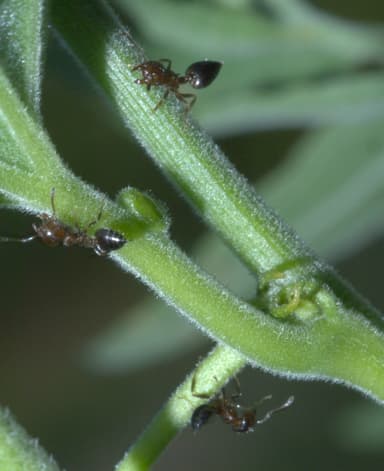
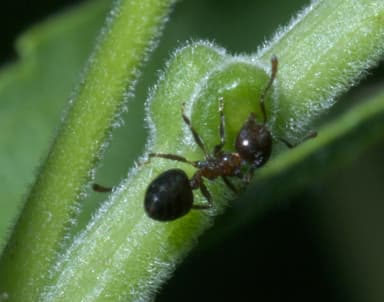
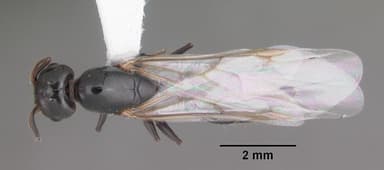
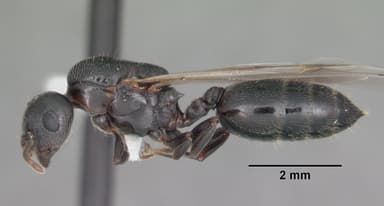
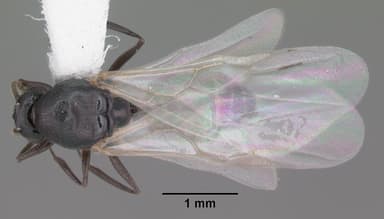
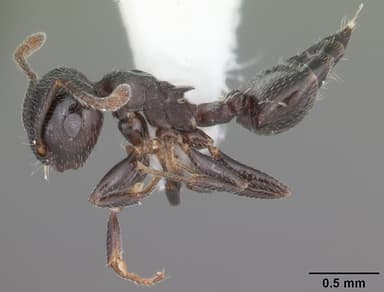
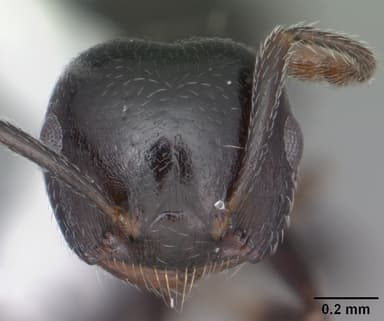
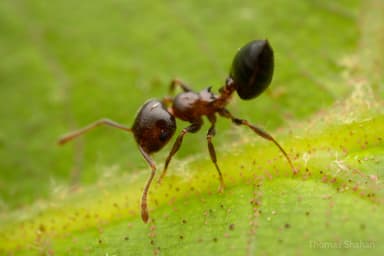
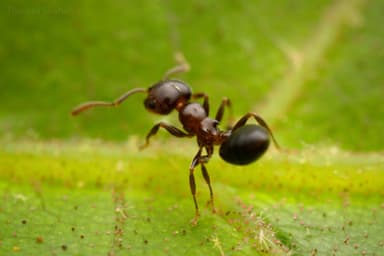
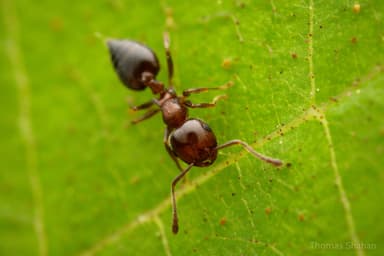
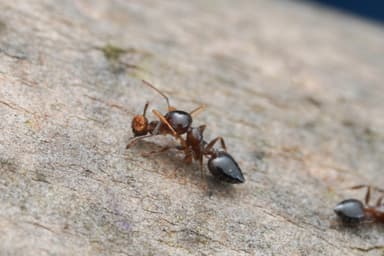
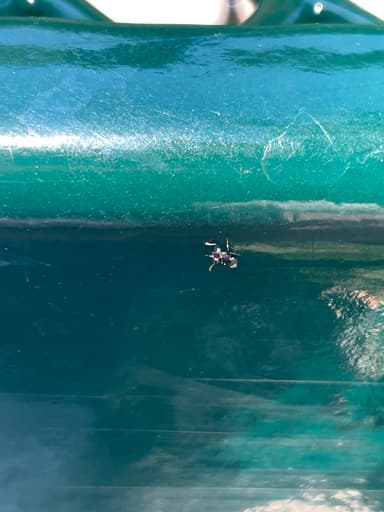
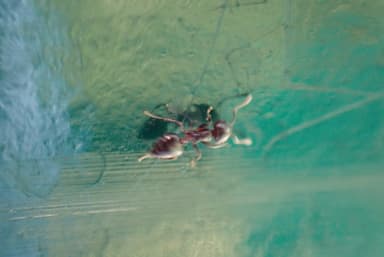
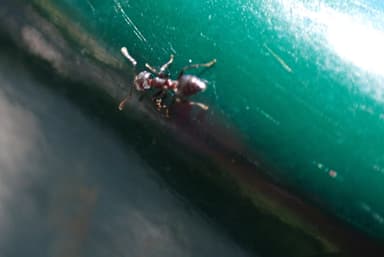
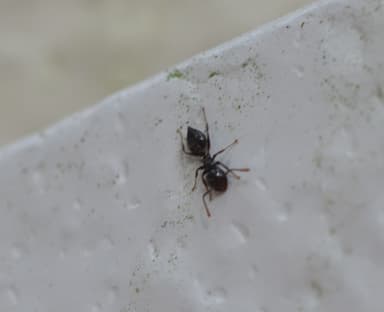
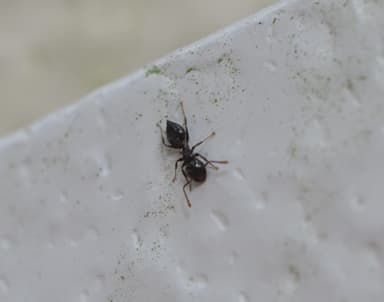
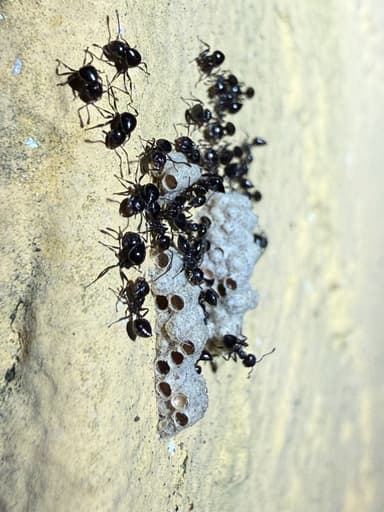
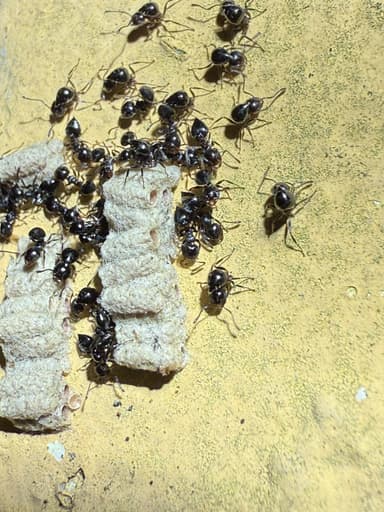
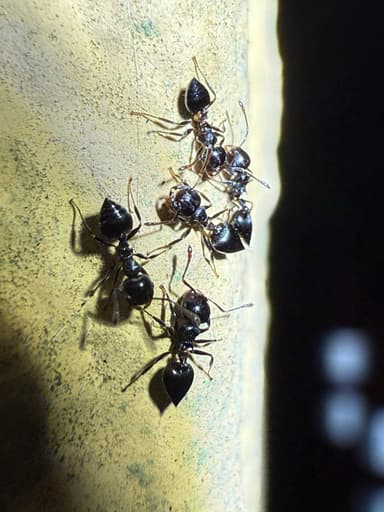
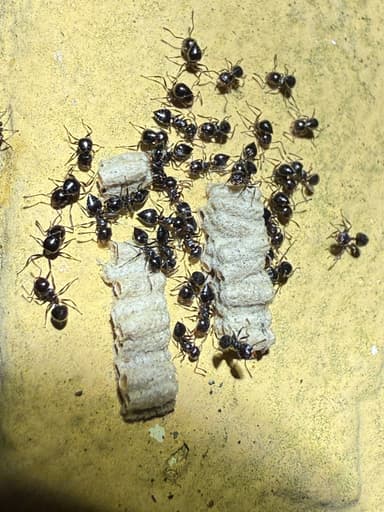
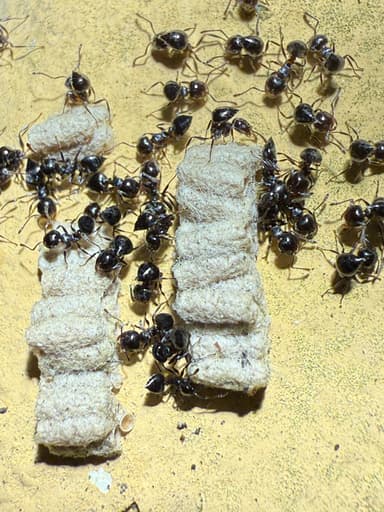
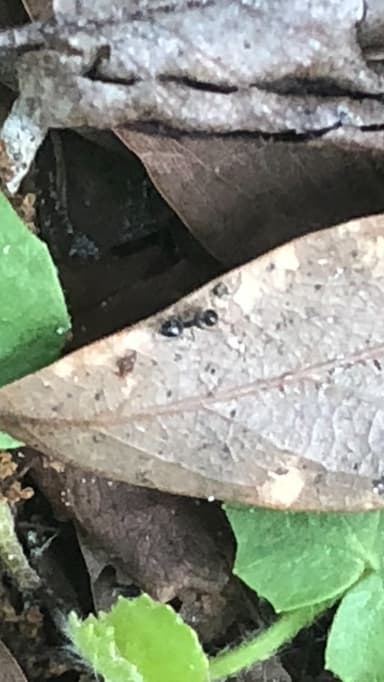
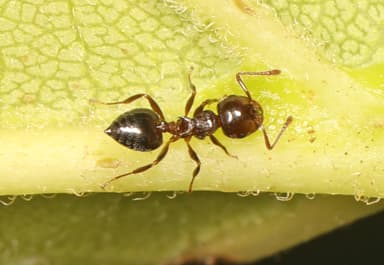
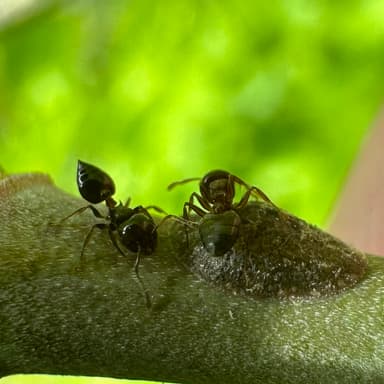
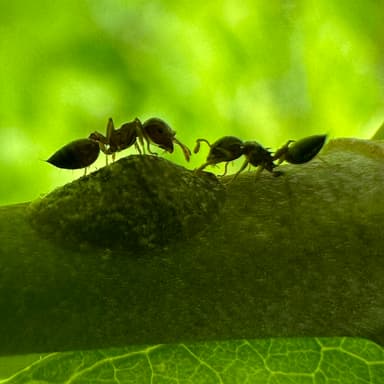
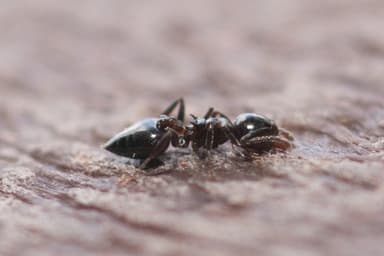
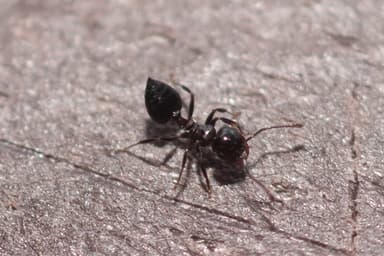
Crematogaster ashmeadi, commonly called the acrobat ant, is an enchanting arboreal species native to the southeastern United States, ranging from the coastal lowlands of Virginia and Kentucky down through Florida and westward to the fringes of Texas. Queens measure a sturdy 6 to 8 millimeters, while the monomorphic workers, the only caste present, span a delicate 2.5 to 4 millimeters. Their most endearing trait is the heart-shaped gaster that they can raise above their thorax when alarmed, a behavior that gives them the acrobat moniker and serves as a warning display. In the wild, mature colonies can reach around 10,000 individuals, nesting high in dead branches, under bark, or within the abandoned galleries of wood-boring beetles (Tschinkel 2002). They are master carton builders, binding debris with silk to create cozy chambers, and their foraging trails winding along tree trunks are a common sight in pine flatwoods and suburban neighborhoods alike. For the hobbyist intrigued by arboreal ants that thrive in a vertical world, C. ashmeadi offers a window into the complex social lives of canopy dwellers without the extreme space demands of some larger species.
This ant is best classified as intermediate in difficulty, making it a rewarding project for keepers who have moved beyond the absolute beginner stage and are comfortable maintaining stable humidity and secure enclosures. The primary challenge lies not in finicky environmental needs but in their astonishing ability to escape through the tiniest cracks—their slender bodies can squeeze through gaps that would contain many other ants. Founding is claustral, so a newly mated queen will seal herself away and raise her first brood without any food, which simplifies the initial phase considerably. However, once workers eclose, their rapid growth rate and exploratory nature demand a meticulously sealed formicarium; a loose lid or a hairline gap around a hydration port will be ruthlessly exploited. For someone who enjoys observing intricate natural behaviors and is ready to commit to a well-planned setup, C. ashmeadi is a delightful challenge that will reward attention to detail with a bustling, long-lived colony.
Housing should mimic their arboreal lifestyle. A vertical nest orientation is ideal—cork bark slabs, wood nests, or plaster formicariums with narrow chambers that trap moisture suit them beautifully. Maintain a temperature gradient between 22 and 28°C, with a basking spot at the warmer end if possible, though they tolerate room temperature well as long as it doesn’t dip too low. Humidity must stay between 50 and 70 percent, and providing a gradient where some chambers are drier and others moist allows the ants to self-regulate their brood and fungal gardens. They naturally produce carton, so offering fine sand or coconut fiber in a small pile can encourage this behavior, but a bare setup is also fine. The outworld should be completely escape-proof; a thin film of fluon or a tight-fitted lid with micro-mesh ventilation is essential, and all connections must be inspected frequently because these ants will test every seam.
Feeding C. ashmeadi is straightforward: in the wild they avidly tend aphids and scale insects for honeydew and scavenge for protein from bird droppings and dead arthropods (Deyrup 2017). In captivity, provide a carbohydrate source such as honey water, maple syrup diluted with water, or sugar water, renewed every few days to prevent spoilage. For protein, offer small pre-killed insects—fruit flies, pinhead crickets, or chopped mealworms—twice a week for a small colony, increasing frequency as the population expands. A fresh water source must always be available; a test tube with a cotton plug or a micro-feeder works well. Avoid oversized prey that could intimidate the young workers, and always remove uneaten food within 24 hours to prevent mold. Their small size makes them vulnerable to drowning, so liquid feeders should use a sponge or cotton wick.
Hibernation is a non-negotiable part of their yearly rhythm. Even though they hail from a region with relatively mild winters, they require a cool diapause to reset their biological clocks and maintain queen longevity. When autumn arrives, gradually reduce temperatures over a few weeks until they settle at around 15°C. They should remain in this chilled state for two to three months, with access to a small water source but no food. A wine cooler or a cool basement works well; just avoid freezing. After the rest period, warm them slowly back to their active range, and the queen will often resume egg-laying within a week. Skipping hibernation can lead to a sluggish, dwindling colony, so plan for this seasonal cycle from the start.
When your ants first arrive, whether as a founding queen in a test tube or a small colony with a few workers, give them absolute quiet to recover from shipping stress. Place the tube in a dark, warm spot at about 25°C and avoid peeking for at least a week. If you have a colony with workers, you can attach their tube to a tiny outworld immediately, but keep it minimal—a small drop of honey on a piece of wax paper and a single pre-killed fruit fly placed outside the tube entrance is a gentle first offering. Do not force them into a larger nest; they will move when they feel cramped, which for this species often only when about 20 to 30 workers crowd the tube. Watch for the familiar gaster-raising posture: if they repeatedly display, they are still uneasy and need more seclusion. Patience in these first days lays the foundation for a robust, confident colony that will soon delight you with its active foraging and acrobat antics.