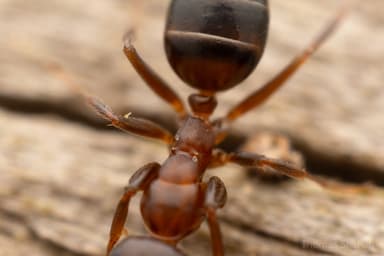
Camponotus
Camponotus impressus
Nuptial Flight Calendar
Flight months: Apr, May, Jun, Jul
Care Guide
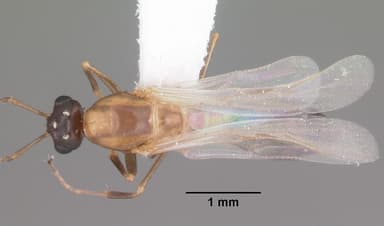
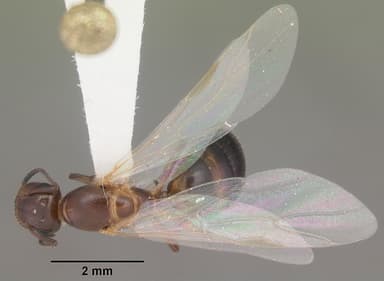
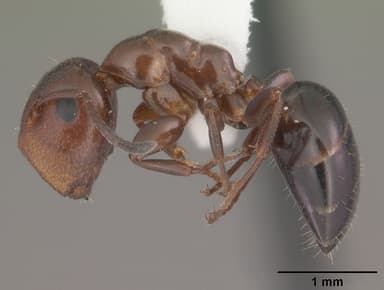
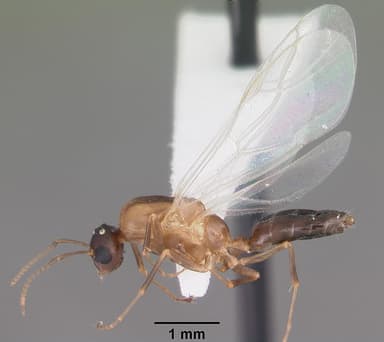
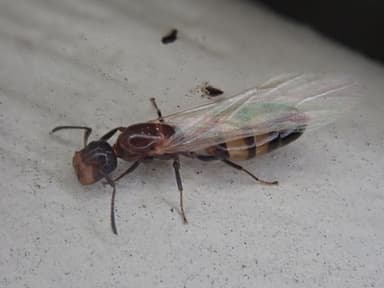
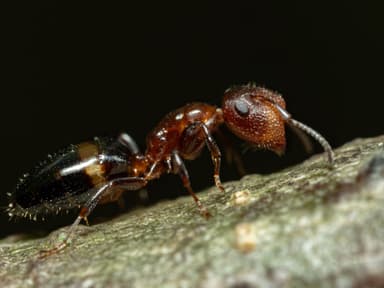
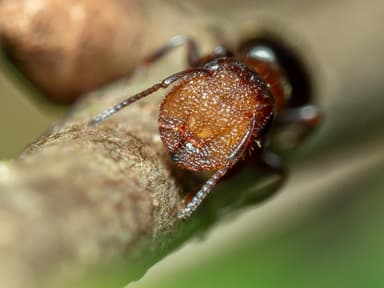
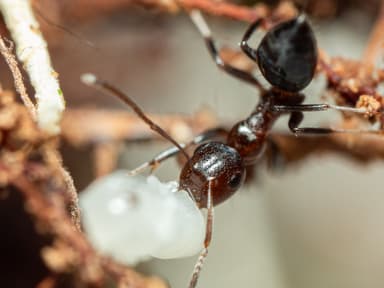
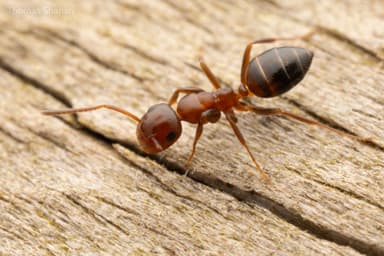
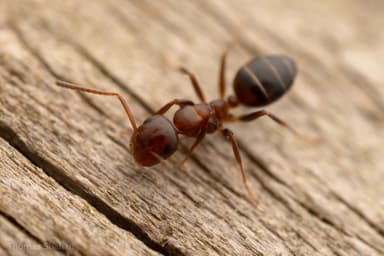
Camponotus impressus is a modestly sized carpenter ant whose colonies reveal a quiet, understated beauty once settled into captivity. Queens measure between 6 and 8 mm, while the polymorphic workers span a remarkable 2.5 to 5 mm, exhibiting two distinct castes: sprightly minor workers and broad-headed major workers that serve as living fortifications at the nest entrance. A mature colony may reach up to 3,000 individuals, a respectable number that allows keepers to appreciate the full rhythm of ant life without being overwhelmed by explosive growth. Nuptial flights occur across the southeastern United States during the afternoon hours of May through July, typically on warm, humid days that follow rainfall (Creighton 1950). Unlike many of its northern cousins, C. impressus does not retreat into a winter slumber, for its subtropical distribution spares it from the harsh chill that triggers diapause in temperate species. The claustral founding means each new queen is a self-contained beginning, sealing herself away to raise her first daughters on the fat reserves of her own body, and this enduring trait remains a fascination for those who witness it in a test tube setup.
With a care difficulty rated as intermediate, C. impressus suits keepers who have already learned the rhythms of a hardy beginner species and are eager to explore the nuances of humidity gradients and escape-proof housing. They are not particularly aggressive, yet the majors can deliver a pinch with their sturdy mandibles and, like all Camponotus, they are capable of chewing through flimsy plastics and ill-sealed lids. The colony grows at a deliberate pace, rewarding patience with a structured society where the physical differences between minor and major workers become increasingly pronounced. If you enjoy watching the emergence of a true worker polymorphism and prefer a species that does not demand daily tinkering, this ant is an excellent bridge into more advanced husbandry.
Housing must replicate the warm, humid microclimates of their native haunts, and a formicarium that offers a hydration gradient is essential. Maintain the nest at a temperature between 22 and 28°C, with a gentle heat source applied to one side so the ants can self-regulate. Ambient humidity should stay within 50 to 70 percent, easily achieved in a plaster, ytong, or cork-lined nest that is kept slightly moist on one end while leaving a dry zone for food storage and refuse. An outworld with a thin layer of sand or coconut coir gives the workers a natural foraging surface, and because these carpenter ants are adept at gnawing through soft materials, every seam and port must be secured with fine mesh or tight-fitting plugs. Mackay & Mackay (2019) note that in the wild colonies often occupy pre-existing cavities in wood, so offering a hollow piece of untreated hardwood inside the foraging area can encourage natural nesting behavior — just be prepared for their carpentry skills.
Feeding C. impressus follows the standard carpenter ant template: they need both protein-rich fare and accessible sugars. For protein, supply freshly killed or pre-frozen crickets, mealworms, roach nymphs, or fruit flies two to three times per week, removing any uneaten portions within a day to prevent mold. Carbohydrates can be given as a small dropper of sugar water, a dab of honey on a foil square, or a slice of overripe fruit; this energy source should be available almost continuously once the colony has more than a handful of workers. A constant supply of fresh water, either by keeping the nest hydrated or providing a separate water feeder, is non-negotiable, as desiccation is the fastest killer of young colonies.
A notable departure from many ant-keeping staples is that C. impressus requires no hibernation. Its native range along the Gulf Coast and into Mexico sees only mild winter cooling, so the colony is adapted to year-round activity. Keep the temperatures steady within the preferred range, and the queen will continue laying eggs without the seasonal pause that other species demand. Some keepers have observed that a very slight nighttime drop — down to perhaps 20°C — can mimic natural fluctuations and may stimulate brood surges, but a deliberate, cold hibernation is unnecessary and likely to cause stress. Simplicity itself: you never need to move the colony into a chilly cellar or refrigerator.
The first days after your C. impressus colony arrives are critical for long-term success, and a light touch is paramount. Place the travel tube or small founding container in a dim, quiet spot and resist the urge to inspect for at least 24 hours, giving the ants time to recover from shipping vibration and reorient themselves. After this settling period, offer a droplet of sugar water on a tiny bit of aluminum foil and a pre-killed fruit fly or pinhead cricket placed near the nest entrance. Do not be alarmed if the ants seem hesitant at first; a claustral queen and her young workers may still be living off internal reserves. Monitor whether the food is taken within a few hours, and discard any leftovers before they spoil. Look for signs that conditions are right: workers exploring deliberately, brood being tended in the moist chamber, and the queen resting calmly rather than pacing frantically. If you notice ants clustering tightly around the water source or refusing to leave the nest, double-check that the temperature and humidity are within the recommended ranges, as these are the most common fixable stressors. Once you see the first foragers boldly patrolling the outworld, you can begin the regular feeding schedule and settle in for the quiet, unfolding drama of a thriving Camponotus impressus colony.