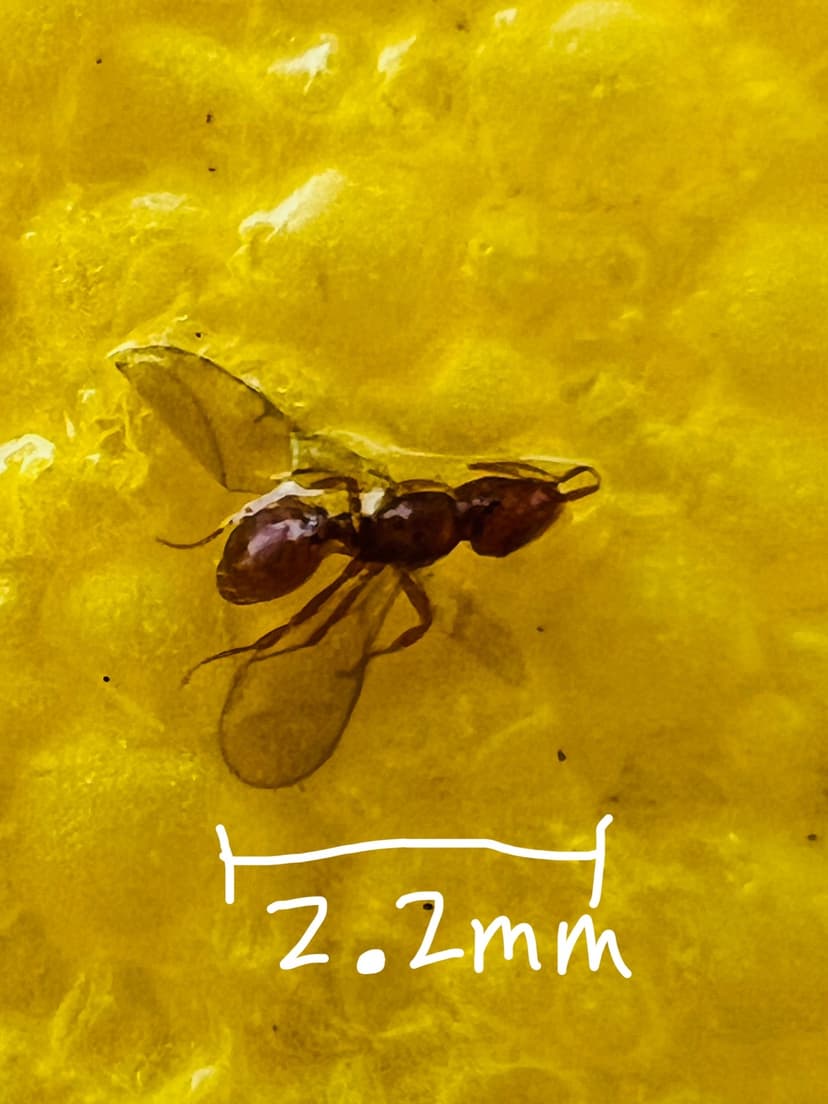
Strumigenys
Strumigenys silvestrii
Care Guide
Strumigenys silvestrii is one of the most fascinating yet demanding ant species a keeper can work with. These tiny ants belong to the so‑called “trap‑jaw” group, and their hunting technique is a marvel of micro‑evolution. The queen, measuring just 2–3 mm, and her workers, between 1.5–2.5 mm, possess highly specialized mandibles that can snap shut at incredible speed to capture tiny prey such as springtails, mites, and other soft‑bodied arthropods. Unlike many ant species, Strumigenys are not attracted to sugar or honeydew; their diet is exclusively insectivorous. A colony will be constantly scanning their environment for minute prey, making feeding a precise and rewarding task for the dedicated keeper. Colony size remains modest, typically between 50 and 200 workers, forming a tight‑knit, slow‑growing society that requires exceptional patience and observation.
Care difficulty
Keeping Strumigenys silvestrii is considered expert level for good reason. Their semi‑claustral founding means the queen must leave the nest to forage during the first weeks, placing her at extreme risk. She needs a steady supply of appropriately sized live prey to raise her first brood, and any disturbance can easily cause her to abandon the founding chamber. Even established colonies are delicate: they thrive on high humidity, a narrow temperature range, and a constant supply of fresh, small live insects. Beginners should gain experience with less demanding species before attempting these remarkable little hunters.
Housing
A formicarium for Strumigenys silvestrii must maintain humidity levels of 75–90% at all times. A plaster or clay‑based nest with a reliable hydration system works best, combined with an outworld that allows for misting without flooding. The nest should have small, tight chambers that mimic the leaf‑litter and soil crevices they naturally occupy. Temperatures between 24–28°C are ideal; avoid any sudden drops or prolonged heat spikes. Because these ants are highly sensitive to vibrations and bright light, place the setup in a quiet, dim area. The outworld substrate (e.g., a thin layer of soil or coconut fiber) helps retain moisture and gives the ants a familiar hunting ground.
First days after purchase
Upon receiving your Strumigenys silvestrii colony, transfer them into their prepared nest with extreme care. Minimize light exposure by covering the nest opening during the move. Position the formicarium in a stable, low‑vibration location and leave them completely undisturbed for at least 48 hours. During this acclimation period, ensure humidity stays high and provide a few tiny live insects (such as springtails or fruit fly larvae) near the nest entrance. Do not offer large prey or open the nest for observation. Patience is everything—these ants can take weeks to settle. Once they begin actively hunting and carrying prey into the nest, you can gradually introduce gentle observation.


